
Fertilizer Spreaders
Fertilizer Spreader
Agricultural fertilizer spreaders are essential tools used in modern farming practices to distribute fertilizers evenly across agricultural fields. They are designed to efficiently and effectively apply fertilizers, which provide essential nutrients to the soil for optimal plant growth and increased crop yields.
Agricultural fertilizer spreaders come in various types and sizes, ranging from small handheld models to large tractor-mounted or self-propelled machines. The choice of spreader depends on factors such as the size of the field, the type of fertilizer being applied, and the desired application rate.
There are two main types of fertilizer spreaders: broadcast spreaders and drop spreaders.
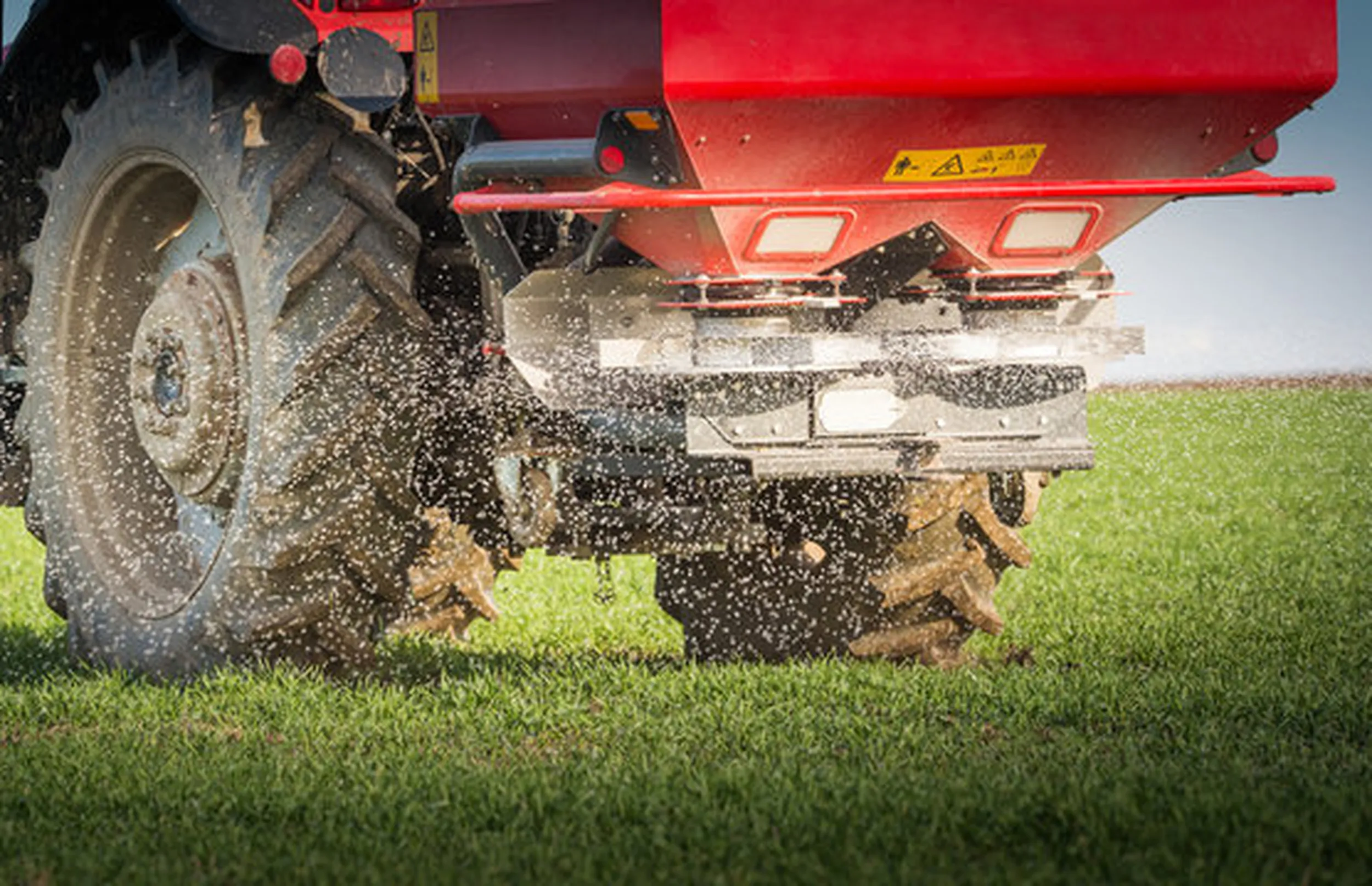
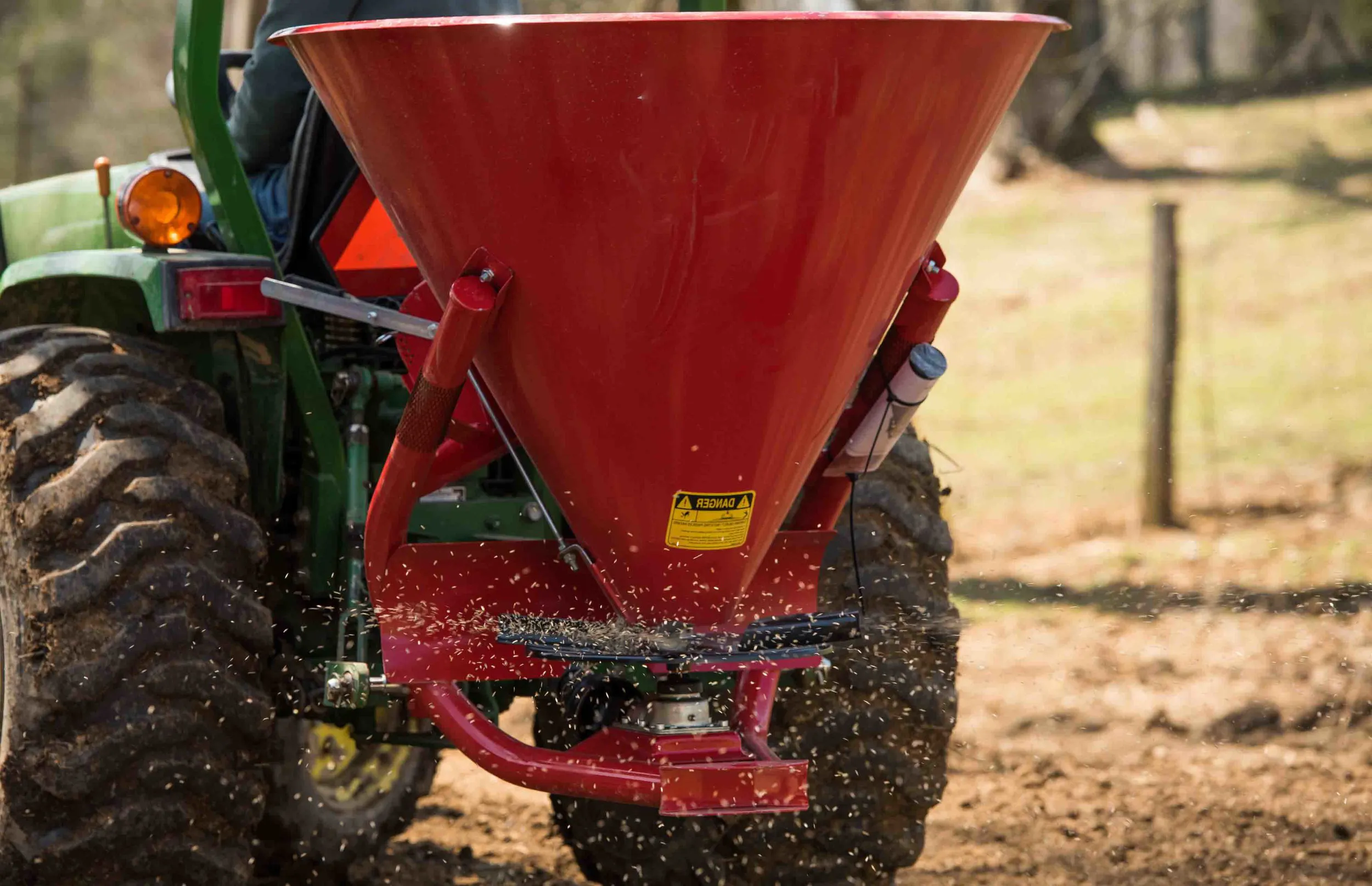
(1) Broadcast Spreaders: These fertilizer spreaders are designed to distribute fertilizer in a wide pattern, covering a larger area. They are commonly used for large-scale farming operations. Broadcast spreaders feature a spinning disc or a series of rotating fins that throw the fertilizer outwards as the machine moves forward. The spread width can typically be adjusted to control the distribution pattern. These spreaders are efficient for covering large areas quickly.
(2) Drop Spreaders: Drop spreaders are designed to deposit fertilizer directly onto the ground in a controlled manner. They have a hopper that releases the fertilizer through evenly spaced openings or chutes. Drop spreaders are commonly used in smaller fields or areas where precise application is required, such as around delicate plants or in garden beds. They provide more accuracy in fertilizer placement but may require more time to cover larger areas compared to broadcast spreaders.
Both types of agricultural fertilizer spreaders can be manually operated or have mechanized components. Mechanized spreaders are often mounted on tractors or other vehicles, making it easier to cover larger areas and allowing for more precise control of the application rate.
Watch Our Fertilizer Spreaders Video:
How Does a Fertilizer Spreader Work?
Loading: The first step is to load the fertilizer into the spreader. Fertilizers can be in granular, powdered, or liquid form. Granular fertilizers are most commonly used with spreaders.
Hopper: The fertilizer is stored in a hopper, which is a large container located at the top of the spreader. The hopper holds the necessary amount of fertilizer for the desired application rate and field size.
Metering System: The metering system controls the flow rate of fertilizer from the hopper to the spreading mechanism. It ensures a consistent and accurate application rate. The system can use various mechanisms such as augers, belts, or spinning discs to regulate the flow of fertilizer.
Spreading Mechanism: The spreading mechanism is responsible for evenly distributing the fertilizer across the field. Different types of spreaders employ different mechanisms:
Spinner Spreaders: These spreaders have a horizontal spinning disc at the bottom of the hopper. The fertilizer is directed onto the spinning disc, which throws the granules outward in a circular pattern. The spreading width can be adjusted based on the disc speed and position.
Drop Spreaders: These spreaders have a series of openings or tubes at the bottom of the hopper. The fertilizer drops directly onto the ground through these openings, creating a precise application pattern. Drop spreaders are ideal for more accurate placement in specific areas.
Pneumatic Spreaders: These spreaders use air pressure to distribute granular fertilizer. The fertilizer is carried by a stream of air and released through a nozzle, creating a wide spreading pattern. Pneumatic spreaders are commonly used for large-scale operations or when a high degree of accuracy is required.
Spreading Width and Pattern Control: Fertilizer spreaders often have mechanisms to adjust the spreading width and pattern. These adjustments allow farmers to match the spreader’s output to the field size and shape, ensuring even coverage.
Calibration: Before starting the actual spreading operation, it is important to calibrate the spreader to determine the correct application rate. Calibration involves measuring the actual output of the spreader and adjusting it to achieve the desired rate. This step helps ensure accurate fertilizer application and avoids over- or under-fertilization.
Operation: Once the spreader is loaded, calibrated, and adjusted, it is ready for operation. The spreader is usually attached to a tractor or another vehicle, which drives along the field in a systematic pattern. As the vehicle moves, the spreading mechanism distributes the fertilizer evenly across the ground, covering the desired area.

Types of Fertilizer Spreaders for Sale:
There are several types of fertilizer spreaders designed to meet different agricultural needs and operational requirements:
- Broadcast Spreaders: These broadcast fertilizer spreaders are designed to distribute fertilizers uniformly over a wide area, making them suitable for large-scale agricultural operations. They can be either mounted on tractors for mechanized operation or operated manually for smaller areas. Broadcast spreaders are efficient for spreading granular fertilizers such as nitrogen, phosphorus, and potassium across fields and pastures, ensuring even nutrient distribution for optimal crop growth and yield.
- Drop Spreaders: Unlike broadcast spreaders, drop fertilizer spreaders release fertilizers directly beneath the spreader in a controlled pattern. This precise application method is ideal for accurate placement of fertilizers around plants, trees, and garden beds without overlapping onto non-target areas. Drop spreaders are commonly used in smaller-scale farming, landscaping, and residential gardening where precise nutrient management is crucial for plant health and productivity.
- Spinner Spreaders: Spinner fertilizer spreaders use a spinning disk or spinner mechanism to distribute fertilizers in a circular pattern. They are versatile tools suitable for spreading both granular and powdered fertilizers over a wide area. Spinner spreaders can be adjusted for different spreading widths and are often mounted on tractors or towed behind them. They are commonly used in field crops, pastures, and other agricultural applications requiring efficient and uniform fertilizer distribution.
- Liquid Fertilizer Applicators: These liquid fertilizer applicators are designed to spray liquid fertilizers directly onto crops or soil surfaces. Liquid fertilizer applicators offer precise control over nutrient application rates and are commonly used in high-value crops, orchards, and specialty farming operations. They are efficient for delivering nutrients directly to plants’ root zones, promoting rapid nutrient uptake and maximizing crop yields, especially in situations where quick nutrient availability is critical.
- Towed Fertilizer Spreaders: Towed fertilizer spreaders are designed to be pulled behind tractors or ATVs and are ideal for spreading fertilizers over large areas efficiently. They offer higher capacity compared to handheld or mounted spreaders, making them suitable for extensive agricultural operations and large fields. Towed spreaders can handle both granular and powdered fertilizers and are adjustable to accommodate varying spreading widths and application rates as needed.
- Manure Spreaders: These manure fertilizer spreaders are specifically designed to distribute animal manure onto fields or pastures. They come in various configurations, such as ground-driven, PTO-driven, or hydraulic-driven models, depending on the size of the operation and the type of manure being spread. Manure spreaders help recycle nutrients back into the soil, improving soil fertility, enhancing organic matter content, and promoting healthier crop growth.
Showing 1–20 of 104 resultsSorted by popularity
-

Farm Machine Fertilizer Spreader CDR1000
-

Farm Equipment ATV Fertilizer Spreader CDR600 for Tractor
-
CDR-350 Tractor Fertilizer Spreader
-

ATV Farm Spreader Fertilizer Spreader for Sale
-

Custom Kinds of Spreader, Agricultural Equipment Fertilizer Spreader
-

Tractor Fertilizer Spreader: A Comprehensive Guide
-

CDR Stainless Steel Fertilizer Spreader: The Ultimate Solution for Lime Spreader Trucks for Sale
-

Tractor Driven Lime Spreader for Sale
-

Tractor Truck Manure Spreader: The Ultimate Fertilizing Solution
-

Farm truck fertilizer spreader for manure or muck
-

Tractor Fertiliser Spreader
-

Animal Waste Manure Spreader and Distributor
-
Salt Spreaders for Tractors Sand Spreading Machine
-

2018 New ATV Spreader for Salt Sand Seed Fertilizer
-

Hot sell 3 point hitch agricultural spreader fertilizer spreader for atv
-

ATV Spreader for Salt, Sand, Seed, and Fertilizer: A Comprehensive Guide
-

Hot Sale Tractor PTO Mounted Salt Spreaders for Tractors
-

ATV Fertilizer Spreader for 12 Volt Electric Motor with Variable Speed Control
-
Tractor Trailed Fertilizer Spreader ATV Spreader Lime Spreader Best Selling
-

Customized Type Stainless Steel Disc Fertilizer Spreader
Applications of Fertilizer Spreader in Agriculture:
(1) Crop Fertilization: The primary application of fertilizer spreaders is to apply fertilizers to crops. Fertilizers contain essential nutrients such as nitrogen, phosphorus, and potassium, along with other micronutrients. Spreaders help distribute these nutrients uniformly across the field, ensuring that crops receive the necessary elements for healthy growth and improved yields.
(2) Soil Amendment: Fertilizer spreaders are also used to apply soil amendments such as lime or gypsum. These amendments help adjust soil pH levels, improve soil structure, and enhance nutrient availability. Spreaders enable even distribution of these amendments, promoting uniform changes in soil properties and optimizing growing conditions for crops.
(3) Cover Crop Seeding: Cover crops are planted to protect and improve soil health during periods when the main cash crops are not actively growing. Fertilizer spreaders can be used to sow cover crop seeds, ensuring even coverage across the field. This promotes the establishment of cover crops and their beneficial effects on soil erosion control, nutrient retention, and weed suppression.
(4) Pasture Renovation: In livestock farming, fertilizer spreaders are employed to renovate pastures by overseeding with improved grass or legume species. By distributing the seeds uniformly, spreaders help establish a denser and more productive pasture, providing better forage for livestock and improving grazing management.
(5) Turf Maintenance: Fertilizer spreaders are used in the maintenance of turfgrass areas, including lawns, sports fields, and golf courses. They are used to apply fertilizers and soil amendments to promote healthy turf growth, improve color and density, and address specific nutrient deficiencies. Spreaders ensure even distribution of products, resulting in a uniform and aesthetically pleasing turf.
(6) Horticulture and Specialty Crops: Fertilizer spreaders find applications in horticulture and specialty crop production as well. They are used to apply fertilizers to fruit orchards, vineyards, vegetable gardens, and other high-value crops. The spreading mechanism can be adjusted to accommodate the specific requirements of different crops, ensuring precise and efficient nutrient application.
Last Update Knowledge & News
No Results Found
The page you requested could not be found. Try refining your search, or use the navigation above to locate the post.
Edited by Yjx