
QD Sprocket

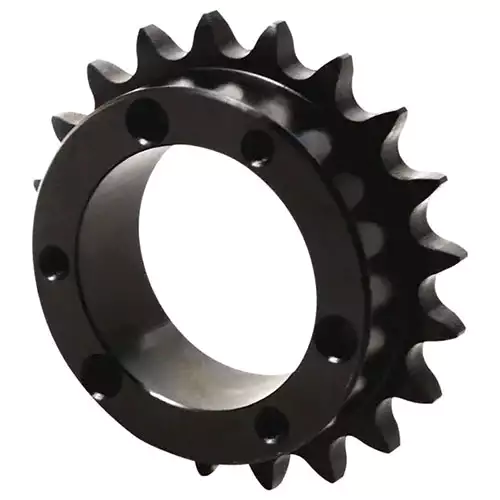
Single QD Sprocket
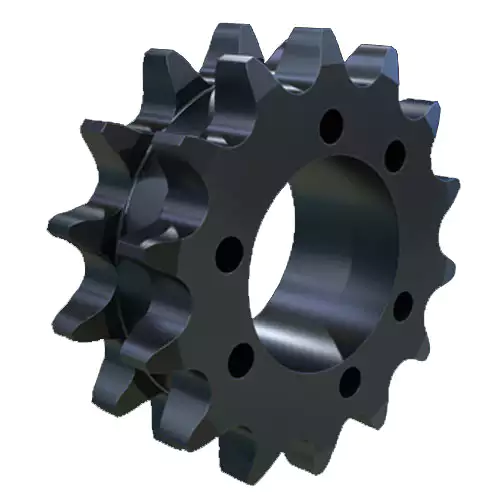
Double QD Sprocket
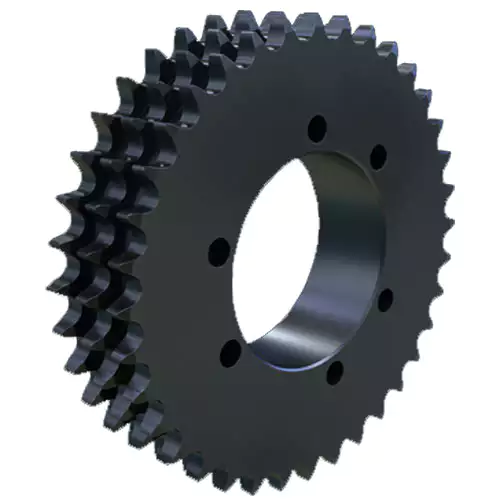
Triple QD Sprocket
[ninja_tables id=”920193″]
What is QD Sprocket?
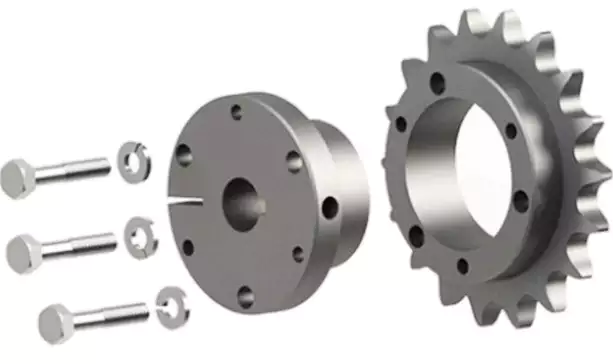
QD Sprocket is a specially designed sprocket, the “QD” in its name stands for “Quick Detachable”. This sprocket features a device called a QD bushing that is fixed to the shaft. The QD bushing is a tapered sleeve that can be easily installed and removed, simplifying the process of replacing and maintaining the sprocket.
The basic structure of a QD sprocket includes:
- Sprocket body: a round metal part with teeth for engaging with the chain.
- QD bushing: a tapered sleeve with a keyway on the inside and threads on the outside, used to fix the sprocket to the shaft.
- Fasteners: usually a set of bolts and nuts that are used to fix the QD bushing to the sprocket and clamp the shaft by tightening the bolts.
Easy Installation and Removal
- The design of the QD bushing allows the sprocket to be quickly installed and removed without complicated tools or equipment.
- Installation or removal can be completed by simply tightening or loosening the bolts, greatly reducing downtime and maintenance costs.
Strong adaptability:
- QD sprockets are suitable for a variety of shaft diameters. By choosing different specifications of QD bushings, they can be easily adapted to shafts of different sizes.
- It can be used in a variety of different applications, such as industrial machinery, agricultural machinery, construction machinery, etc.
High load capacity
- QD sprockets are usually made of high-strength materials such as carbon steel, alloy steel or stainless steel, and can withstand high loads and torques.
- They are suitable for low to medium load applications, but can also be used for heavy load applications in some cases.
Durability
- The design of the QD bushing allows the sprocket to be quickly installed and removed without complicated tools or equipment.
- Installation or removal can be completed by simply tightening or loosening the bolts, greatly reducing downtime and maintenance costs.
Cost-effectiveness
- While the initial cost may be slightly higher than other types of sprockets, its quick installation and removal characteristics reduce long-term maintenance costs.
- Reduces downtime due to sprocket replacement and improves overall production efficiency.
Standardization
- QD sprockets follow international standards such as ANSI, DIN, etc., ensuring interchangeability and compatibility.
- The standardized design makes it easier for users to find suitable replacement parts.
Install QD Type Bushings
1. Clean the shaft, bushing bore, outside of bushing and the sprocket/sheave hub bore of all oil, paint and dirt. File away any burrs.
Note: Do not lubricate the bushing taper, hub taper, bushing bore or the shaft. Doing so may result in sprocket/sheave hub fracture. DO NOT USE LUBRICANTS.
2. For a conventional mount, assemble the sprocket/sheave and bushing combination by sliding the sprocket/sheave taper bore into position over the mating tapered bushing surface. Align the unthreaded holes in the sprocket/sheave hub with the threaded holes in the flange of the bushing.
Hand-tighten the cap screws with lock washers installed. The sprocket/sheave and bushing assembly will mount onto the shaft, with the bushing flange facing inward.
Some sprocket/sheave assemblies will allow a reverse mount procedure. This results in the bushing flange facing outward, but still allows the cap screw installation from the outside of the assembly. The cap screws fit through the unthreaded holes of the bushing flange and into the
threaded holes of the sprocket/sheave hub.
3. With the key resting in the shaft keyway, position the assembly onto the shaft allowing for small axial movement of the sprocket/sheave, which will occur during the tightening process.
When installing large or heavy parts in a conventional mount, it may be easier to mount the key and bushing on the shaft first, then place the sprocket/sheave on the bushing and align the holes.
Note: When mounting sprockets/sheaves on a vertical shaft, pre-cautions must be taken to prevent the sprocket/sheave and/or bushing from falling during installation.
4. Alternately tighten the cap screws until the sprocket/sheave and bushing tapers are completely seated together (use approx. half of the recommended bolt torque; see Table ).
5. Check the alignment and axial sprocket/sheave run out (wobble), and correct as necessary.
6. Continue alternate tightening of the cap screws to the recommended torque values specified in Table below. Do not tighten cap screws further once the recommended torque is reached.
Note: Excessive bolt torque can cause sprocket/sheave and/or bushing breakage. When properly mounted, a gap between the bushing flange and sprocket/sheave should exist.
7. Tighten the set screw, when available, to hold the key securely during operation.
| Bushing style | Bolt(in) | Torque Wrench | ||
| Qty | Size | lb-ft | lb-in | |
| H | 2 | 1/4 x 3/4 | 7.9 | 95 |
| JA | 3 | 10-24 x 1 | 4.5 | 54 |
| SH&SDS | 3 | 1/4-20 x 1 3/8 | 9.0 | 108 |
| SD | 3 | 1/4-20 x 1 7/8 | 9.0 | 108 |
| SK | 3 | 5/16-18 x 2 | 15.0 | 180 |
| SF | 3 | 3/8-16 x 2 | 30.0 | 360 |
| E | 3 | 1/2-13 x 2 3/4 | 60.0 | 720 |
| F | 3 | 9/16-12 x 3 5/8 | 75.0 | 900 |
| J | 3 | 5/8-11 x 4 1/2 | 135.0 | 1620 |
| M | 4 | 3/4-10 x 6 3/4 | 225.0 | 2700 |
| N | 4 | 7/8-9 x 8 | 300.0 | 3600 |
| P | 4 | 1-8 x 9 1/2 | 450.0 | 5400 |
| W | 4 | 1 1/8-7 x 11 1/2 | 600.0 | 7200 |
| S | 5 | 1 1/4-7 x 15 1/2 | 750.0 | 9000 |
Remove QD Type Bushings
1. Loosen and remove all mounting bolts.
2. Insert cap screws into all threaded jack screw holes.
3. Loosen the bushing by first tightening the screw furthest from the bushing saw slot, then, alternately tighten remaining screws. Keep tightening the screws in small but equal increments until the tapered sprocket/sheave and bushing disengage.
Note: Excessive or unequal pressure on the bolts can break the bushing flange, making removal impossible without destroying the sprocket/sheave.
Showing 1–12 of 30 resultsSorted by latest
-
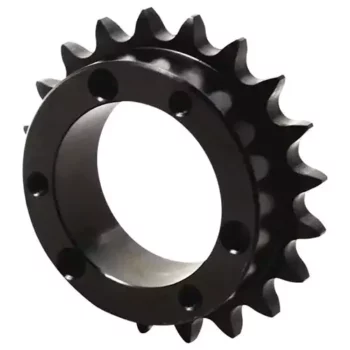
QD Sprocket No.200 Single Type
-
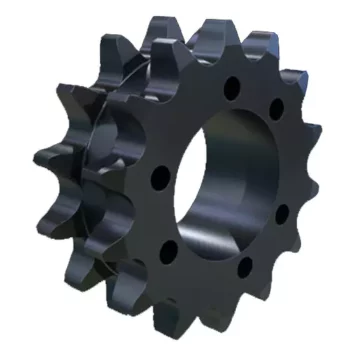
QD Sprocket No.160-2 Double Type
-
QD Sprocket No.160 Single Type
-
QD Sprocket No.140-2 Double Type
-
QD Sprocket No.140 Single Type
-
QD Sprocket No.120-2 Double Type
-
QD Sprocket No.120 Single Type
-
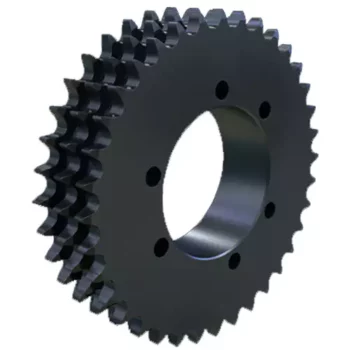
QD Sprocket No.100-3 Triple Type
-
QD Sprocket No.100-2 Double Type
-
QD Sprocket No.100 Single Type
-
QD Sprocket No.80-3 Triple Type
-
QD Sprocket No.80-2 Double Type