
Chain Trencher
Professional Chain Trencher Manufacturer
HZPT Agricultural Machinery Co., Ltd. has been engaged in the research and development of agricultural machinery. We have accumulated more than ten years of experience in production, and mainly produce farming machinery, planting machinery, harvesting machinery and its accessories, and matching machines. Our main products are PTO shafts, agricultural gearboxes, large round baler, mini round baler, PTO wood chipper, diesel wood chipper, drum mowers, rotary hay rakes, silage harvester, flail mowers, lawn mowers, sickle bar mowers, rotary mowers, rotary tillers, land levelers, fertilizer spreaders, furrow ploughs, disc harrows, disc blades, disc ridgers, disc ploughs, potato planters, potato harvester, corn seeder, wheat seeder, vegetable seeder, post hole diggers, boom sprayers, agricultural subsoiler, agricultural trailers, disc mower, finger wheel rake, log splitter, front end loader, backhoe, snow blower, road sweeper, etc. The above series of products are complete in specifications, excellent in performance, and reliable in quality. Our products are sold all over the country and are exported to many countries and regions in Europe, America, Africa, the Middle East, and Southeast Asia all year round.
Types of Chain Trencher for Sale
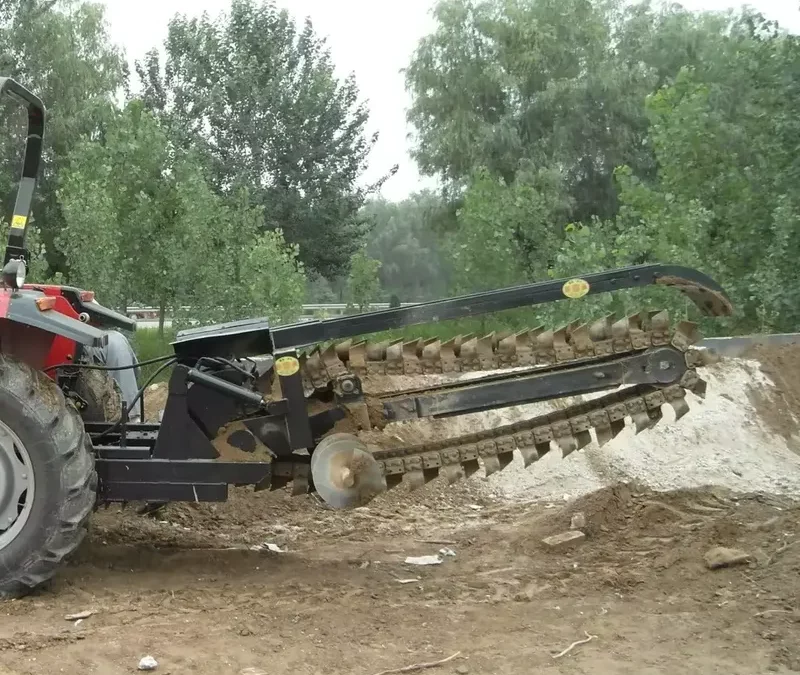
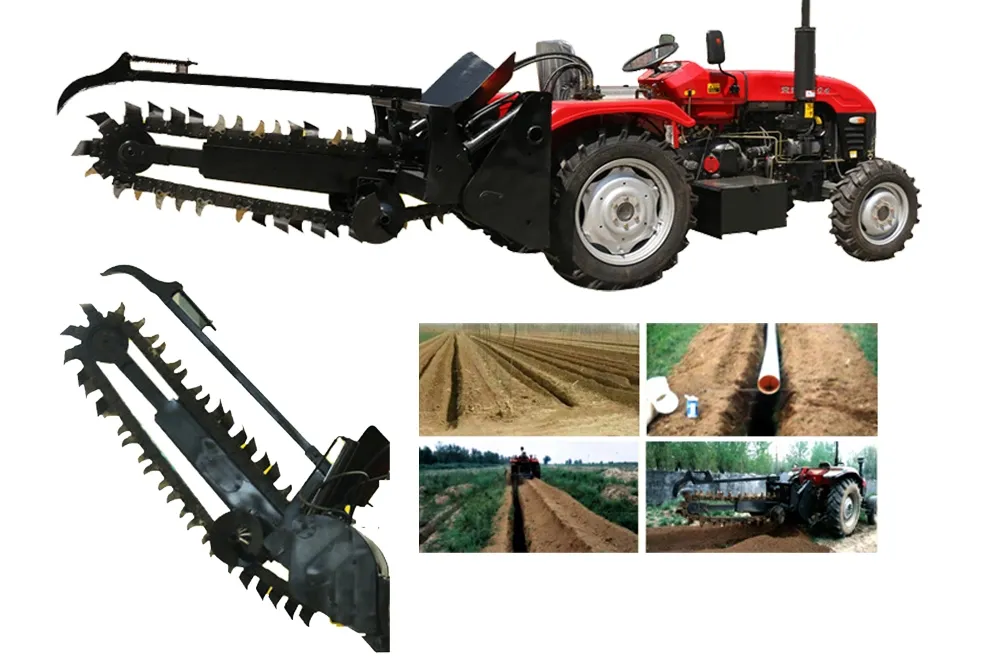
A tractor 3 point mounted chain trencher is a powerful and versatile machine used for digging trenches in various types of soil and terrain. It is designed to be attached to the rear of a tractor using a three-point hitch system, which provides stability and allows for easy transport and operation.
The primary function of a chain trencher is to excavate trenches of specific widths and depths for various purposes such as laying pipes, cables, or drainage systems. The trencher consists of a boom or frame that houses a rotating digging chain with cutting teeth. The chain is driven by a hydraulic motor, which is powered by the tractor’s power take-off (PTO) system.
The chain trencher is typically adjustable, allowing operators to set the desired trench width and depth to meet specific project requirements. It can dig trenches ranging from a few inches to several feet deep, depending on the model and capabilities of the machine.
The cutting teeth on the chain are designed to effectively penetrate and remove soil as the chain rotates. Some trenchers also have a conveyor system to transport the excavated soil away from the trench. This feature helps in maintaining a clean work area and facilitates efficient trenching operations.
Tractor 3 point mounted chain trenchers are commonly used in construction, agriculture, landscaping, and utility installation projects. They can efficiently dig long trenches in a relatively short amount of time, saving labor and increasing productivity.
-
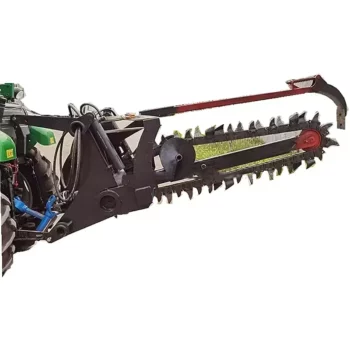
Agricultural Ditcher for Digging Ditch
-
Farm Ditching Equipment for Wheel Tractor
-
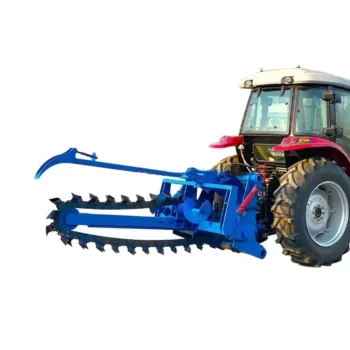
Agricultural Chain Trencher for Sale
-
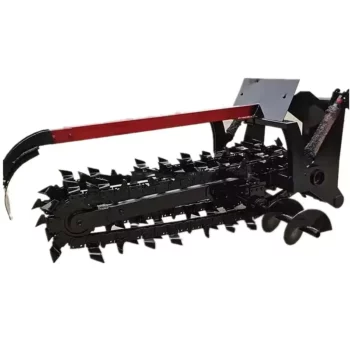
Chain Trencher Farm Ditcher for Digging Ditch
-
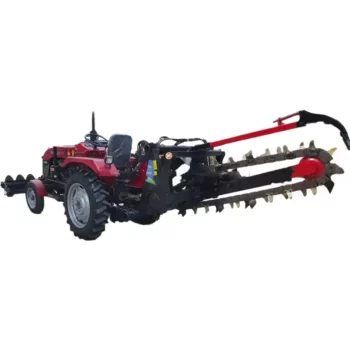
New Design Chain Trenchers for Digging Ditch
-
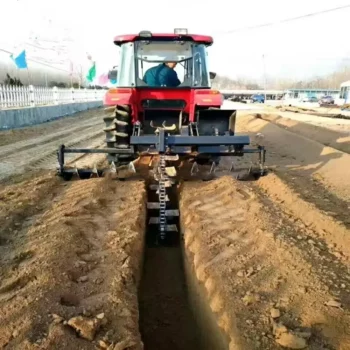
Tractor 3 Point Linkage Chain Trencher for Agricultural Trenching Operations
-
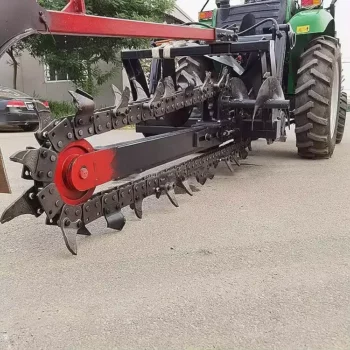
Tractor Chain Trencher for Sale Australia
-
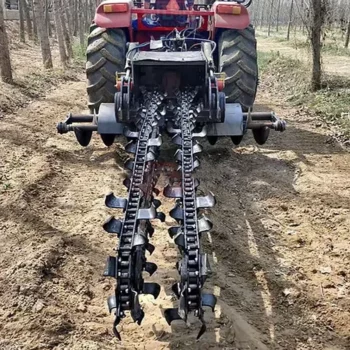
Tillage Ditch with Chain Trencher for Digging Ditch
-
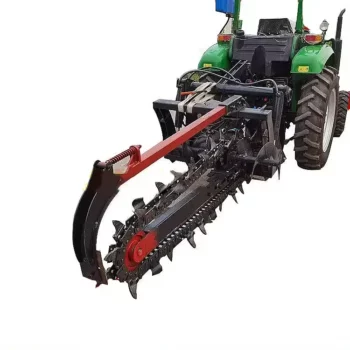
Four Wheel Tractor Drive Chain Trencher for Digging Ditch
-
Farm Tractor Trencher Digging Chain for Trenching Operations
-
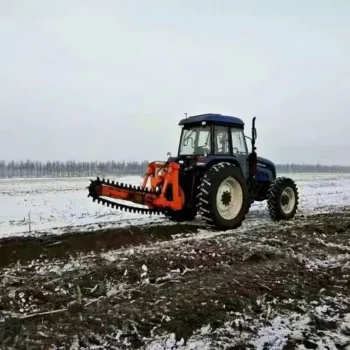
China trencher digger machine for sale
-
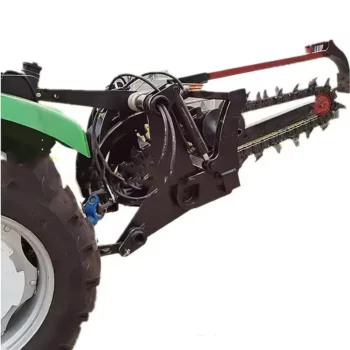
Agricultural Equipment Chain Trencher Digger
-
Farm Chain Trencher Customized Depth for Trenching Operations
-
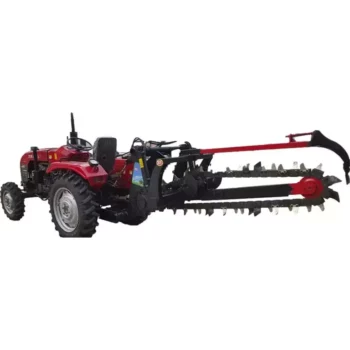
Agricultural Ditching Machinery Tractor Chain Trencher
-
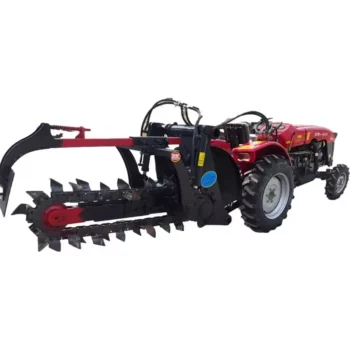
Single Chain Trencher for Tractor
-
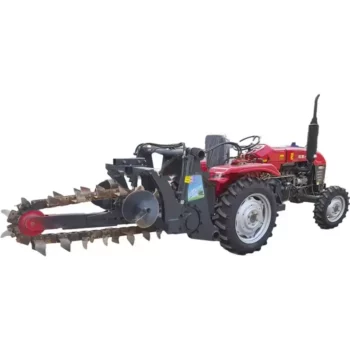
Single Chain Trencher Machine for 80hp Tractor
-
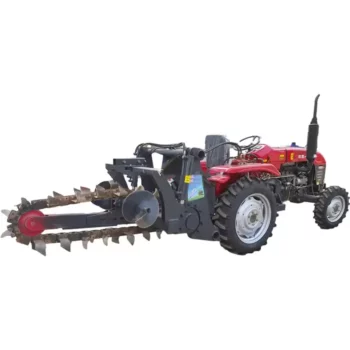
Ditch Machine Chain Trencher for Agricultural Trenching Operations
-
Ditch Depth 1.5m Single Chain Trencher for Trenching Operations
-
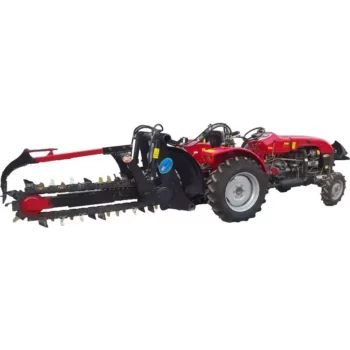
Single Chain Trencher for Field Ditching
-
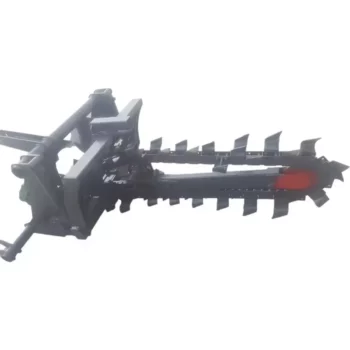
Made in China Trencher for Agricultural Ditching
-
Four wheel tractor pto trencher for agricultural
-
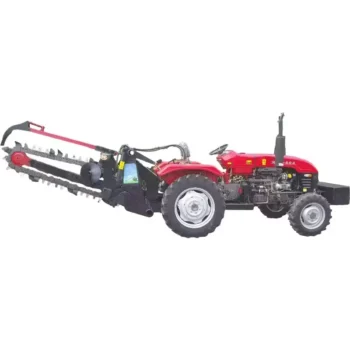
Tractor Suspension Chain Type Digging Trencher
-
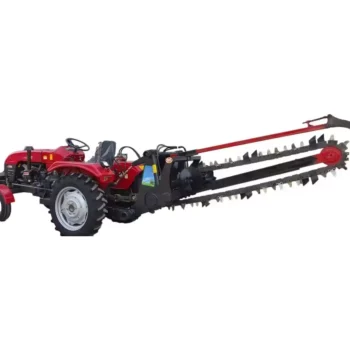
Agricultural Ditching Machinery Farm Trencher
-
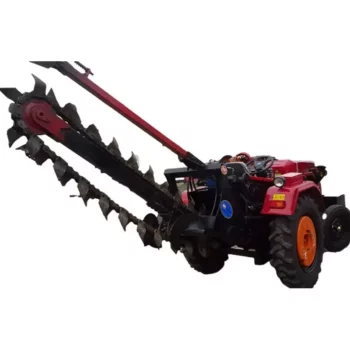
Tractor Mounted Trencher for Agricultural
-
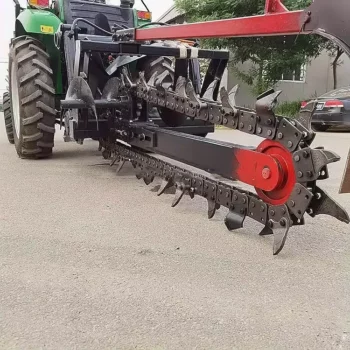
Depth 1.5m Tractor Trencher for Agricultural Trenching Operations
-
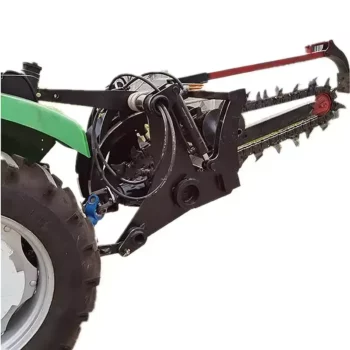
Efficient Chain Trencher for Agriculture
Key Components of Tractor PTO Driven Chain Trencher
A tractor PTO (Power Take-Off) driven chain trencher is a specialized piece of equipment designed to create trenches in the ground, primarily for laying pipes and cables or for drainage and irrigation purposes. This type of trencher is powered by a tractor’s PTO system, which transfers the tractor’s engine power to the trencher attachment. Understanding the key components of a PTO driven chain trencher can help in effectively operating, troubleshooting, and maintaining the equipment. Here are the main components:
1. PTO Shaft: Connects the tractor’s PTO to the trencher, transmitting power from the tractor’s engine to the trencher mechanism. Importance: The PTO shaft is crucial for the operation of the trencher, as it is the primary source of power.
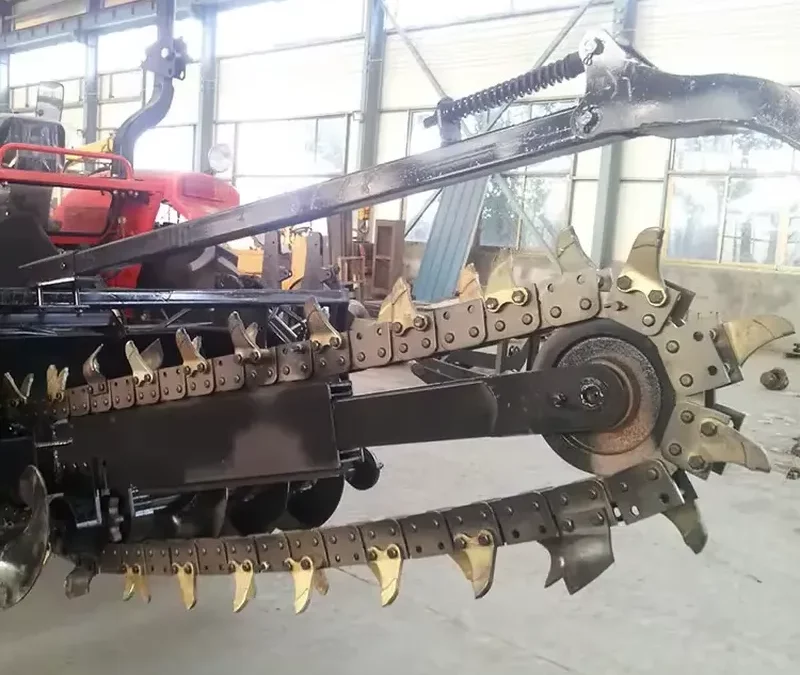
2. Chain and Chain Drive: The chain, fitted with cutting teeth, digs into the soil to create a trench. The chain drive mechanism moves the chain around a metal frame or boom. Importance: The chain and chain drive are central to the attachment’s trenching capability, determining both the efficiency and quality of the trench.
3. Trenching Boom: A metal frame that guides the chain’s path, determining the depth and direction of the trench. Importance: The boom’s length and angle are adjustable, allowing for trenches of various depths and minimizing strain on the chain.
4. Cutting Teeth: Attached to the chain, these hardened steel or carbide teeth cut through the soil (and sometimes roots or other soft obstructions). Importance: The design and material of the teeth are critical for effective cutting performance, especially in different soil conditions.
5. Discharge Auger or Conveyor: Some models include an auger or conveyor system to remove the excavated soil from the trench area, depositing it alongside the trench. Importance: This feature helps to keep the trench clean and reduces the need for additional cleanup, improving efficiency.
6. Safety Shields: Covers and shields protect the operator and bystanders from moving parts and flying debris. Importance: Essential for safety, these components help to prevent accidents and injuries during operation.
Benefits of Using the Tractor PTO Driven Chain Trencher
Using a tractor PTO (Power Take-Off) driven chain trencher offers numerous benefits for agricultural, construction, and utility projects. This equipment harnesses the power of a tractor to perform efficient and precise trenching tasks. Here are some key benefits:
(1) Increased Efficiency: A tractor PTO driven chain trencher significantly increases the efficiency of trenching tasks compared to manual methods. It can dig trenches at a much faster rate, allowing for higher productivity and reduced labor requirements. This is particularly beneficial when dealing with large-scale projects or time-sensitive operations.
(2) Versatility: Tractor PTO driven chain trenchers are highly versatile machines that can handle a wide range of soil conditions. Whether the soil is soft, compacted, or rocky, these trenchers can effectively cut through and create trenches with relative ease. This versatility allows for a broader range of applications, from utility installations to landscaping projects.
(3) Precise Trenching: These trenchers offer precise trenching capabilities, ensuring that the trenches are dug to the desired depth and width. The operator can make adjustments on the go, controlling the depth and width of the trench according to the specific project requirements. This precision helps in maintaining uniformity and consistency throughout the trenching process.
(4) Cost Savings: By using a tractor PTO driven chain trencher, you can achieve significant cost savings in labor and time. The increased efficiency and productivity of the machine reduce the need for manual labor, saving on manpower costs. Additionally, completing trenching tasks quickly allows for faster project completion, minimizing overall project costs.
(5) Flexibility and Mobility: The ability to attach the trencher to a tractor provides flexibility and mobility in trenching operations. Tractors are designed to navigate various terrains, allowing the trencher to access different areas easily. This mobility is especially advantageous in projects where trenches need to be dug in multiple locations or where access is limited.
(6) Reduced Soil Disruption: Tractor PTO driven chain trenchers minimize soil disruption compared to other trenching methods. The digging chain cuts through the ground smoothly, causing less disturbance to the surrounding soil. This is particularly beneficial in landscaping projects or areas where soil preservation is crucial.
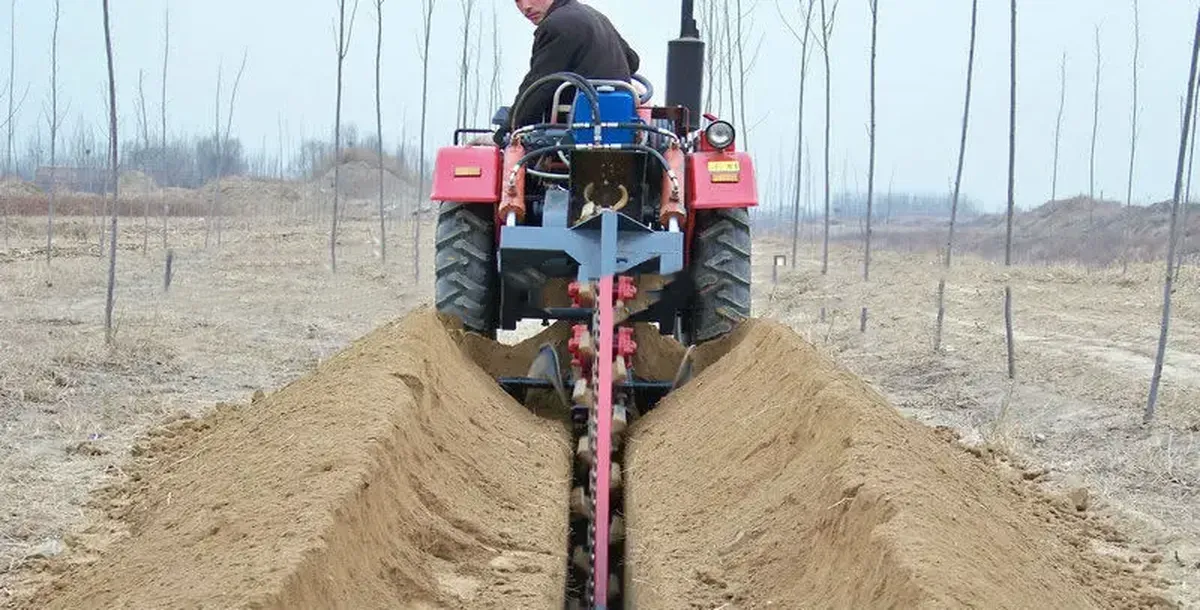
How Does the Tractor PTO Driven Chain Trencher Work?
The tractor PTO (Power Take-Off) driven chain trencher operates by harnessing the mechanical power from a tractor’s engine, which is transferred through the tractor’s PTO shaft to the trencher attachment. This process allows the trencher to perform its primary function: digging trenches in the soil for various purposes such as laying pipes, cables, or for drainage and irrigation systems. Here’s a step-by-step explanation of how it works:
1. Power Transfer
- Initial Setup: The trencher attachment is securely mounted to the tractor using a three-point hitch system, a common method for attaching implements to tractors.
- Engagement: The tractor’s PTO shaft is connected to the trencher’s drive system. When the tractor’s engine is started and the PTO is engaged, power is transferred from the engine to the trencher.
2. Chain and Sprocket Mechanism
- Activation: The power transmitted through the PTO activates the trencher’s chain drive system. This system consists of a series of sprockets or gears that rotate, moving the chain that is equipped with cutting teeth.
- Trench Digging: As the chain circulates around a metal frame or boom, the cutting teeth slice into the soil, excavating a trench. The design of the teeth and their arrangement on the chain are critical for efficiently cutting through the soil and any roots or other soft obstructions encountered.
3. Depth and Width Adjustment
- Customization: Before operation, the operator can adjust the trencher’s settings to achieve the desired trench depth and width. This is usually done through manual levers or hydraulic controls, depending on the trencher’s design.
- Consistent Trenching: The boom length and the positioning of the chain determine the trench’s depth, while the chain width affects the trench’s width. These adjustments allow for consistent and precise trench dimensions.
4. Soil Displacement
- Removal of Excavated Soil: As the trench is dug, the excavated soil is typically thrown to one side of the trench by the action of the chain and teeth. Some trenchers may also be equipped with a conveyor or auger system to more efficiently move the displaced soil away from the trench.
5. Trench Completion and Cleanup
- Finishing the Trench: The tractor moves forward at a steady pace, allowing the trencher to create a continuous trench. The speed at which the tractor moves can affect the quality of the trench and the rate of trenching.
- Post-Operation: After the trench has been dug, the soil that was displaced can be used to fill the trench back in after the necessary cables, pipes, or other utilities have been installed.
Applications of the Tractor PTO Driven Chain Trencher
The tractor PTO (Power Take-Off) driven chain trencher is a versatile tool with a wide range of applications across different industries, primarily due to its efficiency in creating narrow trenches in various soil conditions. Here are some of the primary applications:
1. Utility Installations: One of the primary applications of the trencher is for installing underground utilities such as water lines, sewer lines, electrical cables, and telecommunications cables. The trencher can quickly and efficiently dig trenches of the required depth and width, accommodating the placement of utility infrastructure.
2. Agriculture and Irrigation: In agriculture, the trencher is used for tasks like installing irrigation systems, drainage systems, and underground pipe networks. It allows for the creation of trenches in fields to lay irrigation pipes or drainage tiles, ensuring efficient water management and crop health.
3. Landscaping: Trenchers are valuable tools in landscaping projects. They are used to create trenches for installing landscape lighting, burying sprinkler system pipes, or laying underground wiring for outdoor features like fountains or pathways. Trenchers help streamline these installations and minimize disruption to the existing landscape.

4. Fiber Optic Cable Installation: Trenchers are commonly employed in the installation of underground fiber optic cables for telecommunications and internet connectivity. The trencher efficiently digs trenches for laying fiber optic cables, ensuring secure and reliable communication networks.
5. Construction and Civil Engineering: Trenchers are used in construction and civil engineering projects for various purposes. They help with creating trenches for foundation footings, utility lines, or drainage systems. Trenchers are also used in road construction projects to lay underground infrastructure like water mains and sewer lines.
6. Pipeline and Gas Line Installation: Trenchers are frequently utilized in the installation of pipelines and gas lines. They can dig trenches of the required depth and width to accommodate the placement of these crucial infrastructure components.
Operation Precautions of the Tractor PTO Driven Chain Trencher
Operating a tractor PTO driven chain trencher involves several precautions to ensure safety and efficiency. These machines, while highly effective for trenching, also pose risks if not handled correctly. Here are essential operation precautions:
(1) Read the Manual: Familiarize with the Equipment: Before operation, thoroughly read the manual to understand the specific features, capabilities, and safety instructions of your trencher model.
(2) Inspection and Maintenance: Inspect the trencher and tractor for any signs of wear, damage, or leaks. Ensure that all components, especially the PTO shaft, chains, and cutting teeth, are in good condition. Follow a regular maintenance schedule to keep the trencher in optimal condition, which includes checking the hydraulic systems, sharpening or replacing the cutting teeth, and lubricating moving parts.
(3) Clear the Area: Clear the trenching path of rocks, large roots, and other debris that could obstruct the trencher or pose a safety risk. Always mark the location of underground utilities before trenching to avoid damaging them, which could lead to dangerous situations and costly repairs.
(4) Operational Safety: Engage PTO at Low RPM: When engaging the PTO, ensure the tractor’s engine is at a low RPM to prevent sudden jolts or equipment damage. Stable and Even Ground: Operate the trencher on stable and even ground to prevent tipping or loss of control. Avoid trenching on steep slopes. Keep Bystanders Away: Ensure that all bystanders are at a safe distance from the operating area to avoid accidents.
(5) Use Correct Settings and Speed: Adjust the trenching depth and speed according to the soil conditions. Tough or rocky soil may require slower speeds to avoid damaging the equipment. Maintain a steady, appropriate speed that allows for efficient trenching while not overstressing the tractor or trencher.
(6) Avoid Overloading: Pay attention to signs of overloading the trencher or tractor, such as excessive vibration, slowing down, or difficulty in trenching. Adjust your approach if necessary to prevent damage.

Single Chain Trencher Vs Double Chain Trencher
When it comes to trenching equipment, the choice between a single chain trencher and a double chain trencher can significantly impact the efficiency, quality, and suitability of the work being performed. Both types have their unique advantages and are designed for specific applications. Understanding the differences between them is key to selecting the right trencher for your needs.
Single Chain Trencher
Design and Operation:
- A single chain trencher uses one chain equipped with cutting teeth to dig into the soil and create a trench.
- The chain moves around a metal boom that determines the trench’s depth.
Advantages:
- Simplicity and Cost-Effectiveness: Generally simpler in design and often less expensive than double chain models, making them a good choice for smaller projects or operations with limited budgets.
- Versatility: Can be effectively used in a variety of soil conditions, from soft to moderately hard.
- Ease of Maintenance: With only one chain to maintain, the upkeep is straightforward, reducing maintenance time and costs.
Limitations:
- Depth and Width Restrictions: The size and depth of trenches that can be dug by single chain trenchers may be limited compared to double chain trenchers, potentially making them unsuitable for projects requiring larger or deeper trenches.
- Less Efficient in Hard or Rocky Soil: While capable in various soil types, they may struggle with very hard or rocky soil compared to double chain models.
Double Chain Trencher
Design and Operation:
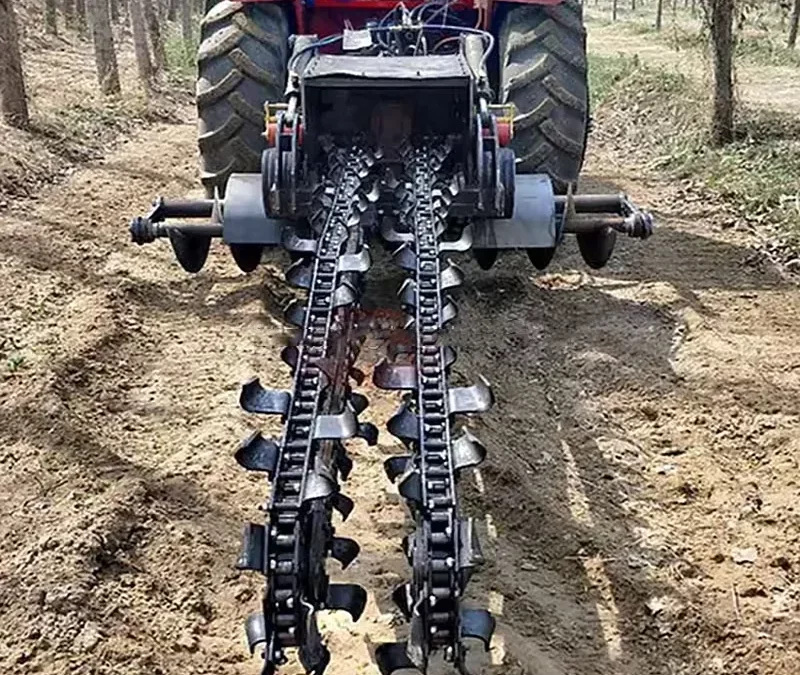
- Double chain trenchers feature two chains that run parallel to each other, each equipped with cutting teeth. This design allows for the excavation of wider and sometimes deeper trenches.
- These models are often more robust and can include more powerful features for challenging conditions.
Advantages:
- Increased Efficiency in Tough Conditions: The dual-chain setup excels in hard, rocky, or frozen soils where single chain trenchers might falter.
- Capability for Wider and Deeper Trenches: The design allows for creating larger trenches, suitable for projects requiring substantial trench dimensions.
- Enhanced Stability: The double chain configuration can provide more stability during operation, especially in challenging terrains or when digging deep trenches.
Limitations:
- Higher Cost: Both in terms of initial investment and operational costs, double chain trenchers can be more expensive than their single chain counterparts.
- Complexity and Maintenance: With two chains, the complexity of the machine increases, as does the need for regular maintenance and potential repairs.
- Less Maneuverable: Due to their size and power, double chain trenchers might not be as maneuverable in tight spaces as single chain trenchers.
 |
|
| Single Chain Trencher | Double Chain Trencher |
Why Choose Us?
As a professional manufacturer, HZPT has obtained numerous international certifications, demonstrating our commitment to quality and customer satisfaction. We offer customized services to meet specific customer needs and have state-of-the-art production facilities to ensure the manufacture of high-quality products. We are also committed to providing excellent after-sales services, including technical support and parts supply, to ensure the longevity and optimal performance of our products. Trust HZPT for all your agricultural machinery needs!
1. Professional and Certified: At HZPT, we are committed to delivering professional and certified products. Our team of experts is highly trained and experienced in the field of agricultural machinery, ensuring that all our products meet international standards of quality and safety.
2. Customized Services: Understanding the diverse needs of our clients, we offer customized services. We can tailor our products to meet your specific requirements, ensuring that you get a product that fits your needs perfectly.
3. Advanced Production Facilities: Our state-of-the-art production facilities are equipped with advanced machinery and technology. This enables us to produce high-quality products consistently and meet the demands of our customers promptly.
4. Excellent After-Sales Services: We believe in building long-lasting relationships with our customers. Therefore, we offer excellent after-sales services, including professional technical support, prompt response to queries, and efficient problem resolution.
Last Update Knowledge & News
No Results Found
The page you requested could not be found. Try refining your search, or use the navigation above to locate the post.
Edited by Yjx