
03B-1 Standard Bore Sprocket
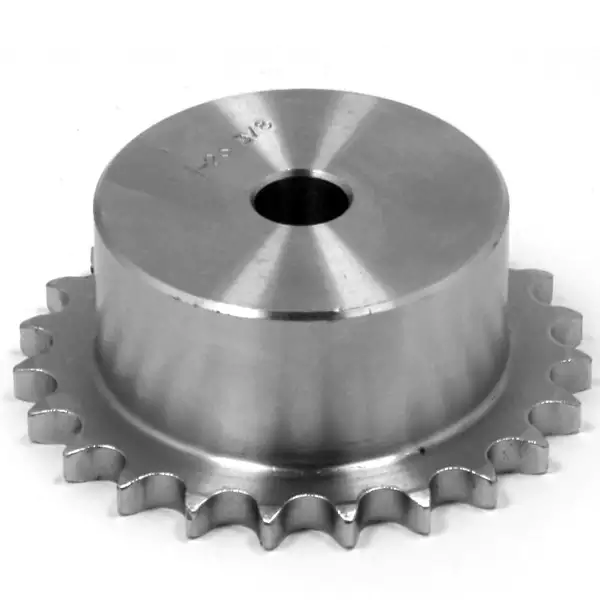
03B-1 Standard Bore Sprocket
A standard bore sprocket is a mechanical component used to transmit rotary motion between two shafts where gears are not suitable due to speed, power, or space constraints. It is a wheel with teeth around its circumference that meshes with a chain or toothed belt, thereby transferring torque and power.
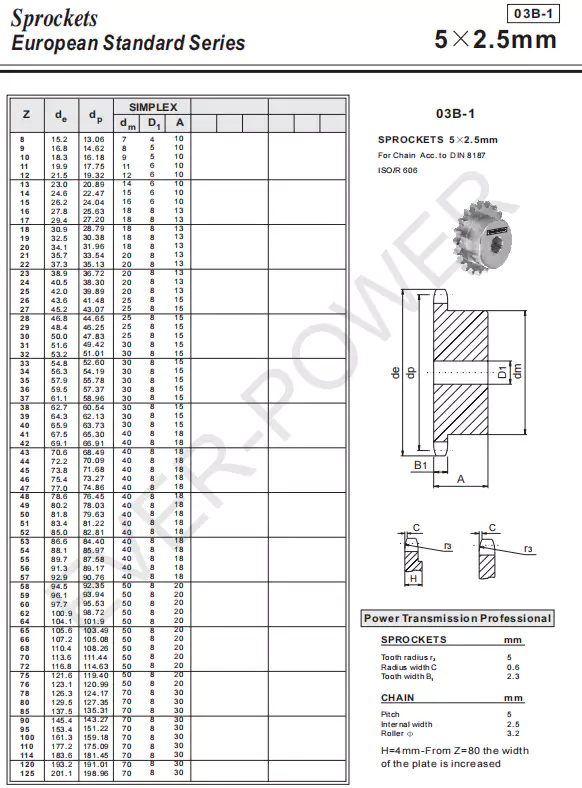
Basic Structure and Customization
Standard bore sprockets consist of a hub with a center bore, a set of teeth around the circumference, and sometimes a keyway or set screw to secure it to the shaft. When customizing a sprocket, several factors need to be determined, including:
- Material: Standard bore sprockets can be made from high carbon steel, alloy steel, or stainless steel depending on the application requirements.
- Tooth Profile: Standard sprockets can have different tooth profiles depending on the chain they need to mesh with.
- Number of Teeth: The number of teeth on the sprocket determines the gear ratio of the system.
- Dimensions: Sprockets come in different sizes and dimensions to fit the application requirements.
- Center Bore: The center bore of the sprocket needs to match the shaft size it will be mounted on.
- Keyway: If necessary, a keyway can be added to secure the sprocket to the shaft.
- Surface Treatment: Sprockets can be treated with surface coatings to enhance their corrosion resistance and durability.
Materials and Manufacturing Process
Our sprockets are made from high-quality materials such as high carbon steel, alloy steel, or stainless steel, depending on the application. The manufacturing process involves:
- Material Selection: The appropriate material is selected based on the application requirements.
- Cutting and Stamping: The sprocket is cut and stamped using precision tools to achieve the correct dimensions and tooth profile.
- Machining: The sprocket is machined to produce the final shape and dimensions.
- Heat Treatment: The sprocket is heat treated to increase its hardness and durability.
- Surface Hardening: The sprocket can be surface hardened to improve its wear resistance.
- Surface Treatment: The sprocket is treated with surface coatings to enhance its corrosion resistance.
- Quality Control: Each sprocket is tested to ensure it meets the required specifications.
Applications
Standard bore sprockets are used in a variety of applications, including:
- Heavy Machinery and Equipment: Sprockets are used in heavy machinery and equipment such as excavators, cranes, and bulldozers.
- Food Processing and Packaging: Sprockets are used in food processing and packaging equipment where hygiene and cleanliness are critical.
- Chemical and Pharmaceutical: Sprockets are used in chemical and pharmaceutical equipment where resistance to corrosion and harsh chemicals is necessary.
- Assembly Lines: Sprockets are used in assembly lines to transmit power between machines and conveyors.
- Logistics and Warehousing: Sprockets are used in conveyor systems and other equipment in logistics and warehousing applications.
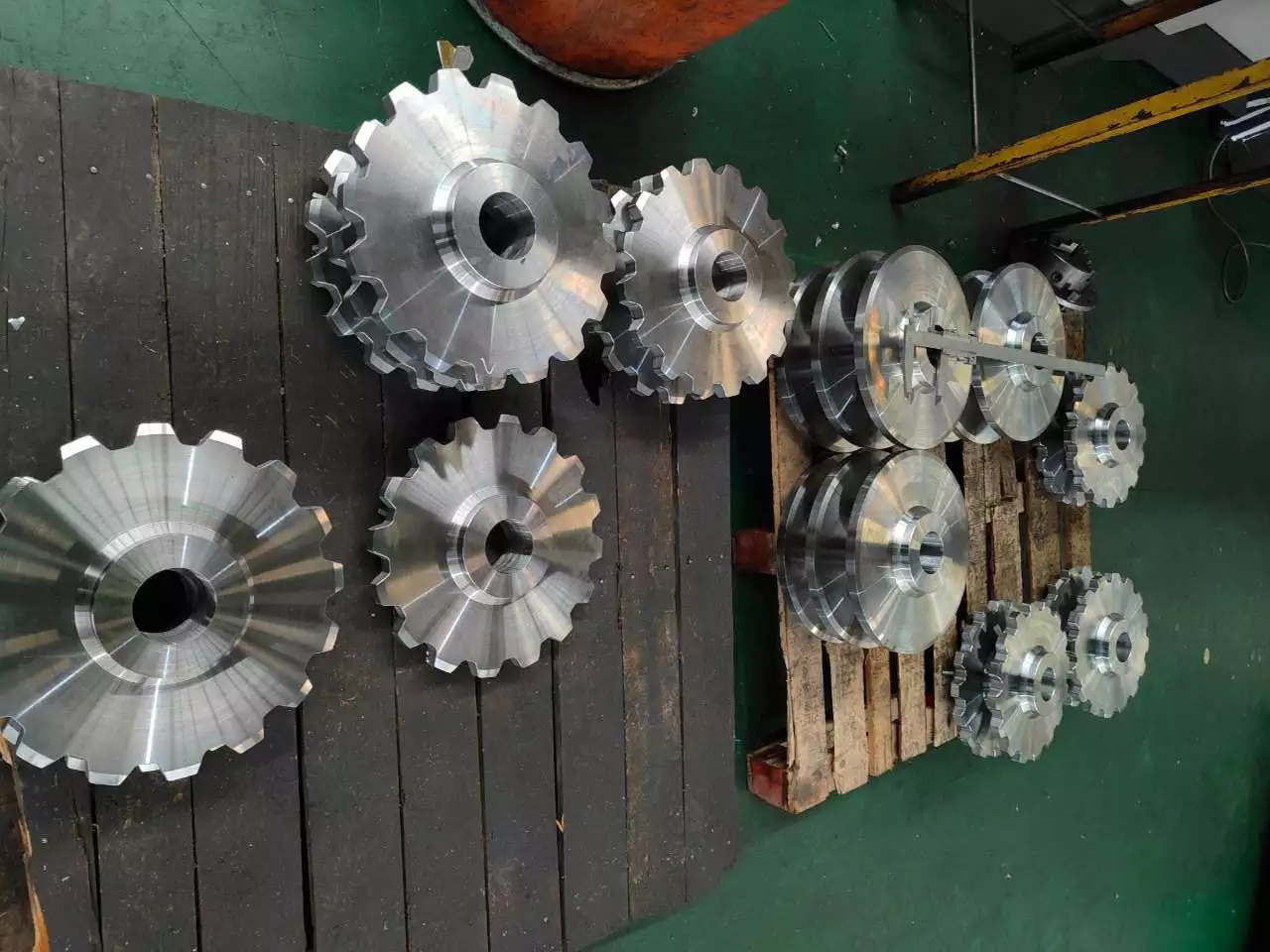
Maintenance and Troubleshooting
Proper maintenance and troubleshooting are essential to ensure the longevity and reliability of any sprocket system. Some important maintenance practices include:
- Daily Inspection: Inspect the sprocket and chain for any signs of wear and damage.
- Cleaning: Clean the sprocket and chain regularly to prevent the buildup of dirt and debris.
- Lubrication: Apply lubricant to the chain and sprocket to prevent wear and tear.
- Adjustment and Calibration: Adjust the tension of the chain and calibrate the sprocket to ensure proper alignment and engagement.
Some common problems that can occur in sprocket systems include:
- Skipping Teeth: This can be caused by worn or damaged teeth, loose chains, or improper tension.
- Fracture: This can occur due to fatigue or overload.
- Wear: This can occur due to normal use and can lead to poor performance and premature failure.
- Noise: This can be caused by worn or damaged teeth or loose chains.
- Chain Disengagement: This can be caused by loose chains or worn or damaged teeth.
Each of these problems can be addressed through proper troubleshooting and maintenance practices.
Other Types of Sprockets
In addition to standard bore sprockets, we also offer other types of sprockets, including:
- Platewheel Sprocket: These are sprockets with a flat, plate-like shape.
- Idler Sprocket: These are sprockets that are not connected to a power source and are used to guide the chain or belt.
- QD Sprocket: These are sprockets with a quick disconnect mechanism for easy installation and removal.
- Taper Lock Sprocket: These are sprockets with a tapered bore that can be locked in place with a bushing.
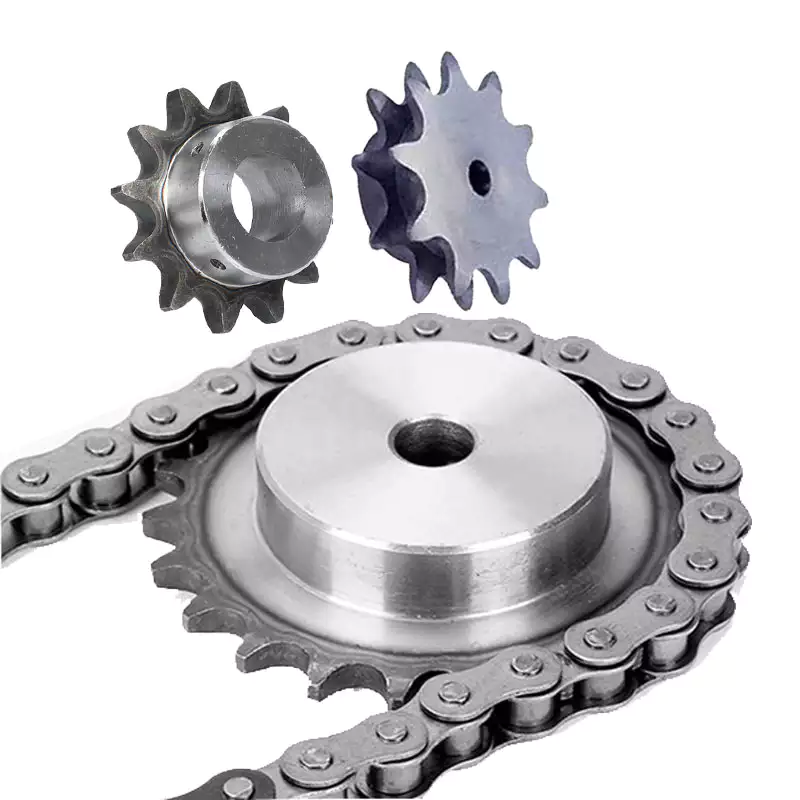
Our sprockets are designed to work seamlessly with our range of chains to provide reliable and efficient power transmission solutions.


We promise will offer the best price by the high quality in china! We also accept special order about the products. If you are interested in our products. Please do not hesitate to let us know.We are pleased to give you the detailed information.We promise that our products would be safety and were in high quality and reasonable price. If you are interested in our products, please contact us asap.We are sincerely looking for your cooperation.
Most of our products are exported to Europe or Americas, both standard and nonstandard products available. We can produce as per your drawing or sample. Material can be standard or as per your special request. If you choose us, you choose reliable.
Industries We Service
