
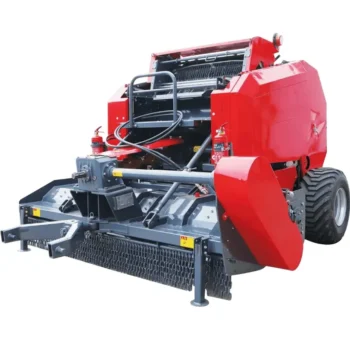
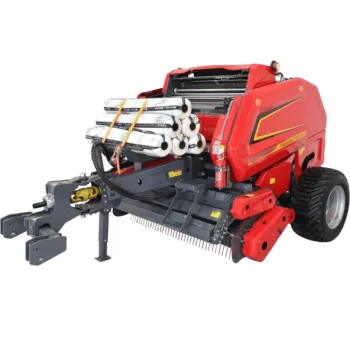
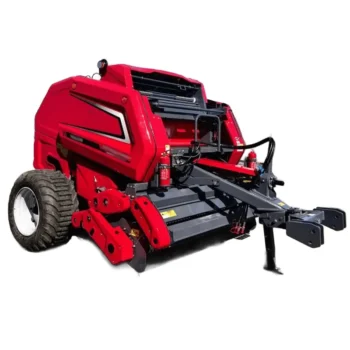
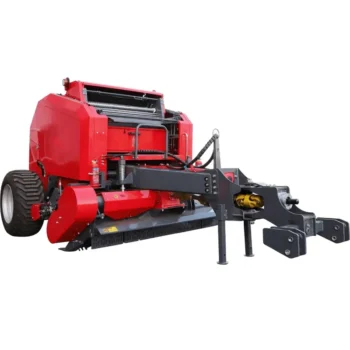
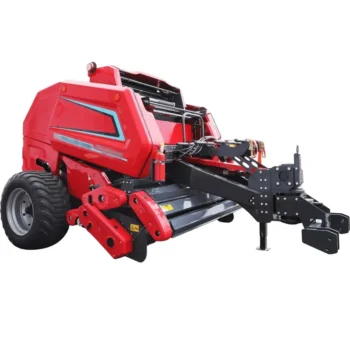
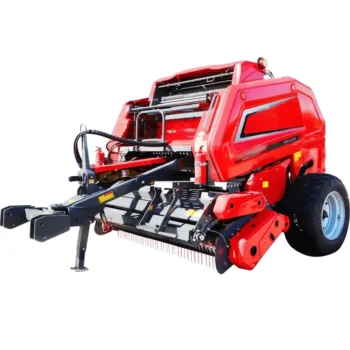
9YG-1.0 Round Baler for Tractor
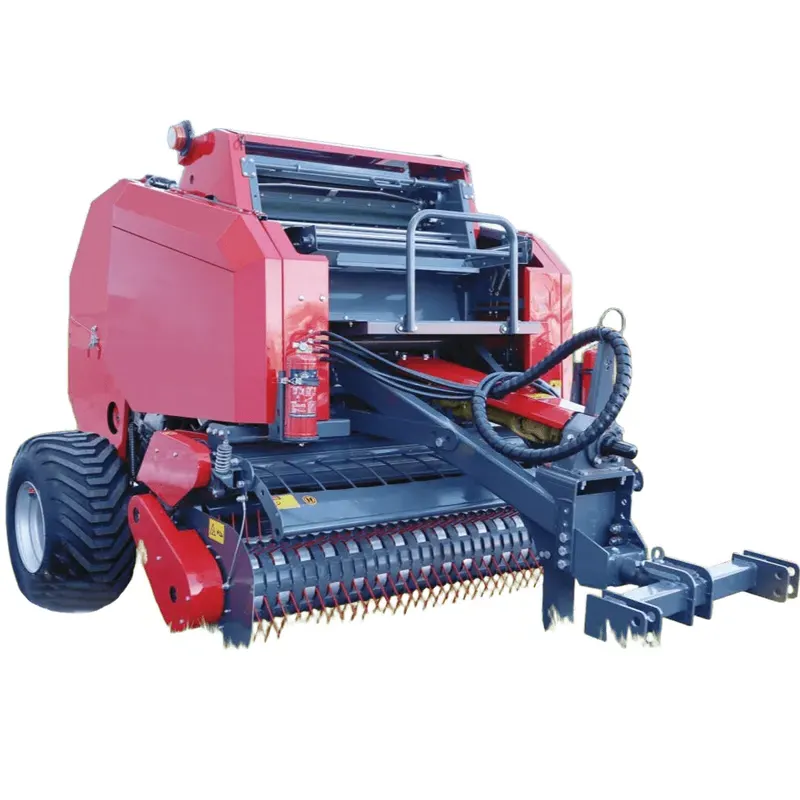
Discover the efficient 9YG-1.0 round baler for tractor, tailored for small-scale farming operations with low-horsepower equipment. This compact machine produces dense bales weighing 200-400 pounds, with a 1000mm pickup width and bale dimensions of 700mm x 800mm, ensuring optimal performance for crops like corn, rice, wheat, and soybeans. Achieve productivity rates of 20-40 bales per hour, backed by durable construction and automatic net wrapping for reliable results. Ideal for easy transportation and cost savings on your farm.
9YG-1.0 Round Baler Overview
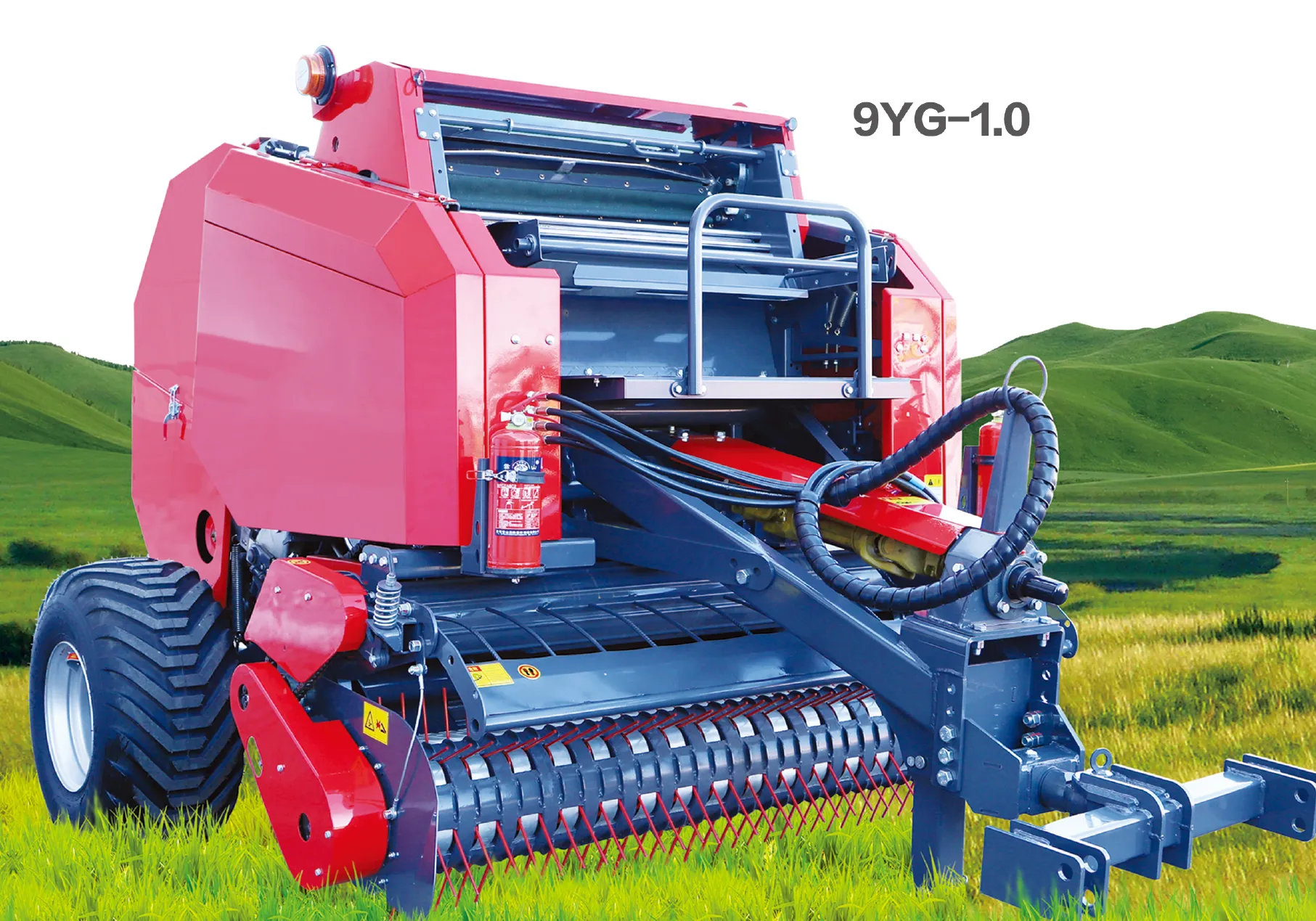
The 9YG-1.0 round baler represents a practical advancement in agricultural machinery, specifically engineered to meet the needs of farmers operating with smaller tractors in diverse field conditions. This tractor round baler excels in collecting and compressing crop residues such as straw from corn, rice, wheat, soybeans, and various grasses into compact, manageable bales. Its design emphasizes simplicity and reliability, allowing operators to handle baling tasks without requiring excessive power or complex setups. By integrating a bullet-tooth pickup system and roller compression mechanism, the machine ensures consistent bale formation, reducing waste and enhancing storage efficiency. This round hay baler machine adapts to uneven terrain, minimizing downtime during harvest seasons and supporting sustainable practices by facilitating better feed preservation for livestock.
The 9YG-1.0 round hay baler stands out for its compatibility with tractors rated between 18-30 kW, making it accessible for smallholder operations where larger equipment might be impractical. The baler's automatic net wrapping feature secures bales quickly, preventing unraveling during transport or storage. Users often note the machine's ability to produce bales with densities ranging from 115-150 kg/m³, which optimizes space in barns or trailers. Furthermore, its trailed connection method allows for easy maneuvering, even in tight spaces, while the overall weight of 980 kg ensures stability without overburdening the towing vehicle. This round baler machine not only streamlines the baling process but also contributes to cost reductions by lowering labor requirements and fuel consumption, positioning it as a versatile tool in modern farm management.
Product Specifications
| No. | Item | Unit | Specification |
|---|---|---|---|
| 1 | Model Name | / | 9YG-1.0 Round Baler |
| 2 | Hitching Method | / | Towed |
| 3 | Pickup Width | mm | 1900 |
| 4 | Pickup Structure Type | / | Tine type |
| 5 | Feeding Mechanism Type | / | Fork and Roller Type |
| 6 | Compression Baling Mechanism Type | / | Roller Type |
| 7 | Compression Width | mm | 1000 |
| 8 | Compression Diameter | mm | Φ 1000 |
| 9 | Number of Compression Working Parts | Units | 16 (Roller) |
| 10 | Compression Roller Diameter | mm | Φ 222 |
| 11 | Bale Tying Method | / | Net Wrap |
| 12 | Matching Power | kW | 48–80 |
| 13 | Structural Mass | kg | 2640 |
| 14 | Power Output Shaft Speed | r/min | 720 |
| 15 | Overall Dimensions (L × W × H) (Working State) | mm | 3750 × 2300 × 2020 |
| 16 | Bale Density Control | / | Sensor Control |
| 17 | Bale Dimensions (Diameter × Width) | mm | Φ 1100 × 1000 |
| 18 | Bale Density | kg/m³ | 115–200 |
| 19 | Productivity | Bales/h | 40–100 |
| 20 | Wheelbase | mm | 2045 |
| 21 | Working Speed | km/h | 5–20 |
| 22 | Net Wrap Specification (L × W) | m | 2000 × 1.0 /bale |
9YG-1.0 Hay Round Baler Highlights
- Compatibility with Small-Horsepower Tractors
This baler is engineered specifically for tractors with lower power outputs, ensuring seamless integration in operations where larger machinery would be inefficient or impractical. Its design allows farmers to utilize existing equipment without the need for upgrades, thereby reducing overall costs and enhancing accessibility for small-scale agricultural enterprises across various terrains. - Convenient Bale Weight Range
Producing bales between 200 and 400 kilograms, the 9YG-1.0 round balers facilitate straightforward handling and transportation, minimizing the physical effort required during loading and unloading. This weight specification supports efficient logistics in rural settings, where road conditions may vary, and enables quicker movement from fields to storage facilities or markets without specialized vehicles. - Versatile Application for Multiple Crops
Primarily intended for harvesting straw and grass from crops including corn, rice, wheat, and soybeans, the baler efficiently collects and bundles residues into compact forms suitable for feed, bedding, or biofuel purposes. Operators benefit from its adaptability to different harvest volumes and field conditions, promoting sustainable practices by repurposing agricultural byproducts that might otherwise be discarded. - Advanced Axial-Flow Semi-Forced Feeding Mechanism
Incorporating an axial-flow semi-forced feeding system without cams or guard rings, this mechanism streamlines the intake process by guiding materials directly into the compression chamber. This approach eliminates common bottlenecks associated with older designs, allowing for smoother operation and consistent performance even in dense or uneven crop distributions. - Lower Power Consumption and Enhanced Feeding Capacity
Compared to conventional systems, the innovative feeding mechanism decreases energy requirements while simultaneously increasing the volume of material processed per cycle, leading to substantial savings in fuel and operational time. Farmers report noticeable improvements in daily output, as the reduced power draw extends tractor runtime and lowers maintenance needs over extended use periods. - Minimized Blockage Risks and Doubled Efficiency
By significantly lowering the likelihood of clogs or jams through its refined design, the baler achieves nearly double the operational efficiency of traditional models, enabling continuous work without frequent interruptions. This reliability is particularly valuable during peak harvest seasons, where downtime can impact yield preservation and overall farm productivity. - Exclusive Intellectual Property Protection
Developed independently by the manufacturing team, this baler features proprietary technology protected by intellectual property rights, assuring users of unique advancements not available in competing products. This ownership underscores the company's commitment to innovation, providing assurance of quality and ongoing support for enhancements based on field feedback.
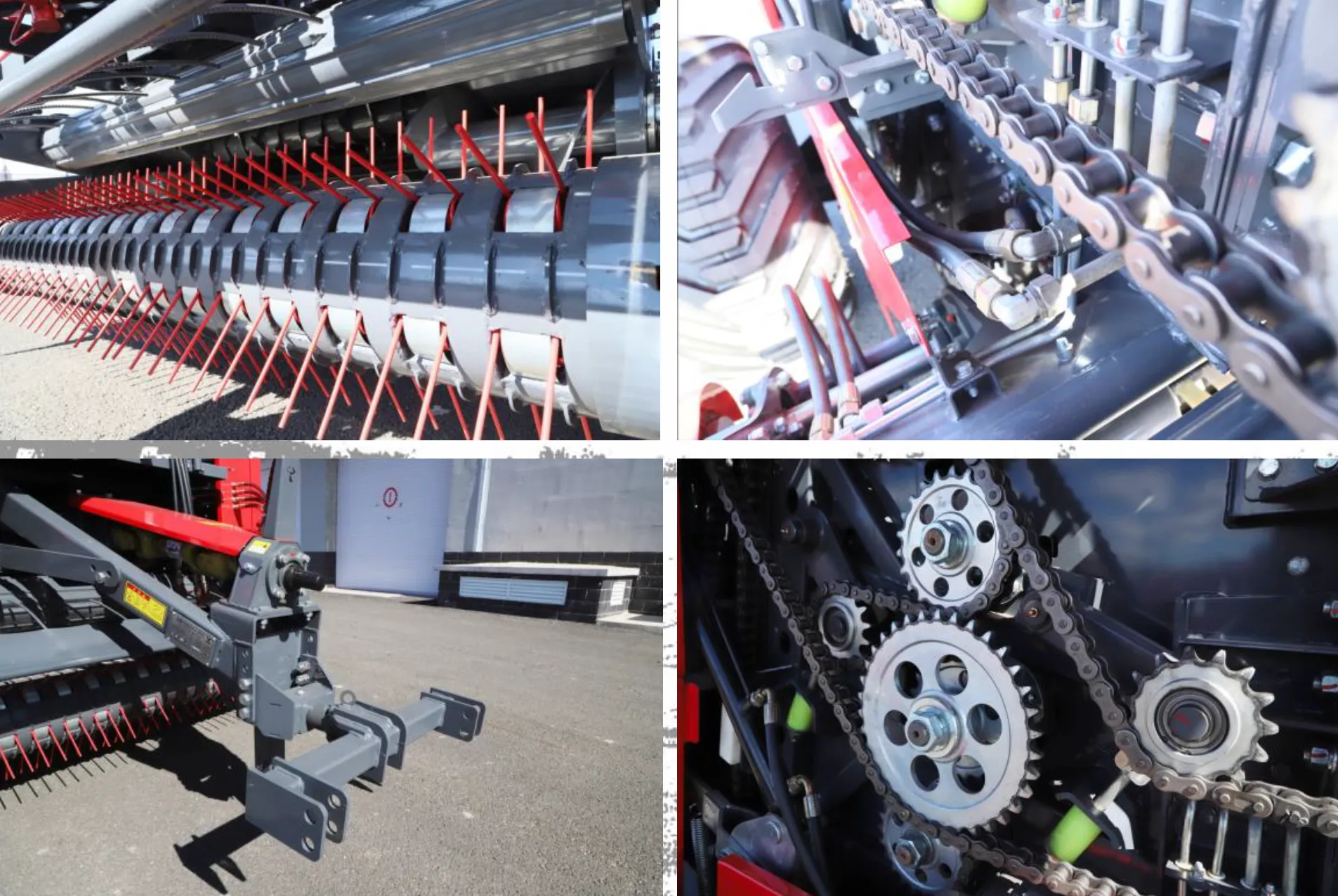
Advantages of the 9YG-1.0 Round Hay Baler
1. Versatility Across Crop Varieties
The 9YG-1.0 round hay baler stands out for its capacity to process residues from a wide array of crops, such as corn stalks, rice straw, wheat chaff, and soybean remnants, without the need for specialized adjustments. This broad compatibility enables farmers managing mixed plantings to rely on a single unit, eliminating the expense of maintaining separate equipment for each harvest type. As a result, operational workflows become more straightforward, with less time spent switching machines or training staff, ultimately leading to smoother seasonal transitions and better resource allocation in diverse agricultural settings.
2. Enhanced Productivity Levels
Capable of generating 20 to 40 bales every hour, this baler accelerates fieldwork considerably, allowing operators to cover larger areas in shorter periods compared to manual or less efficient methods. Such output frees up valuable hours for essential tasks like planting, irrigation, or equipment upkeep, which can boost overall farm yields. In practice, this means harvesting windows are maximized, particularly during tight schedules dictated by weather patterns, helping to secure higher quality forage before spoilage sets in.
3. Simplified Transportation and Storage
With bales measuring 700 by 800 millimeters and weighing between 200 and 400 pounds, the 9YG-1.0 produces units that are manageable for loading onto standard trailers or stacking in barns without heavy lifting gear. This design reduces the risk of worker strain or accidents during handling, while optimizing space in confined storage areas. When contrasted with bulkier alternatives, it proves especially useful for smaller properties or regions with limited infrastructure, where efficient space use directly translates to lower logistical challenges and preserved crop integrity over time.
4. Cost Savings Through Efficient Power Use
Requiring only 18 to 30 kilowatts from compatible tractors, the baler minimizes fuel demands and extends the lifespan of towing vehicles by avoiding excessive strain. This compatibility with modest-powered tractors makes it accessible for budget-conscious operations, cutting down on both immediate running costs and long-term maintenance bills. Operators often highlight how this efficiency contributes to sustainable practices, as reduced energy input aligns with efforts to lower environmental footprints in farming.
5. Reliable Automatic Binding System
The integrated net-wrapping mechanism ensures each bale is firmly secured with minimal material overuse, thanks to precise application that avoids gaps or excess. This feature not only curtails waste from loose or damaged bales but also streamlines the process, requiring less hands-on intervention during runs. Feedback from users indicates notable reductions in net expenses over seasons, bolstering profit margins by preventing losses that could occur from improper bundling in traditional setups.
6. Adaptable Operating Speed for Field Conditions
Running at 2 to 5 kilometers per hour, the baler strikes a balance between careful material collection and swift progress, adapting seamlessly to uneven ground or varying crop densities without sacrificing bale uniformity. In areas prone to sudden weather shifts, this pace allows for timely completion of baling sessions, safeguarding the nutritional value of hay against rain-induced degradation. Such adaptability enhances reliability in real-world scenarios, where maintaining quality amid unpredictable elements is key to successful forage management.
How Does PTO Driven Round Baler Work
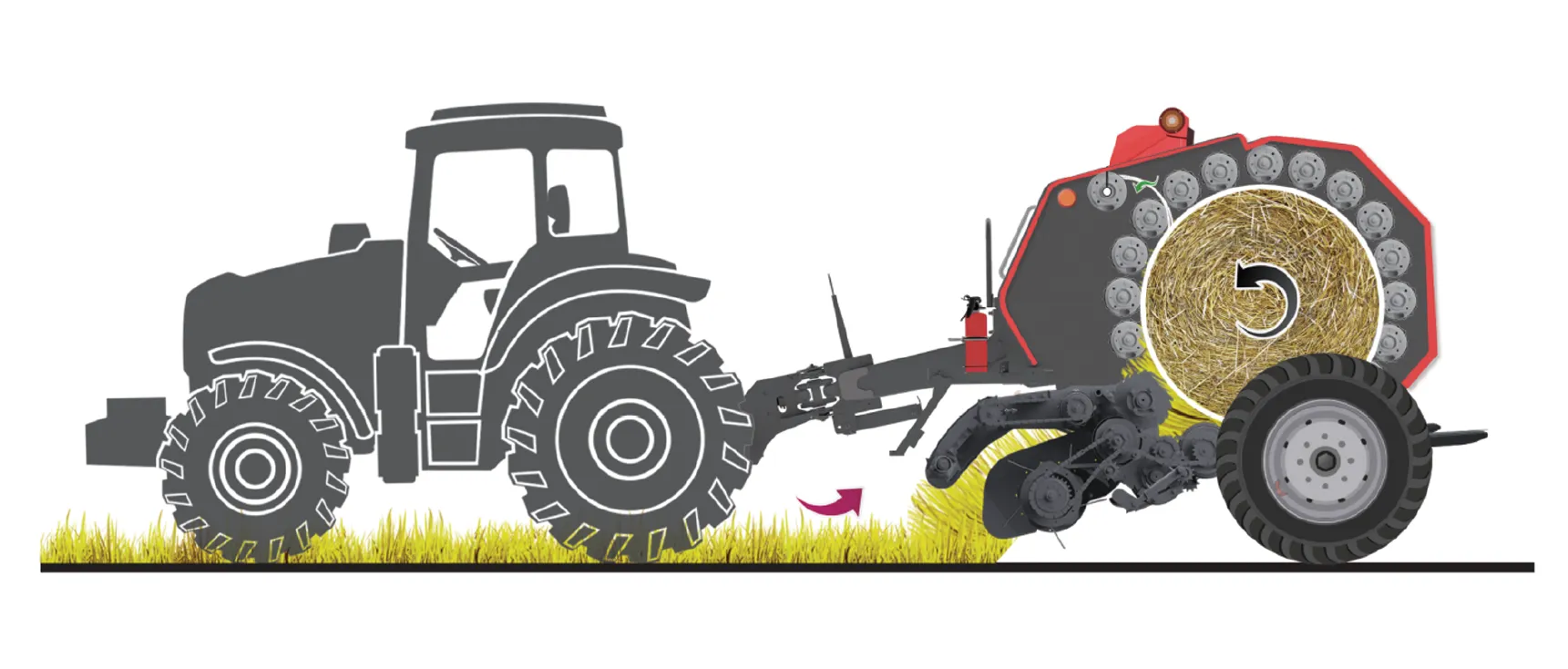
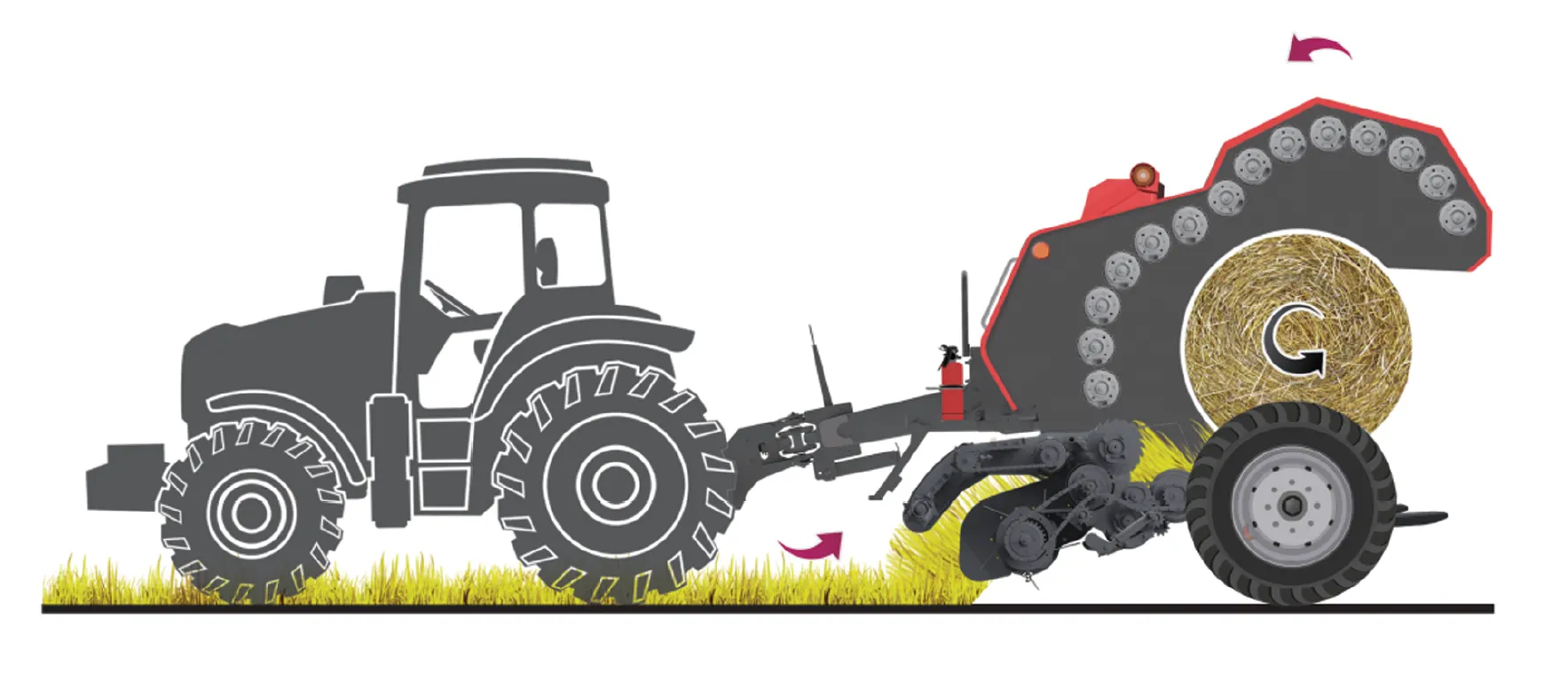
A PTO-driven round baler, such as the 9YG-1.0 model, operates through a series of mechanical stages powered by the tractor's power take-off shaft, which transfers rotational energy to the machine. This setup allows the baler to function efficiently in fields, transforming loose crop residues into compact, cylindrical bales for easier handling and storage. The process relies on coordinated components that work in sequence to collect, compress, and secure the material, minimizing manual input while maximizing output during harvest periods.
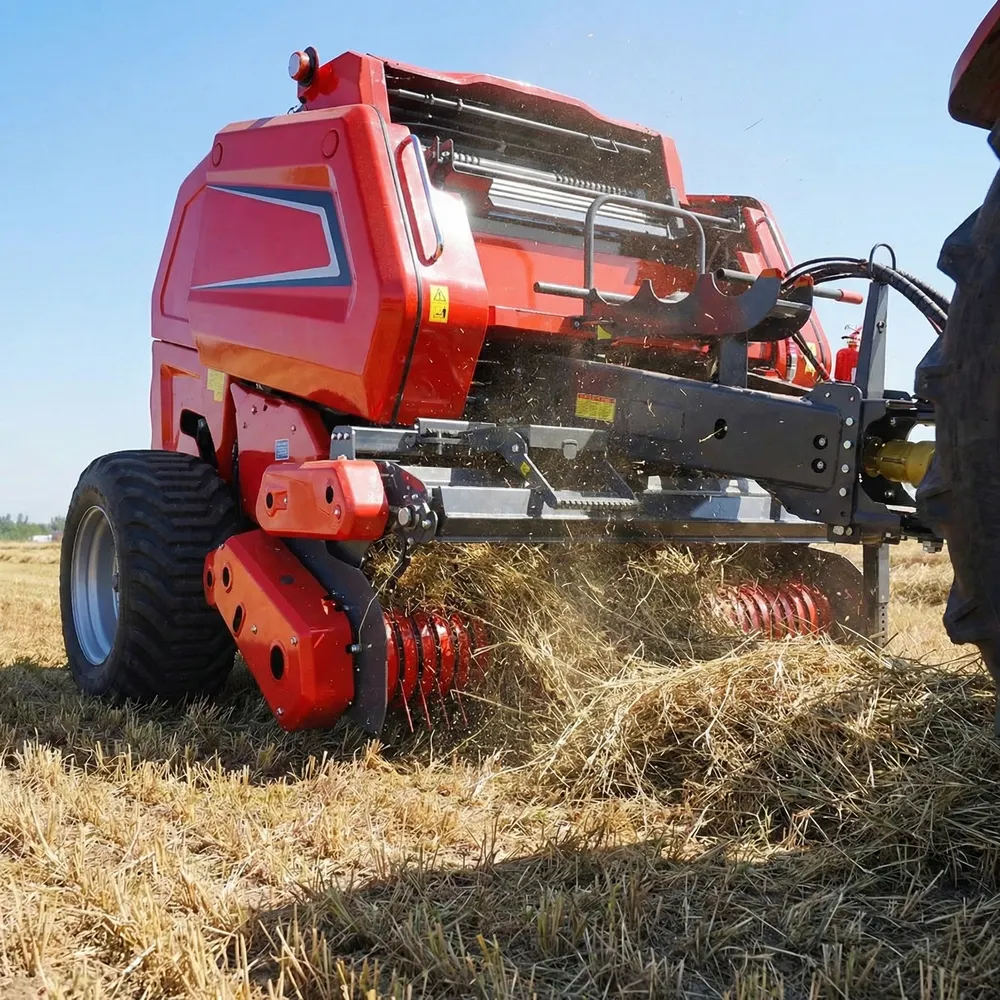
The cycle commences with the pickup stage. As the tractor pulls the baler forward at a steady pace of 2 to 5 kilometers per hour, the spring-loaded tooth assembly sweeps across the ground, gathering cut hay or straw arranged in windrows. These teeth, designed to flex and adapt to uneven surfaces, lift the material cleanly without excessive soil disturbance. From there, it channels directly into the feeding mechanism, where a fork-style pusher advances the crop steadily toward the core of the unit. This design prevents backups by maintaining an even distribution, which is crucial in dense or moist conditions to avoid operational halts.
Next, the material enters the compression area, a chamber equipped with 10 sturdy rollers arranged in a circular pattern. Driven by the PTO rotating at 540 revolutions per minute, these rollers begin turning, gradually packing the incoming crop into a tight, round form. As layers accumulate, a spring-based tension system applies increasing force to achieve uniform density, typically ranging from 115 to 150 kilograms per cubic meter. This controlled pressure ensures the bale holds its shape without overcompacting, which could lead to breakage during later handling. The PTO's consistent torque delivery is key here, as it synchronizes the rollers' motion with the tractor's engine, adapting to varying loads without stalling.
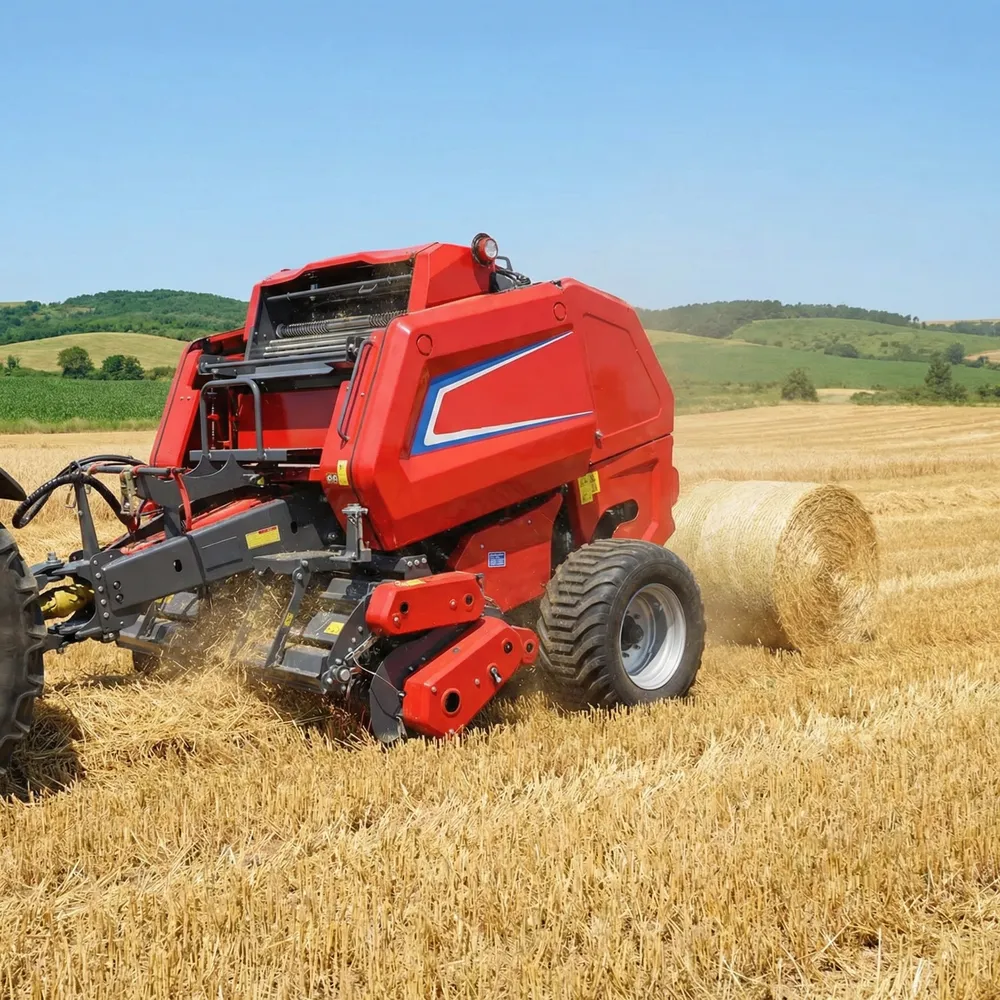
When the bale reaches its predetermined size—around 700 millimeters in diameter and 800 millimeters wide—the system triggers the wrapping phase. An automatic net dispenser activates, unrolling a mesh layer around the exterior to bind everything securely. This step, completed in seconds, adds stability for transport and protects against weather exposure. Once wrapped, hydraulic or mechanical actuators open the chamber rearward, allowing the finished bale to roll out gently onto the field. The operator then continues forward, and the process resets automatically for the next cycle. Throughout operation, safety features like shear bolts protect against overloads, while minimal controls—often just monitoring gauges from the tractor cab—keep the focus on efficiency.
Applications of the Round Baler Machine
- Wheat Straw Processing
In wheat farming regions, the round baler machine efficiently gathers and compresses leftover stalks after grain harvest, forming dense bales that serve as livestock bedding or feed supplements. This practice clears fields promptly for subsequent planting, reduces erosion risks, and supports nutrient recycling in soil management, making it a staple for large-scale cereal producers aiming to minimize waste and enhance operational turnaround. - Rice Paddy Residue Management
For rice cultivation, the machine collects damp straw from flooded or irrigated paddies, bundling it into manageable rolls that dry effectively for use in animal fodder or bioenergy production. Operators value its ability to navigate wet terrains without bogging down, which helps prevent field compaction and promotes faster preparation for the next crop cycle, contributing to sustainable water usage and reduced burning of residues. - Corn Silage Baling
When handling corn silage, the round baler preserves high-moisture forage by tightly wrapping chopped plants into airtight bales, ideal for dairy operations where fresh feed is essential year-round. This method locks in nutrients, extends storage life up to several months, and simplifies distribution to feeding troughs, allowing farmers to maintain herd health during off-seasons while cutting down on spoilage losses from traditional piling techniques. - Cotton Stalk Utilization
In cotton fields, the baler processes tough, fibrous stalks left after boll picking, transforming them into compact bales suitable for mulch, erosion control barriers, or even industrial fiber applications. This approach aids in soil conservation by retaining organic matter on-site, deters pest harbors, and provides an additional revenue stream through sales to composting facilities, proving economical for growers in arid climates. - Pasture Grass Harvesting
For managing pasture grass, the machine cuts and bales excess growth during peak seasons, creating hay reserves that sustain grazing animals through dry periods. Its gentle handling preserves leaf integrity for better palatability, while the uniform bale size facilitates stacking in barns, helping ranchers optimize land rotation and prevent overgrazing, which in turn supports biodiversity in grassland ecosystems. - Reeds and Wetland Vegetation Control
In wetland areas, the round baler harvests reeds for thatching, biofuel, or habitat restoration projects, bundling the tall, watery stems into stable rolls that transport easily without disintegration. This controlled removal aids in waterway maintenance by reducing blockages, enhances flood prevention, and offers ecological benefits like promoting native plant regrowth, making it useful for environmental management teams. - Sugarcane Bagasse Collection
After sugarcane milling, the baler compresses fibrous bagasse residues into bales for use as boiler fuel in processing plants or as mulch in replanted fields. Its robust compression handles the high-volume, sugary waste effectively, minimizing fire hazards from loose piles and enabling efficient recycling that lowers disposal costs, while supporting energy self-sufficiency in tropical agriculture hubs. - Alfalfa Forage Production
In alfalfa fields, the round baler captures nutrient-rich cuttings at optimal maturity, producing high-density bales that retain protein levels for premium livestock feed markets. This precision harvesting reduces leaf shatter during collection, extends shelf life through proper aeration, and allows multiple cuts per season, boosting yield per acre and providing consistent quality for export-oriented hay operations.

FAQ
Q: What is the best tractor size for the 9YG-1.0 round baler?
A: This round baler for tractor operates optimally with units rated between 18 and 30 kilowatts, ensuring compatibility with small to medium horsepower models that avoid overloading the engine during extended field sessions. Such pairings enhance fuel efficiency and reduce wear, making it a practical choice for operators seeking reliable performance in compact round baler applications without needing heavy-duty equipment.
Q: How do I maintain the round baler belts on this model?
A: Regular maintenance of round baler belts involves weekly visual checks for cracks, fraying, or stretching, followed by prompt replacement of any damaged sections to sustain consistent wrapping tension as outlined in the operator's guide. Keeping belts free from debris buildup and adjusting alignment periodically prevents slippage, which is essential for smooth operation in hay round baler tasks and extends the lifespan of the entire system.
Q: What round baler sizes does the 9YG-1.0 produce?
A: The 9YG-1.0 generates bales measuring 700 millimeters in diameter by 800 millimeters in width, which are well-suited for straightforward handling and efficient stacking in limited storage spaces on smaller properties. These round baler sizes strike a balance between density and portability, allowing farmers to maximize transport loads while minimizing the physical demands associated with larger hay round baler outputs.
Q: Is this a good hay round baler for sale in wet conditions?
A: Absolutely, the 9YG-1.0 serves as a dependable hay round baler for sale even in damp environments, provided operators make necessary tweaks to pickup height and compression settings to manage higher moisture levels effectively. Pre-drying forage when feasible further optimizes bale integrity, reducing spoilage risks and ensuring consistent results comparable to those from premium silage round baler models.
Q: How to troubleshoot a compact round baler not picking up hay?
A: When a compact round baler fails to collect hay properly, start by verifying the pickup height is set correctly for the terrain and inspect spring teeth for bends or breaks that could impede material flow. Clearing obstructions from the feeding path and confirming the power take-off runs at 540 revolutions per minute often resolves issues, restoring functionality in tractor round baler setups without extensive downtime.
Q: What is the round baler price range for similar models?
A: Round baler price ranges for models akin to the 9YG-1.0 typically fall between competitive entry-level figures and mid-tier investments, influenced by regional markets and added features like automatic wrapping. For precise current quotes on this round hay baler machine, reaching out directly allows for tailored assessments that reflect value-driven options, ensuring buyers secure equipment that aligns with operational budgets.
Q: Can this tractor round baler handle silage?
A: Yes, the 9YG-1.0 tractor round baler can effectively manage silage processing through targeted adaptations, such as enhanced density controls to create tightly packed bales that promote proper fermentation and nutrient preservation. Consulting with specialists for setup recommendations maximizes its utility as a silage round baler, delivering outcomes that support livestock feeding needs in varied agricultural contexts.
Q: How often should I service the round baler machine?
A: Servicing the round baler machine should include daily debris removal to prevent accumulations, weekly lubrication of moving components like rollers and chains, and thorough annual overhauls to check structural integrity. This routine upholds peak efficiency in round hay baler machine operations, averting common breakdowns and prolonging the unit's service life across multiple harvest cycles.
Q: What are common round hay baler machine issues and fixes?
A: Frequent challenges with a round hay baler machine include material jams triggered by overly moist crops, which can be addressed by slowing travel speed to allow better intake processing. Uneven bale formation often stems from misaligned rollers, requiring straightforward realignment per guidelines, while these fixes enhance reliability in best round baler scenarios and minimize interruptions during critical fieldwork.
Q: Where to find round baler for tractor parts?
A: Genuine round baler for tractor parts are readily available through Mexico Watanabe's supply network, offering swift shipping options upon providing specific model information like the 9YG-1.0. This ensures access to compatible components such as belts or teeth, supporting uninterrupted use in round baler machine maintenance and reinforcing trust in aftermarket service for long-term ownership.
Q: How to install a new net on the silage round baler?
A: Installing a fresh net on the silage round baler begins with consulting the provided threading schematic to route the material accurately through dispensers and guides, avoiding twists that lead to faulty wraps. Proper tensioning and alignment during setup prevent operational snags, making the process efficient for users of compact round baler systems focused on secure bale enclosure.
Q: What makes this the best round baler for small farms?
A: The 9YG-1.0 emerges as the best round baler for small farms due to its modest power demands, space-saving design, and impressive output rates that cater to resource-constrained environments. Features like automatic binding and adaptable crop handling deliver high productivity without overwhelming setups, positioning it as a top contender among round hay baler for sale options for efficient, scalable hay management.
Customer Reviews
Maria Gonzalez, Small Farm Owner, Mexico
"I've been relying on the 9YG-1.0 round baler for two full seasons now on my 50-acre wheat plot, hooked up to a 25kW tractor. The 1000mm pickup width grabs every bit of straw without missing a beat, churning out uniform bales around 300 pounds each. When a roller needed replacing last month, Mexico Watanabe's service team had it shipped and delivered in just three days—no fuss, just solid support that kept my operation running smooth."
Robert Jenkins, Livestock Farmer, United States
"This hay round baler has totally changed how we prep feed on the ranch. Over the past year, we've baled more than 500 loads of corn residue with zero breakdowns, thanks to its automatic wrapping that saves hours and keeps the silage fresh for months. The round baler machine arrived in perfect condition, well-packed, and we had it set up in under an hour—logistics were spot on, making it a game-changer for our daily routines."
Ana Silva, Agricultural Contractor, Brazil
"As someone who hauls equipment between jobs, the compact round baler's 980kg weight is a huge plus—easy to move without extra hassle. It runs great at 2-5 km/h, producing top-notch bales that my dairy clients rave about for their consistency. Had a small glitch with the round baler belts once, but the support crew fixed it remotely with a quick call; their positive vibe and fast response really stood out."
Thomas Lee, Crop Producer, Australia
"I shopped around for round baler prices and this model won hands down for bang for the buck. It's clocked 30 hours a week on soybean fields for 10 months straight, spitting out 20-40 bales per hour without skipping a beat. The trailed hitch mates perfectly with our older tractor, and while I'd love more local stock for parts like round baler belts, the overall build quality makes it a reliable workhorse."
Elena Petrov, Ranch Manager, Russia
"Our horse hay needs are met perfectly by this tractor round baler, which packs dense bales at 115-150 kg/m³ for efficient stacking in the barn. It powered through last summer's rough weather without a single hiccup, and the global shipping from Mexico Watanabe was lightning fast—arrived in a week. Their maintenance tips have slashed our costs, proving it's among the best round balers for harsh climates."
David Kim, Family Farm Operator, South Korea
"The 9YG-1.0 fits our rice paddies like a glove, tackling wet stalks way better than I expected in a round hay baler machine. Bales come out at 700x800mm, super easy to stack, and it's doubled our productivity since we got it six months ago. When I emailed about PTO tweaks, customer service replied in hours with clear, pro advice—couldn't ask for better help."
John Patel, Dairy Farmer, India
"In our humid fields, this silage round baler handles alfalfa and grass mixes flawlessly, producing tight bales that stay fresh longer and cut down on waste. We've used it for eight months on a 20kW tractor, and the round baler sizes are just right for our storage sheds. Delivery took a bit longer than hoped due to customs, but once here, the quality shone through—no regrets on the investment."
Sophie Laurent, Grain Grower, Canada
"Switching to the 9YG-1.0 round baler for tractor has boosted our wheat straw output tremendously, with its fork feeder preventing clogs even in thick windrows. After comparing round hay baler for sale options, this one's low power needs sealed the deal for our 25-acre setup. Service attitude from the team was top-tier when we needed a net wrapper adjustment—quick video call sorted it right away."
Carlos Ramirez, Hay Exporter, Argentina
"For exporting pasture grass, the round baler machine's efficiency is unmatched, baling at 20-40 units per hour with perfect density control. It's been in action for a year on our vast pampas, and the compact round baler design makes transport a breeze. While the round baler price was fair, what impressed most was the timely parts delivery—got replacement rollers overnight during peak season, keeping exports on schedule."
Additional information
| Edited by | Yjx |
|---|

We promise will offer the best price by the high quality in china! We also accept special order about the products. If you are interested in our products. Please do not hesitate to let us know.We are pleased to give you the detailed information.We promise that our products would be safety and were in high quality and reasonable price. If you are interested in our products, please contact us asap.We are sincerely looking for your cooperation.
Most of our products are exported to Europe or Americas, both standard and nonstandard products available. We can produce as per your drawing or sample. Material can be standard or as per your special request. If you choose us, you choose reliable.
Industries We Service
