
No.25 Standard Bore Sprocket
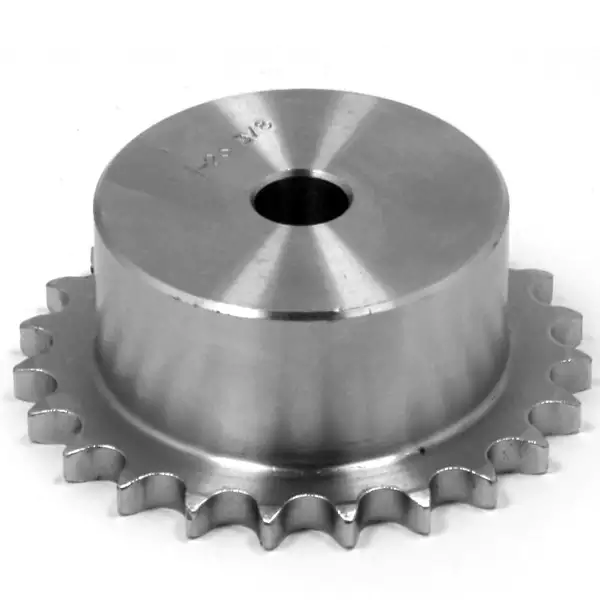
No.25 Standard Bore Sprocket
A standard bore sprocket is a type of mechanical transmission component used to transmit torque and rotation between two objects via a chain. It is commonly used in industrial machinery, conveyors, and other power transmission applications. The No.25 Standard Bore Sprocket is a type of sprocket with a 1/4" (6.35mm) pitch and a 3/8" (9.525mm) finished bore. It is commonly used in light to medium-duty applications and can be easily mounted on a shaft using a set screw or added keyway. Below is a selection table for the No.25 Standard Bore Sprocket:
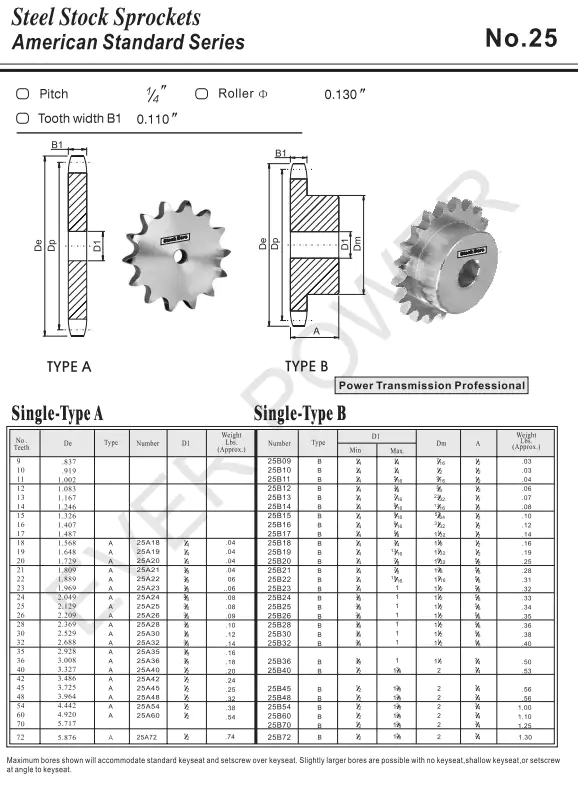
Basic Structure and Customization
The basic structure of a sprocket consists of teeth, a bore, and a hub. When ordering a custom sprocket, several variables need to be determined, including material, tooth profile, number of teeth, dimensions, bore size, keyway, and surface treatment.
- Material: The material chosen depends on the application and the environment in which the sprocket will be used. Common materials include high carbon steel, alloy steel, and stainless steel.
- Tooth Profile: The tooth profile determines how the sprocket engages with the chain. Common tooth profiles include standard, double pitch, and specialty profiles such as those used for silent chain applications.
- Number of Teeth: The number of teeth determines the speed ratio between the driving and driven sprockets in a chain drive system. The number of teeth can also impact the strength and durability of the sprocket.
- Dimensions: The dimensions of the sprocket depend on the pitch of the chain and the number of teeth. It is important to ensure that the sprocket dimensions match the chain specifications to ensure proper engagement and performance.
- Bore Size: The bore size determines the diameter of the shaft on which the sprocket will be mounted. The bore size must match the diameter of the shaft to ensure proper fit and alignment.
- Keyway: A keyway is a slot cut into the bore of the sprocket to accommodate a key, which provides additional torque transmission and prevents rotational slippage. The size and location of the keyway must be determined when ordering a custom sprocket.
- Surface Treatment: Surface treatments such as hardening, plating, or coating can improve the durability, wear resistance, and corrosion resistance of the sprocket.
Materials and Manufacturing Process
Our sprockets are made from high-quality materials such as high carbon steel, alloy steel, or stainless steel to ensure optimal performance and durability. Our manufacturing process includes material selection, cutting, stamping, forging, machining, heat treatment, surface hardening, surface treatment, and quality testing. We use advanced equipment and techniques to ensure precise and consistent sprocket production.
- Material Selection: We carefully select the appropriate material for each sprocket based on the application, environment, and performance requirements.
- Cutting: We use cutting machines to cut the raw material into the desired dimensions and shape.
- Stamping: We stamp the sprocket teeth and other features onto the blank using a stamping machine.
- Forging: We use a forging process to improve the strength and durability of the sprocket.
- Machining: We use precision machining techniques such as turning, milling, drilling, and tapping to achieve the desired dimensions and tolerances.
- Heat Treatment: We use heat treatment techniques such as quenching and tempering to improve the hardness, strength, and toughness of the sprocket.
- Surface Hardening: We use surface hardening techniques such as carburizing or nitriding to improve the wear resistance and durability of the sprocket.
- Surface Treatment: We use surface treatment techniques such as plating, coating, or painting to improve the corrosion resistance and appearance of the sprocket.
- Quality Testing: We perform quality testing on each sprocket to ensure that it meets or exceeds the relevant industry standards for performance and durability.
Applications
Our No.25 Standard Bore Sprocket is suitable for a wide range of applications, including:
- Heavy Machinery and Equipment: Our sprockets are commonly used in heavy machinery and equipment such as bulldozers, cranes, and excavators.
- Food Processing and Packaging: Our sprockets are used in food processing and packaging equipment, where hygiene and corrosion resistance are critical.
- Chemical and Pharmaceutical Industry: Our sprockets are used in chemical and pharmaceutical processing equipment, where corrosion resistance and durability are essential.
- Assembly Lines: Our sprockets are used in assembly line equipment such as conveyor belts and production lines.
- Logistics and Warehousing: Our sprockets are used in logistics and warehousing equipment such as conveyors, elevators, and lifts.
Maintenance and Troubleshooting
Proper maintenance and care are essential for the optimal performance and longevity of your sprockets. Below are some maintenance and troubleshooting tips:
- Daily Inspection: Inspect the sprocket daily for signs of wear, damage, or misalignment. Replace or repair any damaged sprockets immediately.
- Cleaning: Regularly clean the sprocket to remove dirt, debris, and other contaminants that can cause wear or damage. Use a mild detergent and water to clean the sprocket.
- Lubrication: Apply lubricant to the sprocket to reduce friction and wear. Use a lubricant that is compatible with the sprocket material and environment.
- Adjustment and Calibration: Regularly check and adjust the sprocket alignment, tension, and calibration to ensure optimal performance and minimize wear.
Common problems with sprockets include tooth skipping, breakage, wear, noise, and chain disengagement. Below are some common causes and solutions:
- Tooth Skipping: Caused by misalignment, worn sprocket teeth, or loose chain tension. Solution: check and adjust sprocket alignment, replace worn sprocket teeth or chain, adjust chain tension.
- Breakage: Caused by excessive load, fatigue, or corrosion. Solution: replace broken sprocket with a new one.
- Wear: Caused by friction, corrosion, or fatigue. Solution: regularly clean, lubricate, and maintain the sprocket, replace worn sprocket with a new one.
- Noise: Caused by misalignment, loose chain tension, or worn sprocket teeth. Solution: check and adjust sprocket alignment, adjust chain tension, replace worn sprocket teeth or chain.
- Chain Disengagement: Caused by worn or damaged sprocket teeth, loose chain tension, or misalignment. Solution: replace worn sprocket teeth or chain, adjust chain tension, check and adjust sprocket alignment.
Other Types of Sprockets and Chains
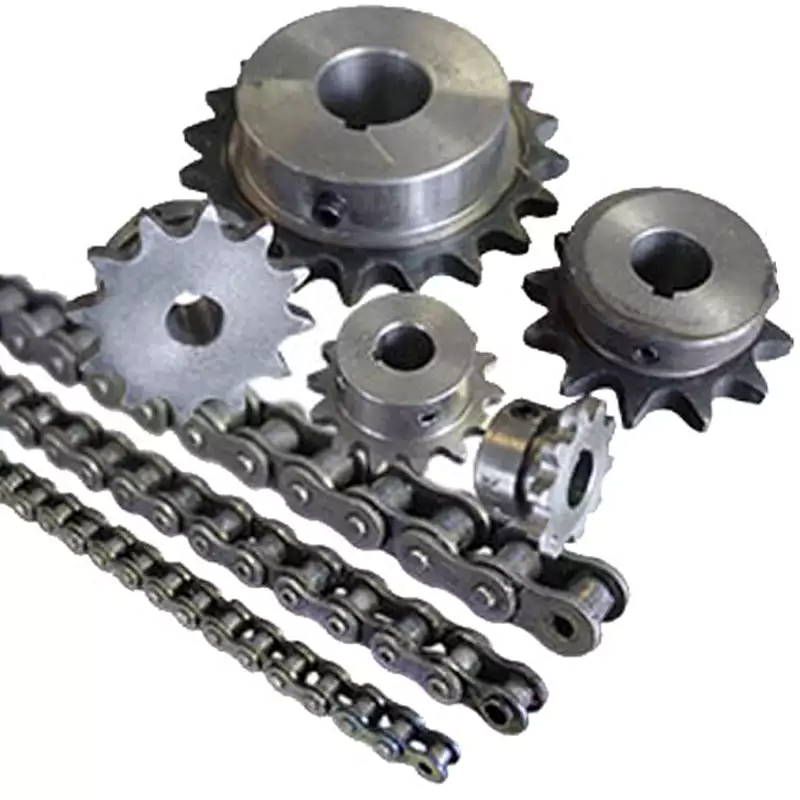
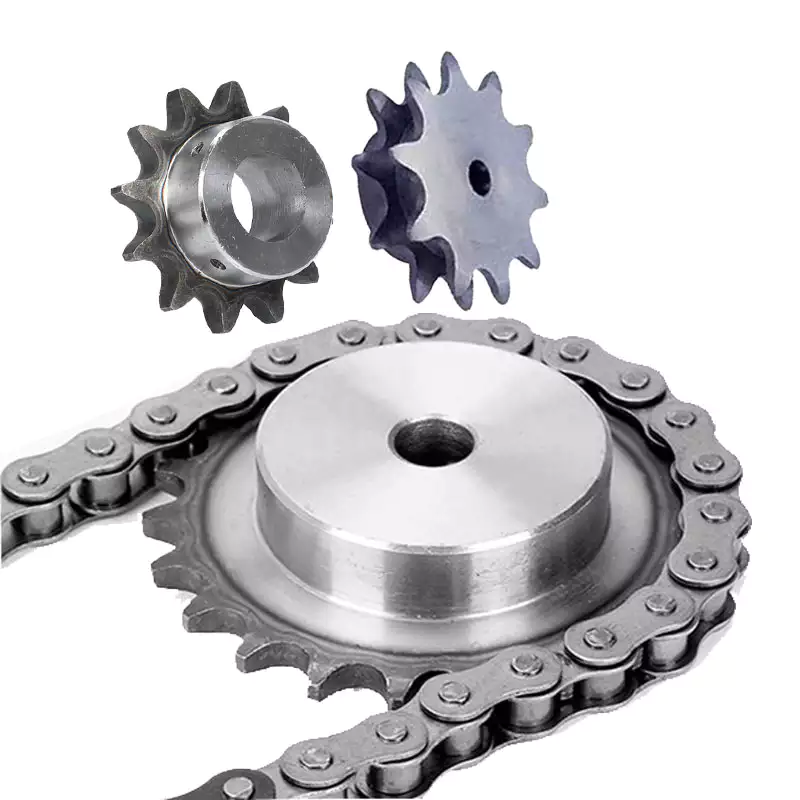
In addition to the No.25 Standard Bore Sprocket, we also offer a wide range of other sprockets and chains, including platewheel sprockets, idler sprockets, QD sprockets, taper lock sprockets, and more. These sprockets and chains are designed to work together and provide optimal performance and durability for your power transmission needs.
Author: Miya


We promise will offer the best price by the high quality in china! We also accept special order about the products. If you are interested in our products. Please do not hesitate to let us know.We are pleased to give you the detailed information.We promise that our products would be safety and were in high quality and reasonable price. If you are interested in our products, please contact us asap.We are sincerely looking for your cooperation.
Most of our products are exported to Europe or Americas, both standard and nonstandard products available. We can produce as per your drawing or sample. Material can be standard or as per your special request. If you choose us, you choose reliable.
Industries We Service
