
[S4.0B] Lower Body Weldment
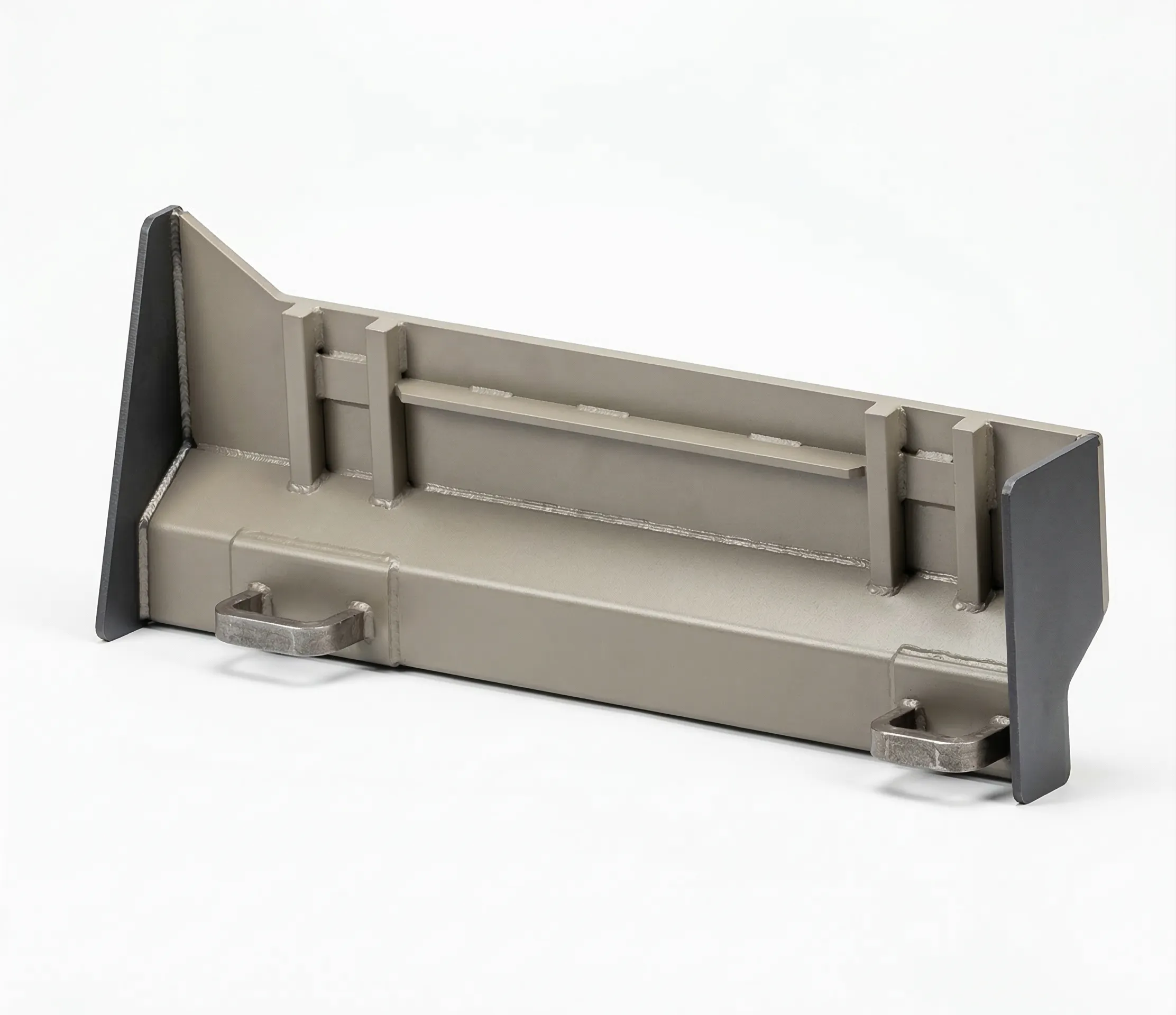
EVER-POWER’s S4.0B Lower Body Weldment is a precision-fabricated Q345B steel structural foundation for 4.0m rotary tiller headers, featuring full-penetration corner welds, post-weld stress relief, and 8mm reinforced base plate for superior impact resistance and fatigue endurance. Unlike thinner alternatives, it withstands 1,500+ hours of abrasive field loads, minimizing downtime and structural failures.
Product Specifications & Technical Parameters
The S4.0B lower body weldment is produced to a fixed engineering specification with documented dimensional tolerances and material traceability. The table below reflects the verified production parameters for the standard variant. Custom configurations for non-standard header platforms are available — forward your machine drawing to sales@hzpt.com for a dimensional cross-reference.
| Parameter | Specification | Notes |
|---|---|---|
| Part Name | S4.0B Lower Body Weldment | Header assembly lower housing |
| Model / Series Code | S4.0B | Rotary tiller header series |
| Primary Material | Q345B High-Strength Low-Alloy Steel | Yield ≥ 345 MPa |
| Main Shell Plate Thickness | 5 mm | Lower body side walls |
| Base / Bottom Plate Thickness | 8 mm | Ground-facing base plate |
| Flange / Mounting Plate Thickness | 8 mm | Mating interface with upper body |
| Applicable Header Width | 4.0 m (S4.0B series) | Matched to S4.0B platform |
| Weld Process | CO₂ GMAW — ER70S-6 wire | Pre-qualified WPS; full-penetration joints at critical locations |
| Post-Weld Treatment | Stress relief + shot-blast SA 2.5 | Before coating application |
| Surface Treatment | Electrophoretic primer + polyester topcoat | ≥ 80 µm DFT; 480-hr salt-spray (ISO 9227) |
| Overall Dimensional Tolerance | ±1.0 mm overall; ±0.3 mm at bolt interfaces | Verified per QC checklist |
| Approx. Unit Weight | Approx. 38 – 46 kg | Configuration-dependent |
| Quality Certification | ISO 9001:2015 | Factory-wide QMS scope |
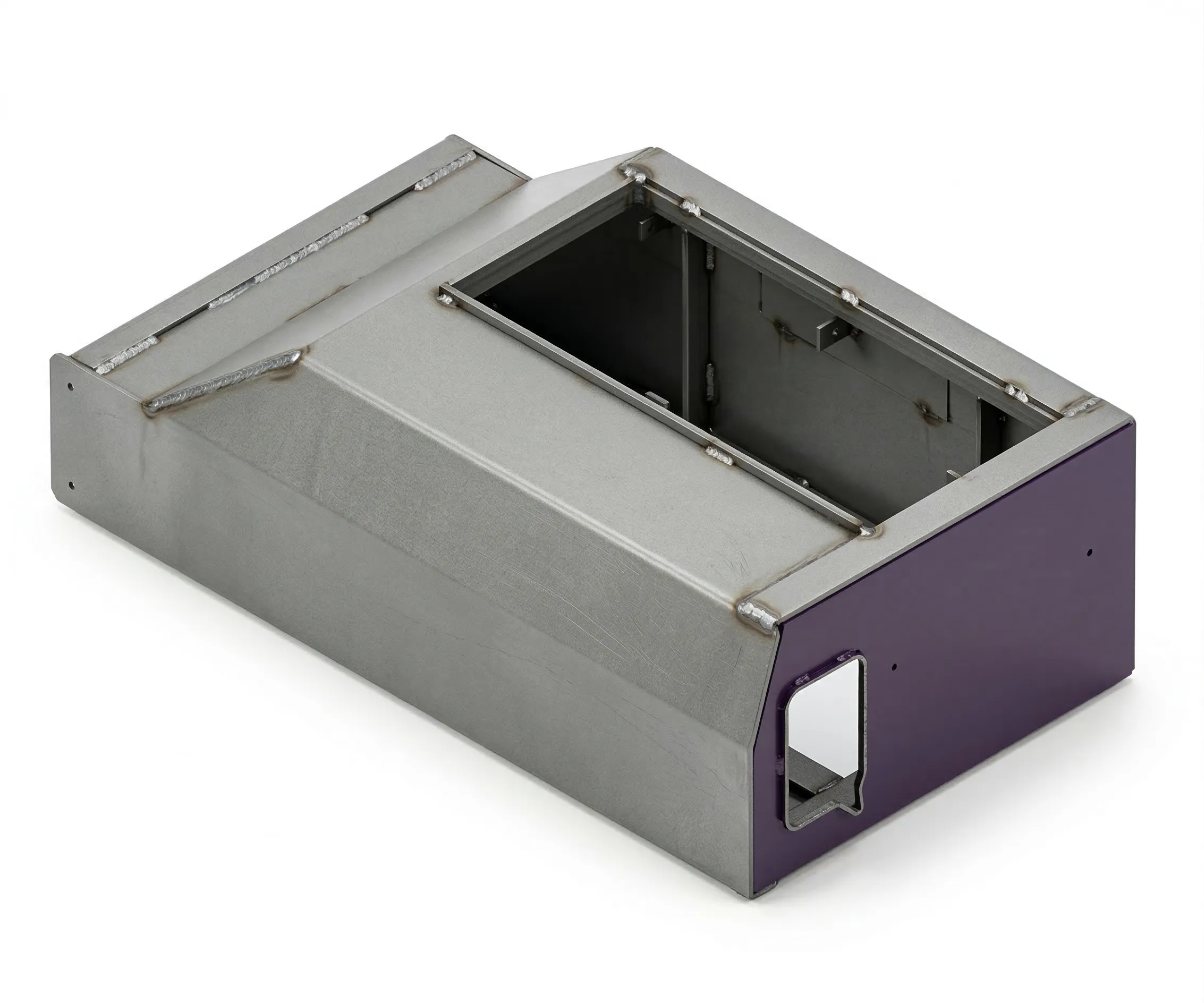
What the S4.0B Lower Body Weldment Does
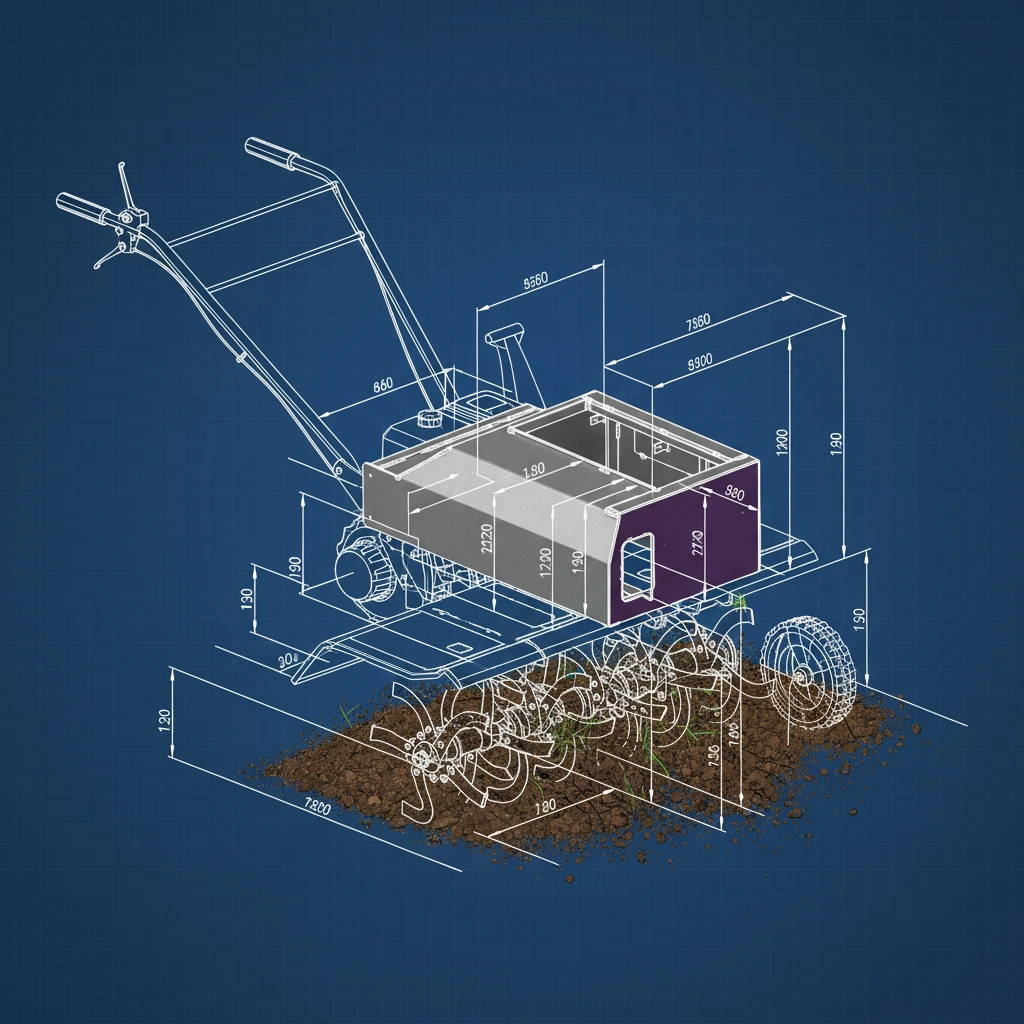
In the S4.0B series rotary tiller header, the machine structure is divided into an upper body assembly and a lower body assembly. The lower body weldment forms the structural foundation of the entire header. It sits closest to the ground, bears the full weight of the cutting rotor shaft assembly, and transfers all cutting reaction forces from the tiller blades through the frame into the tractor's three-point hitch connection. Without a dimensionally accurate and structurally sound lower body weldment, every other component in the header operates under stress conditions that accelerate wear and cause premature failure.
Load Paths and Structural Demands
During tillage operation, the lower body weldment simultaneously carries four distinct load types: the static weight of the rotor assembly and gearbox (typically 80–140 kg); the dynamic cutting reaction torque transmitted through the rotor bearing housings into the side walls; the bending moment generated when one side of the rotor encounters harder soil or a buried obstruction; and the ground reaction force when the header skids across a field ridge or contour change. The wall thickness and weld geometry of this rotary tiller component are calibrated against these combined load cases — this is why the base plate is specified at 8 mm while the side walls are 5 mm, reflecting the higher bearing stress at the soil contact zone.
The S4.0B Series Platform
The S4.0B designation refers to a 4.0-metre working-width header platform that is widely deployed across large-scale arable farming operations in China, Central Asia, Eastern Europe, and South America. At 4.0 metres, this header requires a lower body weldment with greater lateral span and correspondingly higher cross-section moment of inertia than the 2.0 m and 3.0 m header lower body weldments. The S4.0B lower body weldment is not interchangeable with shorter header variants — the bolt pattern, rotor bearing housing positions, and gearbox mounting pad locations are all dimensioned specifically for the 4.0 m platform.
Innovation & Standout Engineering Features
EVER-POWER's manufacturing approach to the lower body weldment addresses the specific failure patterns that operators and dealers report most frequently with generic fabrications: warped flange faces that prevent proper upper body alignment, bearing housing bore distortion from weld shrinkage, and premature corrosion at the base plate weld seam where crop residue and moisture accumulate during storage.
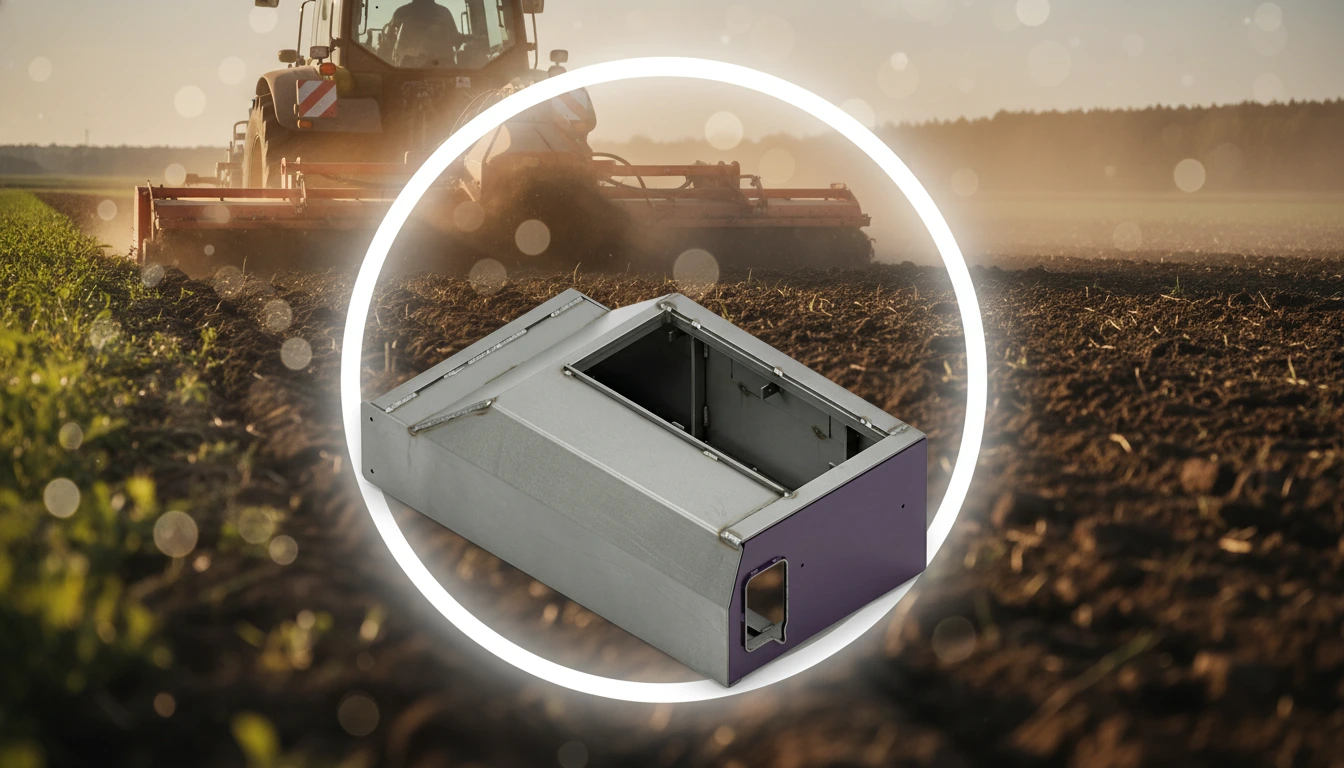
Fixture-Controlled Welding
All components are located in a purpose-built steel welding fixture before any weld is deposited. The fixture constrains the assembly to within ±0.3 mm on all critical dimensions before welding begins, meaning that weld shrinkage distortion is managed rather than corrected after the fact. This produces flange faces that are flat within 0.2 mm straight from the fixture, eliminating the shimming and grinding that generic fabrications require on installation.
Post-Weld Thermal Stress Relief
After welding, every lower body weldment goes through a controlled stress-relief cycle at 580–620 °C. This reduces residual weld stresses by 70–80%, converting what would otherwise be a fatigue-prone fabrication into a part with near-parent-metal fatigue properties. The heat treatment records are retained by production batch and can be made available for OEM or dealer quality audits on request from EVER-POWER.
CNC-Drilled Bearing Housing Pads
The rotor bearing housing mounting pads are finish-machined and drilled on a CNC machining centre after welding and stress relief. Machining after stress relief ensures that the bearing pad positions are accurate relative to the actual weldment geometry rather than the pre-distortion nominal. Positional tolerance of the bearing pad bolt holes is ±0.2 mm true position, keeping rotor shaft alignment within the specification required for full bearing life.
8 mm Reinforced Base Plate
The ground-facing base plate is specified at 8 mm Q345B — 60% thicker than the 5 mm side walls — to resist the bending and impact loads from field obstructions. Where competitor lower body weldments use a uniform 5 mm throughout to save material cost, this uneven load distribution causes base plate cracking within 500–800 operating hours on rocky or ridged ground. The 8 mm specification is derived from finite element analysis of the worst-case obstacle impact scenario at the tractor's rated forward speed.
Full-Penetration Corner Welds
At all four base plate-to-side wall corners — the highest-stress location in the entire assembly under combined bending and torsional load — full-penetration multi-pass welds replace the single-pass fillet welds used by budget fabricators. Full penetration means the weld root merges with the parent plate on both sides, eliminating the root gap defect that acts as a fatigue crack starter under cyclic field loading. Dye-penetrant inspection of all full-penetration joints is carried out as a production standard.
Electrophoretic Primer at Weld Roots
The cathodic electrophoretic priming process drives primer into weld root areas and internal corners that spray painting cannot reach. This addresses the single most common corrosion failure mode on header lower body weldments: rust developing at the base plate weld seam from the inside, invisible to external inspection until the base plate detaches. Salt-spray testing at 480 hours confirms the coating system meets the baseline corrosion resistance requirement for field-stored agricultural equipment.
Manufacturing Process
The lower body weldment is a structurally critical rotary tiller component, and its quality is entirely determined by process discipline. The eight-stage sequence below is EVER-POWER's production standard for the S4.0B weldment. Each stage has defined acceptance criteria that must be met before the part moves to the next operation.
Material Incoming Inspection
Q345B steel plate arrives with mill certificates. Optical emission spectrometry verifies chemical composition in-house. Hardness testing confirms yield strength. Plate with thickness deviations exceeding ±0.2 mm from nominal is rejected before cutting. This prevents the undersized wall thickness that is the most common hidden defect in low-cost fabrications.
CNC Plasma Cutting & Nesting
All flat plate parts are nest-cut on a CNC plasma table programmed directly from the CAD model at ±0.3 mm positional accuracy. Nesting optimisation keeps material waste below 12%. All cut edges are power-brushed and deburred to remove the heat-affected zone at the plasma kerf, ensuring clean fusion at subsequent welds.
Press-Brake Forming
Folded sections of the lower body shell are formed on a CNC hydraulic press brake programmed with the Q345B springback compensation angle. Radius and angle are checked against a physical gauge template after forming. Components outside tolerance are re-formed before proceeding — no forcing or shimming during assembly is acceptable.
Fixture Assembly & Tack Welding
All parts are loaded into the dedicated S4.0B weld fixture. The fixture controls flatness and perpendicularity at all interfaces before tack welds are placed. Tacks are deposited symmetrically to pre-balance shrinkage forces. The tacked assembly is dimensionally checked before removal from the fixture and before full welding begins.
Full GMAW Welding Sequence
CO₂ shielded GMAW with ER70S-6 wire completes all welds following a pre-qualified welding procedure specification. Full-penetration welds at the base plate corners use multiple passes with controlled inter-pass temperature below 250 °C. Each pass is inspected visually. Dye-penetrant examination is carried out on all full-penetration welds at final pass.
Post-Weld Stress Relief
The welded assembly is furnace-stress-relieved at 580–620 °C with a ramp rate of ≤ 100 °C/hour, held at temperature for 2–3 hours, then furnace-cooled to below 300 °C before air cooling. Thermocouple records are logged and retained per ISO 9001 procedure. This step is non-negotiable for a part of this structural criticality.
CNC Machining of Interfaces
After stress relief, the upper flange mating face is face-milled flat to within 0.15 mm. Rotor bearing housing pad surfaces are milled and bolt holes drilled on a CNC machining centre to ±0.2 mm true position. Gearbox mounting pad flatness is verified with a precision straight-edge. All machined faces are lightly oiled and masked before the surface treatment stage.
Surface Treatment & Final QC
Shot-blast to SA 2.5, cathodic electrophoretic primer bath, then polyester topcoat to ≥ 80 µm DFT. Film thickness is verified with an eddy-current gauge at six measurement points. Final inspection records overall dimensions, flange flatness, coating thickness, and weld appearance. Each unit ships with a traceability tag cross-referencing the production batch QC records.
Material Selection & Metallurgical Rationale
Material decisions for a header assembly lower housing are not a matter of cost-cutting versus quality. They reflect specific engineering requirements that arise from the loading environment. Every material specified in the S4.0B lower body weldment is chosen for a reason that directly impacts service life in the field.
Q345B — Why This Grade and Not Q235
Q345B provides a minimum yield strength of 345 MPa and documented Charpy impact toughness of ≥ 27 J at –20 °C. For a component that may be used in temperate or continental climates where morning pre-season commissioning temperatures fall below –10 °C, the low-temperature toughness guarantee is not academic — it determines whether the base plate corners survive the shock of the first field contact at sub-zero temperature. Q235, which has a yield of only 235 MPa and no low-temperature toughness specification, is frequently substituted by budget fabricators. In a large 4.0 m header lower body, the difference in yield strength means Q235 reaches plastic deformation under obstacle impact loads that Q345B absorbs elastically — resulting in permanent base plate distortion after a single field event.
ER70S-6 Welding Wire
The ER70S-6 GMAW wire contains elevated silicon (0.80–1.15%) and manganese (1.40–1.85%) as deoxidisers, providing superior resistance to porosity at the weld root when welding Q345B plate edges with residual mill oxide. The deposited weld metal tensile strength exceeds 480 MPa, ensuring the weld bead is never the weakest element in the structural system. Lower-grade ER70S-3 wire, which produces acceptable welds on clean low-carbon steel, generates microporosity at Q345B weld roots that dramatically reduces fatigue performance — but this defect is only detectable by ultrasonic testing, not visual inspection.
Coating System Design
The electrophoretic primer is selected over zinc-rich primer specifically because the cathodic process deposits a uniform film inside enclosed sections and at weld root geometries where zinc-rich spray painting cannot penetrate. The lower body weldment has internal corner geometries at the base plate joints where moisture can accumulate during field storage — the location where corrosion most commonly initiates and propagates from the inside. Electrophoretic primer eliminates this failure mode. The exterior polyester topcoat layer adds UV resistance and resistance to herbicide and fertiliser chemical contact that degrades alkyd-resin topcoats within two to three seasons.
Compatibility & Platform Fitment
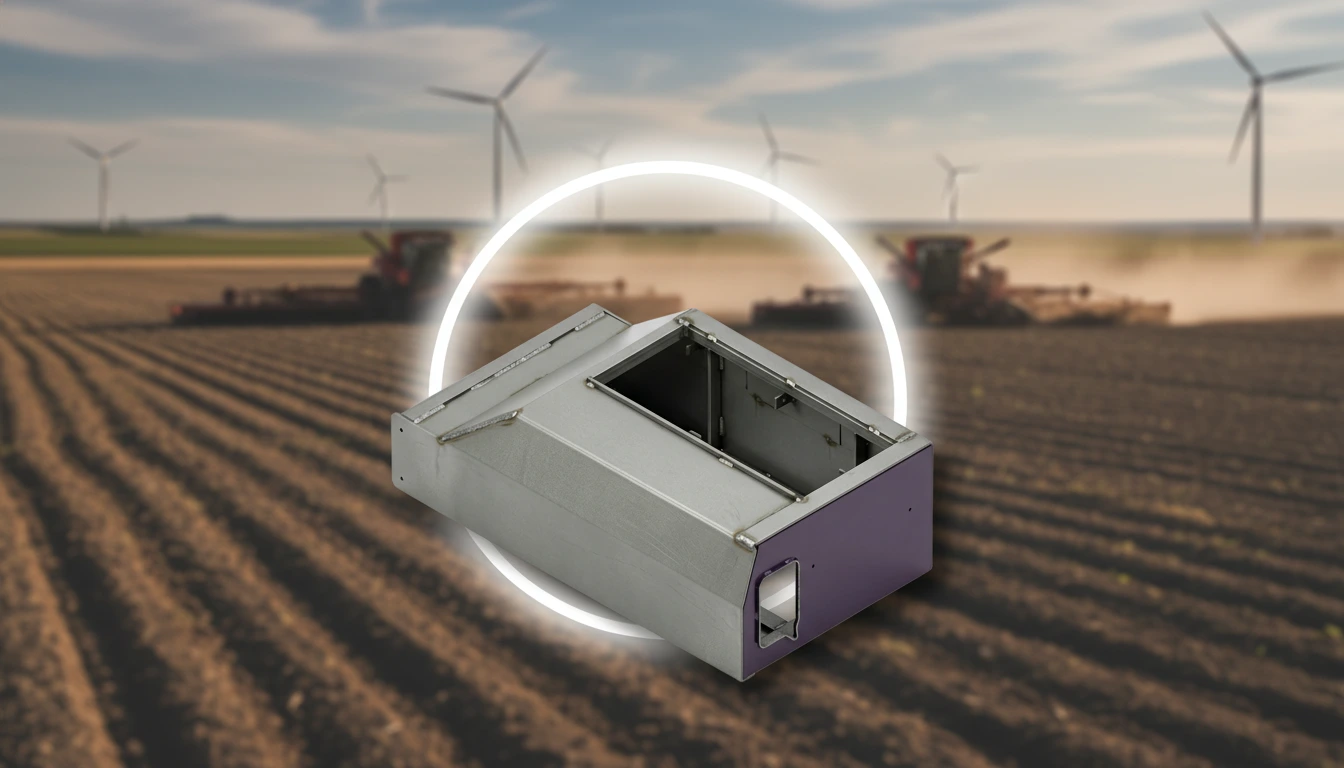
The S4.0B lower body weldment is dimensioned to the specific mounting interface of the S4.0B series rotary tiller header. Because the 4.0 m platform spans a physically large working width, the dimensional requirements for the lower body are unique to this series — the part cannot be fabricated to a generic agricultural weldment standard and then adapted.
Upper Body Mating Interface
The upper flange face of the lower body weldment mates directly with the lower flange of the upper body assembly. The face-milled flange provides metal-to-metal contact over the full gasket area, distributing the clamping load from the flange bolts evenly across the joint. Flatness within 0.15 mm eliminates the uneven bolt loading that causes bolt loosening under vibration — a common field complaint with unmachined generic fabrications where the flange face waviness acts as a lever arm against the bolt pre-load. The bolt hole pattern is fixed to the S4.0B series interface standard; confirm your series designation before ordering.
Rotor Bearing Housing Compatibility
The bearing housing mounting pad positions on the lower body sidewalls are dimensioned to accept the standard UCP211 or UCP212 pillow-block bearing units used in the S4.0B series rotor assembly. The pad-to-pad centre distance across the 4.0 m width is held to ±0.5 mm of nominal — if this tolerance is exceeded, the rotor shaft runs at an angle that loads the bearings asymmetrically, reducing bearing life by 40–60%. Confirm the target bearing housing series with your machine service manual before ordering to ensure compatibility.
Three-Point Hitch & Gearbox Mounting
The lower body weldment also incorporates the gearbox mounting pad on the central section of the rear face, and the front skid shoe mounting points along the base plate forward edge. Both features are dimensioned to the S4.0B series specification. If your machine uses a different gearbox model or skid shoe geometry, submit your machine drawing to sales@hzpt.com for a custom variant quotation with a minimum order of three units.
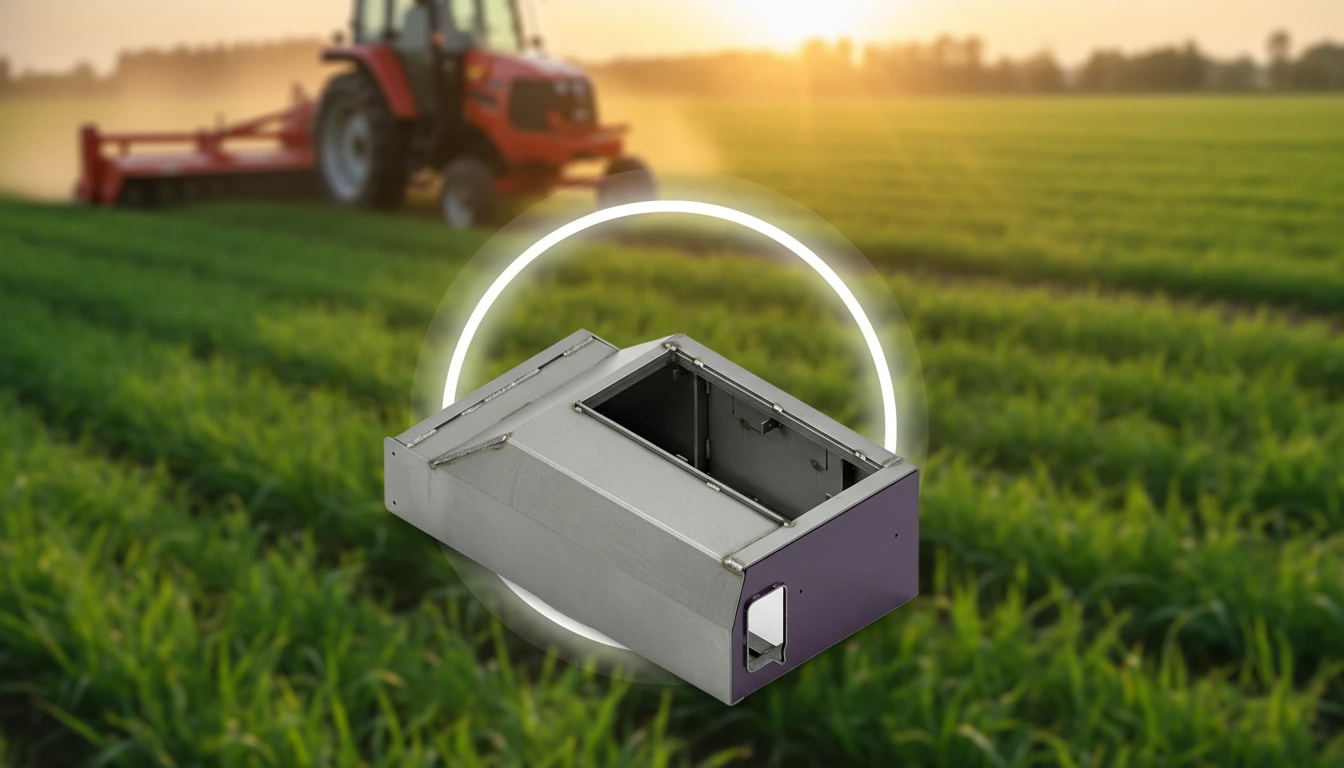
🔗 View the complete rotary tiller header assembly parts range — rotor blades, gearboxes, upper body weldments, and drive components from the same certified facility.
Related Components & Accessories
The lower body weldment is the structural base of the header, but its functional performance depends equally on the condition of the components it supports and connects. When the lower body is replaced, the surrounding components should be inspected and replaced where worn — fitting a new weldment onto a worn drivetrain and damaged bearing housings produces a predictably short service life for the new part.
The structural upper housing that bolts to the top flange of the lower body weldment, enclosing the rotor zone. When the lower body is replaced, inspect the upper body flange for distortion. A warped upper body flange transferred into the new lower body joint will cause immediate joint leakage and bolt loosening.
The C-blade or L-blade flange sets mounted directly to the rotor shaft and operating in the soil zone enclosed by the lower body. Worn blades create vibration that accelerates lower body weld fatigue. Replace blades when cutting edge wear causes visible imbalance or audible vibration increase during operation.
Pillow-block bearings mounted to the lower body sidewall bearing pads. These are always replaced at the same time as a lower body weldment — using the old bearings in a new weldment exposes the new pad surfaces to worn bearing fretting immediately. Confirm bearing series from the machine's parts book before ordering.
The central gearbox that transmits PTO torque from the tractor to the rotor shaft. The gearbox output flange mounts directly to the gearbox pad on the lower body rear face. Inspect the gearbox pad contact surface and gearbox output shaft seal condition whenever the lower body is removed — oil leakage from a failed gearbox seal corrodes the lower body pad and surrounding welds from the outside.
Replaceable wear plates or skid assemblies that contact the ground surface and set the tilling depth. Skid shoes are designed to wear sacrificially to protect the lower body base plate. When skid shoe wear allows the base plate to make direct ground contact, base plate abrasion accelerates rapidly. Replace skid shoes at the depth-setting adjustment interval — never wait until the base plate itself is visibly worn.
Grade 10.9 M12 bolts and hardened washers for the upper-to-lower body flange joint. Always replace with new Grade 10.9 fasteners when reassembling — re-using stretched bolts from a dismantled header is one of the most common causes of joint loosening in field use. Torque to specification in a cross pattern using a calibrated torque wrench.
The adjustable rear deflector board or crumbler roller assembly that mounts to the rear of the lower body weldment to control tilled soil throw and surface finish. Worn or damaged deflector mounting brackets on the lower body allow the deflector to flex during operation, reducing soil surface quality. Check bracket weld integrity at every seasonal inspection.
Applied to the upper-to-lower flange mating face on assembly to prevent soil and moisture ingress into the joint, which causes progressive flange face corrosion and bolt seizure. Use the OEM-specified sealant type — typically an anaerobic thread-locking paste — applied as a continuous bead around the bolt holes without blocking any drainage provisions in the lower body.
Industry Applications & Suitable Machinery
The S4.0B lower body weldment is primarily associated with large-scale rotary tiller header operations, but the structural design principles and material specification make it relevant across a broader set of ground-engaging machinery applications wherever heavy-duty fabricated lower housings are required.
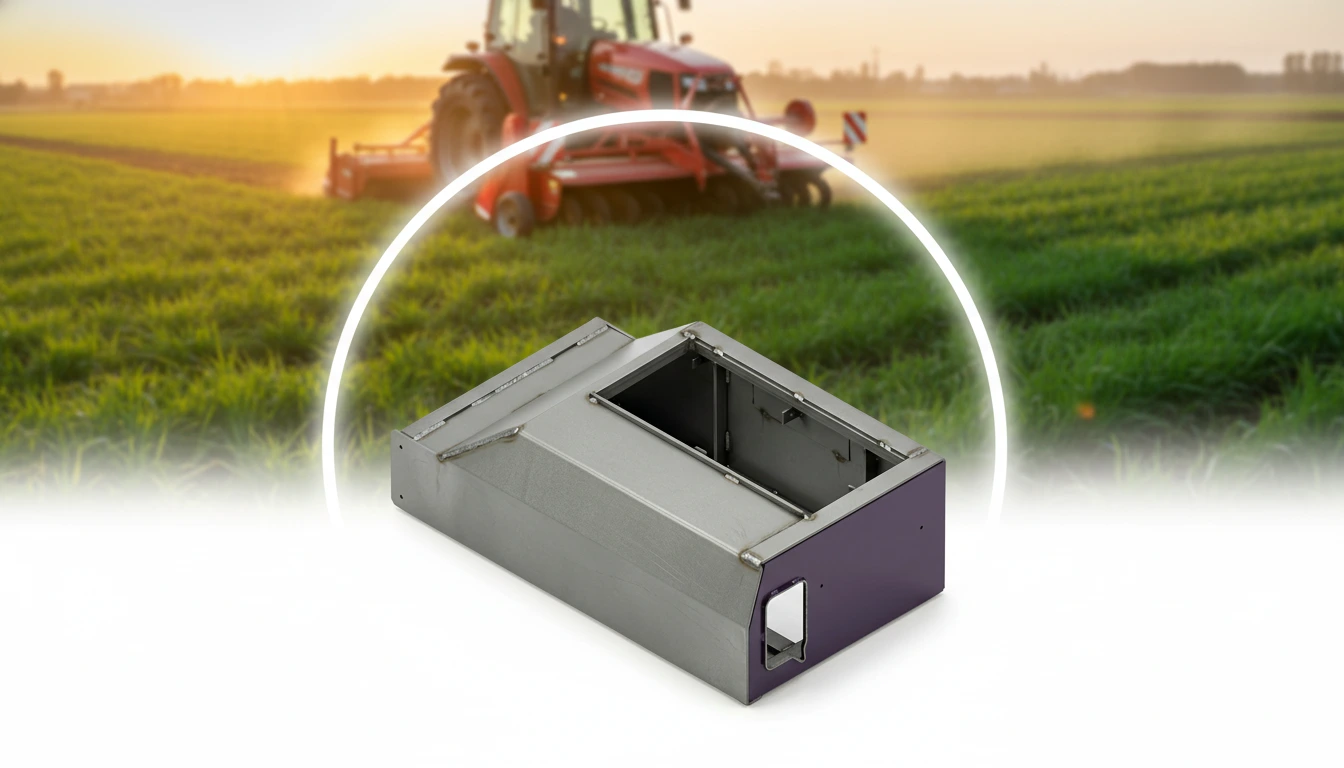
- 🌾 Large-Scale Arable Farming — 4.0 m Rotary Tiller Headers
This is the primary use case. On large arable farms and custom cultivation services operating in the cereal belts of China's North China Plain, Ukraine, Kazakhstan, and Argentina's Pampas, the 4.0 m rotary tiller header is the standard unit for primary and secondary tillage before planting. The lower body weldment is the single highest wear-cost structural item in the header assembly, typically reaching replacement after 2–4 seasons at 600–900 annual operating hours. Custom hiring operations managing 10–20 headers will typically stock one spare lower body weldment per four to five machines to avoid harvest-window downtime. - 🌿 Rice Paddy Seedbed Preparation
In the double-cropping paddy rice systems of the Yangtze Delta, Mekong Delta, and Java, rotary tillers with S4.0B-class headers prepare the flooded paddy field seedbed between harvests. Operation in saturated, high-clay soils places maximum bending stress on the base plate of the lower body weldment, because the clay resistance creates a more uniform and sustained force distribution across the blade sweep than the intermittent cutting load of dry cultivation. The 8 mm base plate specification in this header assembly part is specifically derived from paddy cultivation load cases. - 🌱 Vegetable & Market-Garden Intensive Tillage
Large-scale commercial vegetable operations in China's Shandong, Hebei, and Yunnan provinces use rotary tillers with 3.0–4.0 m headers for multiple tillage passes per growing season. At 4–6 passes per year and 400–600 hours per season, this application reaches the replacement threshold for the lower body weldment in 1–2 years rather than the 3–4 year life expected in once-per-season grain cultivation. Vegetable operators typically maintain a higher inventory of replacement lower body weldments than grain farmers, prioritising continuity of the intensive cropping schedule. - 🌿 Orchard & Vineyard Under-Row Tillage
Narrow-track tractors in orchard and vineyard settings sometimes use 4.0 m headers split into two offset half-sections for under-row and inter-row tillage on the same pass. The lower body weldment in this configuration operates in a mixed stone and root environment where the obstacle impact frequency is significantly higher than open-field cultivation. The full-penetration base plate corner welds in this header assembly part are the critical structural feature for this application — generic fillet-welded lower body fabrications crack within one orchard season in rocky alluvial soils. - ♻️ Residue Incorporation & Green Manure Tillage
In conservation agriculture and organic growing systems where crop residues or green manure cover crops are incorporated into the soil by tillage rather than burning or chemical treatment, the rotary tiller header operates in very high-bulk, low-stone conditions. The primary stress on the lower body weldment in this application is torsional, caused by the uneven resistance of the dense, fibrous residue feeding into the cutting zone. The fixture-controlled weld geometry of the S4.0B lower body weldment maintains the symmetry required for balanced torsional load distribution across both sidewalls. - 🏗️ Land Reclamation & Construction Site Preparation
On brownfield land reclamation projects and construction site topsoil preparation — particularly in large infrastructure projects in Central Asia and East Africa — rotary tillers with large headers are used for topsoil loosening and preparation. The lower body weldment in this application is at higher risk of stone and debris ingestion than agricultural field operation. The 8 mm base plate and reinforced corner welds provide the impact margin needed for this application, though users should inspect for base plate denting after any session on a site with visible surface debris.
Replacement Guide — Step by Step
Replacing the S4.0B lower body weldment is a full header disassembly task that requires two technicians, a workshop crane or engine hoist rated for 200 kg minimum, and a full hand-tool set including a calibrated torque wrench. Clear a workshop area of at least 5 m × 3 m to safely support the removed header structure. Allow 3–5 hours for a team that has performed this task previously.
① Tractor Isolation & Header Lowering
Park on level concrete with the header fully lowered. Engine off, key removed, PTO shaft disconnected. Attach a tag-out lock to the ignition and PTO lever before any person works under or near the header. Allow 2 minutes for PTO driveline inertia to fully dissipate before touching the rotor.
② Remove Deflector & Rear Components
Unbolt the crumbler roller or deflector board assembly from the rear lower body mounts and set aside. Remove skid shoes from the forward base plate mounts. Disconnect any depth-gauge wheel linkage from the lower body side brackets. Photograph all fastener positions and shim arrangements before removal.
③ Disconnect Gearbox
Place a drip tray under the gearbox output. Unbolt the gearbox from the rear lower body gearbox pad. If the gearbox output shaft is directly coupled to the rotor shaft, slide the shaft out of the coupling before attempting to remove the gearbox. Support the gearbox with a separate strap before the final bolt is removed — a 4.0 m header gearbox weighs 40–70 kg.
④ Remove Rotor Bearing Housings
Unbolt both bearing housing assemblies from the lower body sidewall pads. Note the shim arrangements under each bearing housing and retain them — these set the rotor shaft height relative to the blade sweep zone. Support the rotor shaft with a strap before the final bearing housing bolt is removed, as the full rotor assembly weight (typically 60–100 kg) will be unsupported at that point.
⑤ Separate Upper and Lower Body
With a crane strap supporting the upper body assembly, undo the upper-to-lower flange bolts working outward from the centre to equalise the joint separation. Use wooden wedges to gently separate the flanges if joint sealant has bonded them — do not lever against weld seams. Once separated, lift the upper body clear and set it on trestles for inspection of its lower flange condition.
⑥ Inspect & Prepare for New Weldment
Clean the upper body lower flange face and inspect it for cracks or severe corrosion. Check the three-point hitch mounting bracket welds on the machine frame for cracks. Verify that the hitch lower link pin bores are within specification. If the machine frame mounts are damaged, repair them before fitting the new lower body — a new weldment fitted to a distorted machine frame will develop fatigue cracks in its first season.
⑦ Install New Lower Body Weldment
Apply the specified anaerobic sealant bead around the upper flange bolt holes. Lower the new weldment into position, aligning the bolt holes with guide pins in the first two holes. Run all flange bolts in finger-tight, then torque in a cross pattern to specification in two stages — 40 Nm, then 80 Nm for M12 Grade 10.9. Refit the bearing housings with original shim arrangements and torque to specification.
⑧ Refit Ancillary Components & Test Run
Refit the gearbox, rotor shaft, skid shoes, deflector, and PTO shaft. Rotate the rotor by hand through several full turns before connecting the PTO — any binding or metal-to-metal contact requires investigation before power is applied. Run the PTO at low idle for 5 minutes, observing for vibration or noise. Re-torque the flange bolts after 2 hours of initial operation to compensate for thermal settling of the joint sealant.
Maintenance & Inspection Schedule
The S4.0B lower body weldment is a long-life structural item, but it reaches its design life only when a consistent maintenance programme is followed. The most common cause of premature replacement is not fatigue — it is accelerated corrosion caused by inadequate post-season storage preparation, combined with bearing failures that load the sidewall pads beyond the design stress.
Pre-Season Inspection (Annual)
Before the first operation of each season, remove the skid shoes and inspect the base plate external face for wear grooves and dents from the previous season. Measure base plate thickness with a magnetic thickness gauge at three points across the width — replace when the thinnest reading falls below 5 mm from the original 8 mm. Inspect all visible weld seams with a dye-penetrant kit if the header was involved in any obstacle impact event during the previous season. Verify that the upper flange bolt torques have held by checking every bolt with a torque wrench before starting work.
In-Season Weekly Service (50-Hour Interval)
Check the flange joint visually for any signs of separation, sealant extrusion, or rust bleeding from the joint gap. Any visible rust bleed from a flange joint indicates sealant degradation and requires joint re-sealing at the next available non-operation window. Inspect the base plate skid shoe mounts for cracking at the weld roots — skid shoe brackets are intentionally designed as sacrificial elements, and a cracked bracket should be repaired rather than left until the lower body base plate itself begins to crack at the same location.
Post-Season Storage Preparation
Pressure-wash the entire lower body weldment exterior and allow to dry fully before storage. Inspect the base plate underside for coating damage — the external face of the base plate is the highest-abrasion surface on the weldment and will show paint wear after every season of operation. Touch up areas of bare steel with cold zinc primer spray before storage. Remove all packed soil from the upper flange joint area — trapped wet soil accelerates corrosion at the joint gap, particularly where the topcoat has chipped at the joint edge. The lower body weldment should be stored with the base plate facing down on clean wood blocks, not on concrete that will draw moisture into the base plate underside coating.
Structural Life Assessment
At 1,500 cumulative operating hours, or at any point when the machine has been involved in a severe obstacle impact (stone ingestion, buried concrete, irrigation pipe), carry out a formal structural inspection using dye-penetrant kits at all four base plate corner welds, the gearbox pad welds, and the bearing housing pad welds. Any indication of cracking in these areas requires replacement — operating with a cracked structural weld in a header lower body weldment under full cultivation load is a safety hazard and will result in sudden structural failure.
Market Price Comparison
The S4.0B lower body weldment market is served by several supply tiers with very different process standards and price points. For large arable operations, the procurement decision should be evaluated on total cost per operating hour rather than unit purchase price. The table below reflects approximate indicative FOB ex-China pricing in USD as of early 2026.
| Supply Tier | Price (USD) | Plate Grade | Stress Relief | Base Plate | Warranty |
|---|---|---|---|---|---|
| Budget / Unbranded | $65 – $95 | Q235 or unverified | None | 5 mm uniform | None |
| Standard Aftermarket | $98 – $135 | Q345 (claimed) | Rarely | 5–6 mm | 3–6 months |
| ★ EVER-POWER Recommended | $115 – $155 | Q345B certified | ✔ Standard | 8 mm reinforced | 12 months |
| Regional OEM | $175 – $240 | OEM spec | ✔ Yes | 8 mm | 12 months |
| Premium European / Japanese | $310 – $450 | S355 / SS400 | ✔ Yes | 8–10 mm | 24 months |
Sustainability & Regulatory Compliance by Region
As agricultural machinery parts trade becomes more regulated in the major purchasing markets, compliance documentation has shifted from a nice-to-have to a procurement requirement. The EVER-POWER S4.0B lower body weldment is produced with compliance in the following key markets built into the manufacturing process rather than retrofitted at the documentation stage.
🇨🇳 China — Domestic Market
Production conforms to GB/T 1591 Q345B steel standard and GB/T 11345 weld quality requirements. ISO 9001:2015 certification covers the full production scope. Export documentation for domestic re-export includes Certificate of Origin, Material Conformance Certificate, and production batch inspection records. Chinese customs duty classification is prepared for standard HS codes covering agricultural machinery structural parts.
🇪🇺 European Union
Q345B is cross-referenced to EN 10025-2 S355JR for EU import technical submissions. The coating system is REACH-compliant under EU Regulation (EC) No 1907/2006. CE declaration of incorporation per EU Machinery Directive 2006/42/EC is prepared for OEM applicants. RoHS screening confirms the absence of restricted heavy metals in the coating formulation, relevant for equipment operated on organic-certified land.
🇰🇿 Kazakhstan & Central Asia
Kazakhstan is a major export market for large rotary tiller header components due to the rapid expansion of mechanised grain cultivation in the Northern Grain Belt. GOST 27772-88 equivalent documentation for Q345B is prepared for Eurasian Customs Union import procedures. Russian-language technical data sheets are available on request for Central Asian importers and dealers.
🇮🇳 India
India's mechanised tillage market is expanding across Madhya Pradesh, Uttar Pradesh, and Punjab as farm consolidation accelerates adoption of large-format rotary tillers. BIS IS 2062 E350 cross-reference documentation is prepared for Indian customs import submissions. Lead-free coating formulation meets FSSAI guidelines for soil-contact agricultural equipment operated on food crop land.
🇧🇷 Brazil & South America
Brazil's Cerrado expansion into large-format rotary tillage for soybean and corn seedbed preparation drives demand for S4.0B class components. ABNT NBR documentation is prepared for INMETRO import requirements. Portuguese-language packing lists and technical descriptions are available to simplify Brazilian customs clearance for agricultural machinery part imports.
♻️ Environmental Operations
ISO 14001:2015 environmental management certification covers the entire production facility. The electrophoretic priming system uses closed-loop bath replenishment that reduces chemical discharge by over 80% against open-bath systems. All steel plate offcuts are collected and delivered to certified scrap processors for 100% recycling. Shot-blast media recovery is closed-loop, with no grit discharge to drainage. Process water is treated on-site to GB 8978 before release.
What Operators Say
"We switched from the local fabricator's version after the third base plate crack in two seasons. The EVER-POWER weldment went through our full summer wheat campaign and an autumn rape seed pass — 680 hours total — with no base plate cracking and the flange joint still tight on first re-check. The 8 mm base plate is the difference."
"The bearing housing pad positions were accurate — rotor ran perfectly true from first start. With the previous aftermarket lower body we spent 90 minutes shimming the bearing pads before we could get the rotor shaft parallel. Not a problem here. Documents were clean, mill certificate included without asking."
"Good quality weldment — the coating held through a full wet paddy season which is more than we expected at this price point. We deducted one star because the lead time was 18 days rather than the 14 quoted, but the EVER-POWER team gave us advance notice so we could plan around it. Would buy again and already have 4 more on order for next season."
"We source these as an OEM-equivalent for our repair workshop. EVER-POWER's S4.0B lower body weldment fits the first time, every time — no rework, no shimming, no customer callbacks. The stress relief certificate is something our OEM customers actually ask for now when we present the parts, so that documentation matters commercially."
Customer Success Stories
Fleet Structural Cost Reduction Across 12 Headers
A custom cultivation company operating 12 S4.0B rotary tiller headers across the North China Plain was replacing lower body weldments every 18 months on average due to base plate cracking from hard, stony loess soils. At the previous supplier's pricing, this represented a $1,800–$2,400 annual spend across the fleet on lower body weldments alone, plus an estimated $3,200 in mechanic labour. After switching to the EVER-POWER lower body weldment with the 8 mm reinforced base plate, the first fleet-wide lower body replacement cycle was pushed from 18 months to 31 months — a 72% increase in service interval. Annual lower body weldment spend across the fleet dropped by approximately $900, and mechanic labour by $1,600.
Post-Impact Structural Failure Prevention
An arable operation in Kharkiv Oblast had experienced a complete lower body fracture at the base plate-to-sidewall weld on a competitor brand weldment after striking a partially buried concrete irrigation channel cover. The fracture occurred mid-season, requiring a complete header strip-down in the field over two days. When the replacement was sourced from EVER-POWER, the farm's engineer requested the dye-penetrant inspection records for the full-penetration corner welds to verify that the critical weld joints had been properly executed. The records were supplied within 24 hours. The replacement weldment completed the remainder of the season and survived a subsequent impact event the following year with only surface denting to the base plate — confirming the performance margin of the reinforced 8 mm base plate specification.
Winter Pre-Season Commissioning Cold-Fracture Issue Resolved
A large grain operation in North Kazakhstan reported three instances of lower body weldment base plate corner cracking during pre-season commissioning operations at ambient temperatures below –15 °C. Investigation identified that the previous supplier's weldments were fabricated from Q235 without the low-temperature Charpy impact toughness guarantee required for sub-zero field commissioning. EVER-POWER confirmed that Q345B with documented ≥ 27 J Charpy at –20 °C was the correct specification. After switching to the EVER-POWER S4.0B lower body weldment, no pre-season cold cracking events occurred across the following two spring commissioning seasons, both of which included days at –18 °C to –22 °C at first operation.
Brand Comparison — Technical Criteria
Evaluating lower body weldment suppliers requires looking past price to the process decisions that determine whether a part achieves its structural design life. The comparison below covers the twelve criteria that experienced agricultural parts managers and OEM engineers use to separate genuinely engineered fabrications from price-competitive imitations.
| Evaluation Criteria | EVER-POWER | Standard Aftermarket | Budget Fabricator | Premium OEM |
|---|---|---|---|---|
| Material Certificate (Q345B Mill Test) | ✔ Certified | ~ Claimed | ✗ None | ✔ Yes |
| 8 mm Reinforced Base Plate | ✔ Standard | ✗ 5–6 mm | ✗ 5 mm | ✔ 8 mm |
| Post-Weld Thermal Stress Relief | ✔ Standard | ✗ Skipped | ✗ Skipped | ✔ Yes |
| Full-Penetration Corner Welds | ✔ Yes | ✗ Fillet only | ✗ Fillet only | ✔ Yes |
| Fixture-Controlled Welding | ✔ Dedicated fixture | ~ Basic | ✗ Freehand | ✔ Yes |
| CNC-Machined Bearing Pads | ✔ After stress relief | ~ Pre-weld only | ✗ No | ✔ Yes |
| Electrophoretic Primer Coating | ✔ 480 hrs salt spray | ~ 120–200 hrs | ✗ <80 hrs | ✔ 400–500 hrs |
| Low-Temperature Toughness (–20 °C) | ✔ Q345B guaranteed | ✗ Not specified | ✗ Q235 — none | ✔ Guaranteed |
| ISO 9001:2015 QMS | ✔ Yes | ~ Some | ✗ No | ✔ Yes |
| Custom Config (MOQ 3 units) | ✔ Yes | ✗ Fixed dims | ✗ Fixed dims | ~ Platform-specific |
| Price Range (USD FOB) | $115 – $155 | $98 – $135 | $65 – $95 | $175 – $450 |
| Warranty Period | ✔ 12 months | ~ 3–6 months | ✗ None | ✔ 12–24 months |
Across all twelve criteria, the EVER-POWER S4.0B lower body weldment matches or exceeds the OEM performance standard while sitting 30–60% below OEM pricing. The budget tier — which offers apparent short-term savings — creates a structural liability in a safety-critical component through the combination of Q235 steel, absent stress relief, fillet-only welds, and inadequate base plate thickness. For arable operations in cold-climate markets, Kazakhstan and Ukraine operators have found that the Q345B low-temperature toughness specification alone justifies the premium over budget suppliers.
Frequently Asked Questions
These questions reflect the most common technical and commercial queries received from operators, workshop engineers, and purchasing managers regarding the S4.0B lower body weldment. For queries not covered here, contact sales@hzpt.com.
Source the S4.0B Lower Body Weldment
EVER-POWER delivers ISO 9001:2015-certified rotary tiller header assembly parts and lower body weldments to OEM manufacturers, agricultural dealers, and fleet operators in over 60 countries. Technical fitment confirmation within 48 hours.
EVER-POWER Agricultural & Industrial Components | https://hzpt.com/ | sales@hzpt.com
© 2026 EVER-POWER. All technical specifications subject to revision without notice. Contact the engineering sales team for confirmed fitment data and current production documentation.


We promise will offer the best price by the high quality in china! We also accept special order about the products. If you are interested in our products. Please do not hesitate to let us know.We are pleased to give you the detailed information.We promise that our products would be safety and were in high quality and reasonable price. If you are interested in our products, please contact us asap.We are sincerely looking for your cooperation.
Most of our products are exported to Europe or Americas, both standard and nonstandard products available. We can produce as per your drawing or sample. Material can be standard or as per your special request. If you choose us, you choose reliable.
Industries We Service
