
Chains for Steel Industry
The steel industry relies heavily on various specialized chains to keep its operations running smoothly and efficiently. These chains come in different configurations, each designed to withstand the demanding environment and handle the rigorous tasks involved in steel production.
Here are some of the most common types of chains used in the steel industry:
-
Conveyor Chains: These are heavy-duty chains that transport large quantities of materials throughout the steel production process. They can be made from carbon steel or stainless steel for added corrosion resistance depending on the application. Conveyor chains are available in different configurations, such as roller chains, link chains, and slat chains, each suited for specific loads and environments.
-
Sintering Plant Chains: Sintering plants play a crucial role in steel production by agglomerating iron ore fines into usable feedstock for blast furnaces. Sintering plant chains endure extreme heat, abrasion, and harsh chemicals. They are designed with high strength and heat resistance to withstand these demanding conditions.
-
Blast Furnace Skip Chains: Blast furnaces are the heart of steel production, where iron ore is smelted into molten iron. Skip chains are used to hoist and transport raw materials like iron ore, coke, and limestone to the top of the blast furnace. These chains require exceptional strength and durability to handle the massive loads and withstand high temperatures.
-
Casting Machine Chains: Once molten iron is produced in the blast furnace, it is transported to casting machines where it is solidified into slabs or billets. Casting machine chains play a vital role in this process, ensuring the smooth movement of molds and molten metal. They are designed for high temperatures and precise operation to maintain the integrity of the cast steel products.
-
Rolling Mill Chains: Rolling mills transform semi-finished steel products like slabs and billets into various shapes and thicknesses. Rolling mill chains are used to move these steel products through the rolling process. They need to be exceptionally strong and durable to handle the immense forces involved in shaping the steel.
Choosing the right chain for a specific application in the steel industry requires careful consideration of factors such as:
- Working Load: The weight or force the chain will need to handle.
- Operating Temperature: The chain’s ability to withstand extreme heat or cold environments.
- Environment: Whether the chain will be exposed to moisture, dust, or corrosive chemicals.
- Chain Speed: The speed at which the chain will be operating.
By selecting the appropriate chain type and ensuring proper maintenance, steel mills can optimize their production processes, minimize downtime, and promote workplace safety.
When it comes to chains for the steel industry, there are many different types of chains to choose from. These chains are usually non-standard, and they are supplied with various attachments. They must be able to handle very high breaking loads because of the various processes that are performed. Some chains are made with high-strength materials such as stainless steel or Inconel. Some chains are made with additional materials, such as manganese, carbon, or nickel, to make them even stronger. These chains are available in a variety of lengths, from 3 inches to 6 inches. Other chains may come with spectrographic analysis or silicone coating, which makes them stronger.
Features of Chains for Steel Industry
These chains for steel industry are highly reliable and are suitable for high temperatures, heavy loads, continuous shock loads, dust, ferrous and iron filings, corrosion and high humidity. Individual system solutions are provided by HZPT, one of the experienced industry chain suppliers in China, according to user requirements.
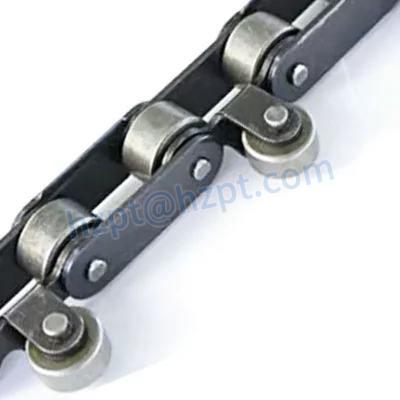
Chains used in the steel industry have many features, from their design to their lubrication. They need to operate reliably for long periods of time in demanding applications. With the right features, they can boost production, minimize downtime, and minimize replacement costs.
The most important of the features is strength. Chains can be made of various types of materials, and their strength and size depend on the application. For instance, a heavy-duty overhead lifting application may require a chain with Grade 80 or 100 breaking strength, while a smaller application may only need a Grade 40 or 43 chain. Industry professionals will also consider applicable standards and regulations when choosing a chain.
Stainless steel chain is often used in the steel industry. It is designed with a hyperbola arc pattern, which helps reduce friction and energy loss. This means that it is very durable even in harsh environments. Different types of driving chains are used in the steel industry, including the Driving Inverted Tooth Shape Chain, PIV Chain, and Long Pitch Conveyor Chain.
Showing 1–30 of 33 resultsSorted by popularity
-

Conveyor Chains for Steel Mill P600F3 P300F7
-
Conveyor Chains for Steel Mill BC300/400F1 BC350F1
-

Conveyor Chains for Steel Mill P300F5
-
Conveyor Chains for Steel Mill P75F9 P50.8F10
-
Conveyor Chains for Steel Mill LF150F1
-
Conveyor Chains for Steel Mill LF155
-
Conveyor Chains for Steel Mill P63F4
-
Conveyor Chains for Steel Mill P1000
-
Conveyor Chains for Steel Mill P625
-
Conveyor Chains for Steel Mill P600F1
-
Conveyor Chains for Steel Mill P650 P750
-
Conveyor Chains for Steel Mill P500 P500F1 P500F2
-
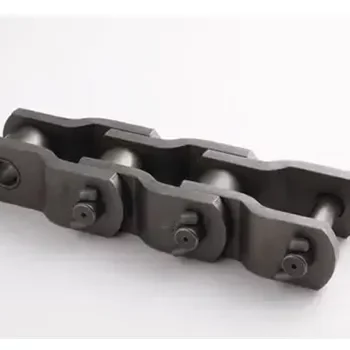
Large-pitch Heavy Duty Loading Chains EPL Series
-
Large-pitch Heavy Duty Loading Chains M-A1
-

Painted Chains Pitch 101.6
-
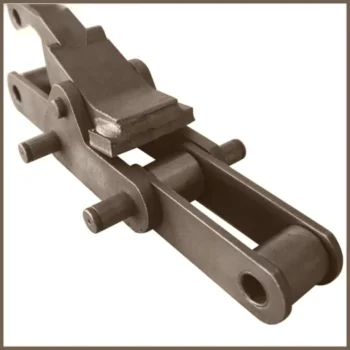
Air Drying Chain Pitch 80
-

Loading Chains for Metallurgical WTR03075 WTR03100 WTR07100 WTR07150
-

Chain-style Roll Conveyor Chains Pitch 100
-
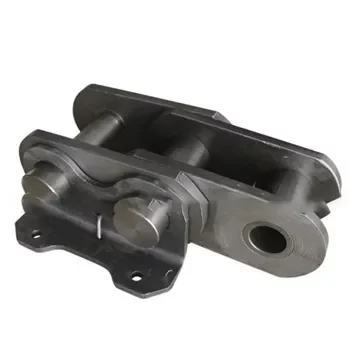
Chain-style Roll Conveyor Chains Pitch 125
-
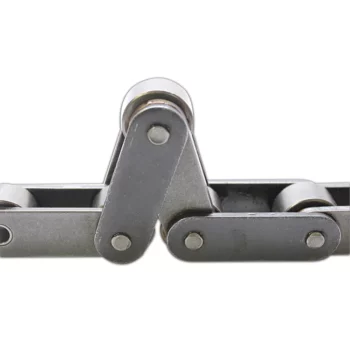
Chain for Puncher Pitch 100
-

Conveyor Leaf Pin Chain 9JH72T01 9JH11T01
-
Loading Chains for Metallurgical W03075 W03100 W07100 W07150
-

Lift Chain for Steel Lngot TS250
-
Conveyor Leaf Pin Chain M-A3
-
Conveyor Leaf Pin Chain 2159 2127 2156 2142 2138
-

Conveyor Chains of Steel Sheet YB250
-
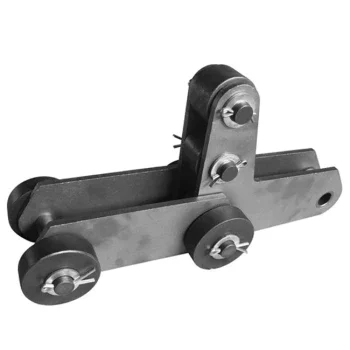
Cold Bed Chain Pitch 100
-
Cold Bed Chain Pitch 125
-
Cold Bed Chain Pitch 220
-
Cold Bed Chain Pitch 250