
Harmonic Drive
Harmonic Drive Reducer, also known as a harmonic drive or harmonic gearbox, is a type of precision gear system that offers high gear reduction ratios with exceptional accuracy and zero backlash. The basic design of a harmonic drive reducer consists of three main components: a wave generator, a flex spline, and a circular spline. The wave generator is typically an elliptical or cylindrical-shaped device that is connected to a motor or an input shaft. The flex spline is a thin-walled, flexible component with external teeth, while the circular spline has internal teeth that mesh with the flex spline.
The operation of a harmonic drive reducer is based on the principle of elastic deformation. When the wave generator rotates, it creates an elliptical or cylindrical motion that causes the flex spline to deform and mesh with the circular spline. This deformation generates a high gear reduction ratio between the input and output shafts.
One of the key advantages of a harmonic drive reducer is its ability to achieve high reduction ratios in a compact design. It can provide reduction ratios ranging from 30:1 to over 300:1, allowing for precise and controlled motion in applications that require high torque and accuracy. The absence of backlash, which is the clearance between gear teeth, ensures precise positioning and repeatability.
Another significant advantage of harmonic drives is their high torque-to-weight ratio. The design allows the transmission of high torque without sacrificing the overall weight and size of the system. This makes harmonic drives ideal for applications where weight and space constraints are critical, such as in robotics and aerospace. Harmonic drives also offer excellent positional accuracy and repeatability due to their nearly zero backlash. This characteristic makes them suitable for applications that require precise and controlled motion, such as industrial robots, machine tools, and optical systems.
Showing all 13 resultsSorted by popularity
-
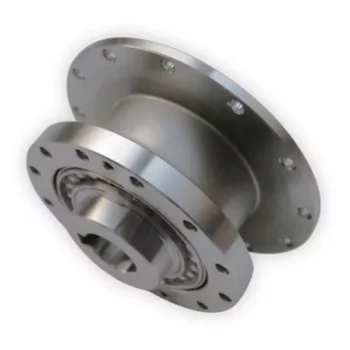
SF/SG-A Series Harmonic Drive (Strain Wave Gear Reducer)
-
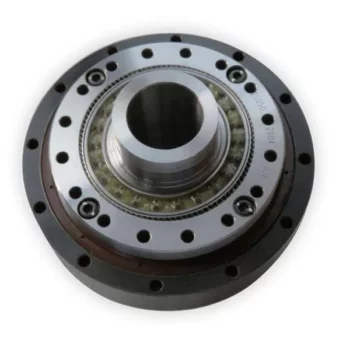
SF/SG-S2 Series Harmonic Drive (Strain Wave Gear Reducer)
-
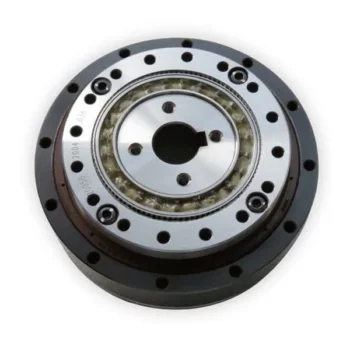
SF/SG-S1 Series Harmonic Drive (Strain Wave Gear Reducer)
-
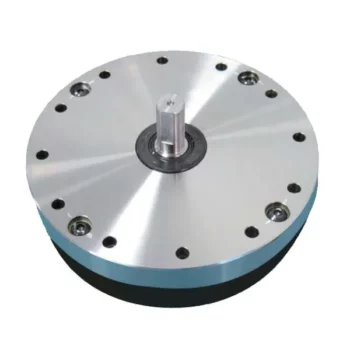
SF/SG-U2 Series Harmonic Drive (Strain Wave Gear Reducer)
-
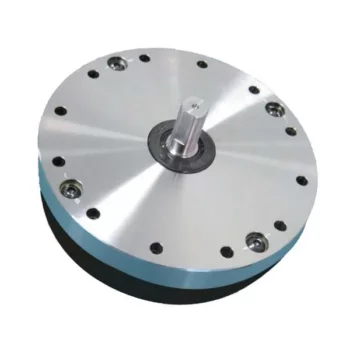
SF/SG-U1 Series Harmonic Drive (Strain Wave Gear Reducer)
-
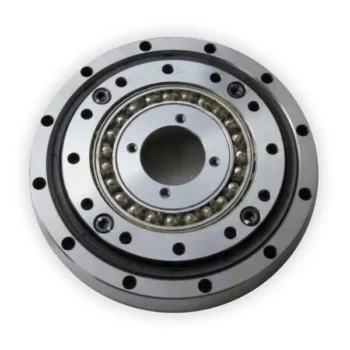
SD-U2 Series Harmonic Drive (Strain Wave Gear Reducer)
-
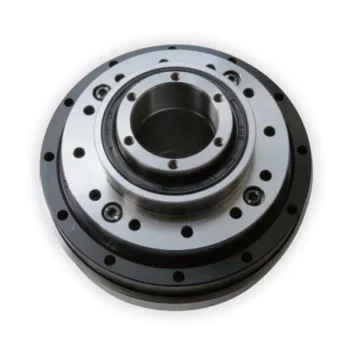
SD-U1 Series Harmonic Drive (Strain Wave Gear Reducer)
-
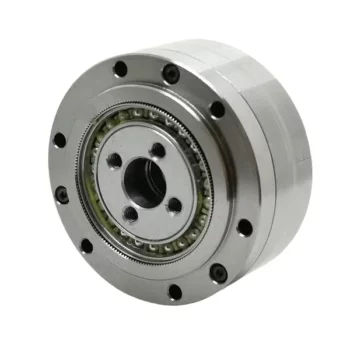
CD-A Series Harmonic Drive (Strain Wave Gear Reducer)
-
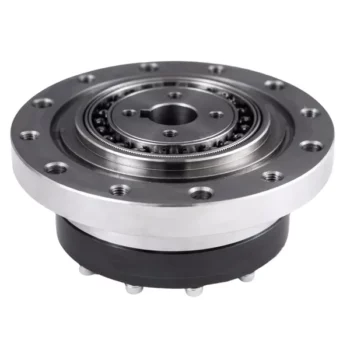
CD-U2 Series Harmonic Drive (Strain Wave Gear Reducer)
-
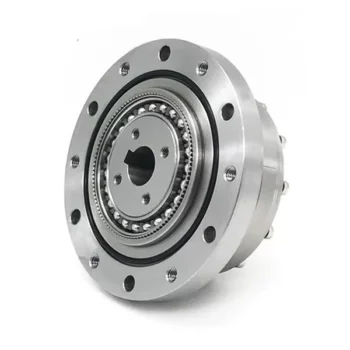
CD-U1 Series Harmonic Drive (Strain Wave Gear Reducer)
-
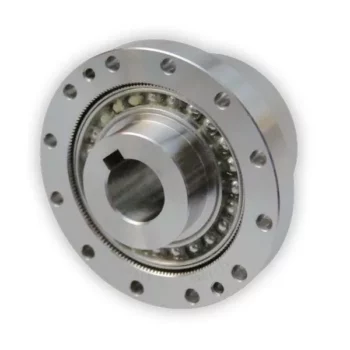
CF/CG-A Series Harmonic Drive (Strain Wave Gear Reducer)
-
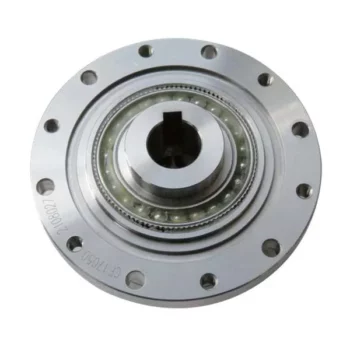
CF/CG-U1 Series Harmonic Drive (Strain Wave Gear Reducer)
-
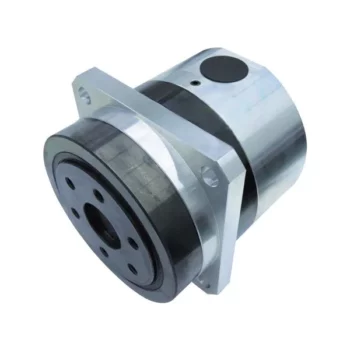
CF-GH Series Harmonic Drive (Strain Wave Gear Reducer)