
Harmonic Drive
What Is a Harmonic Drive Reducer?
A harmonic drive reducer, also known as a harmonic drive or strain wave gearing, is a type of precision gear mechanism that offers distinct advantages over traditional gear systems. It’s widely used in situations where high precision, compact size, and high torque capacity are required.
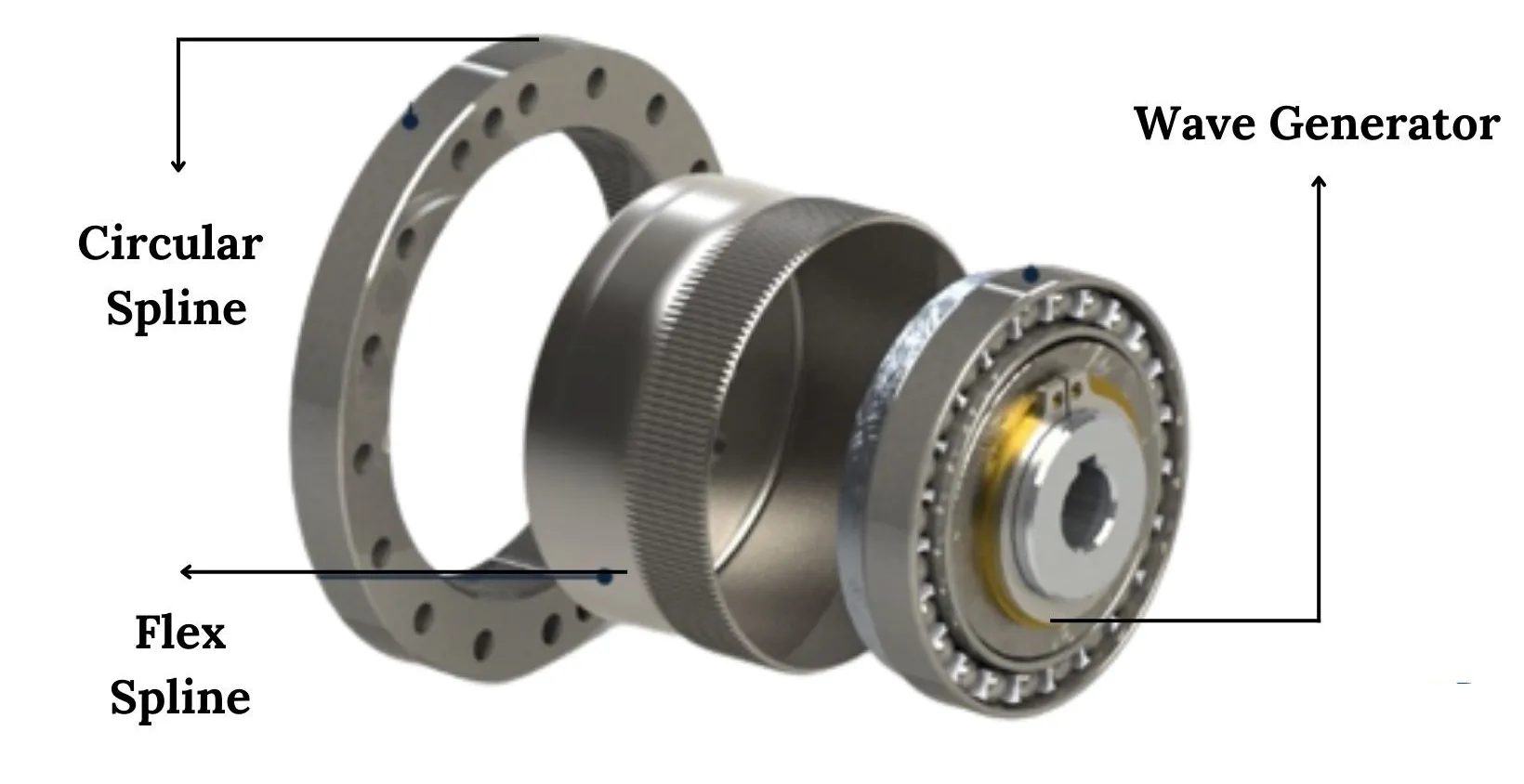
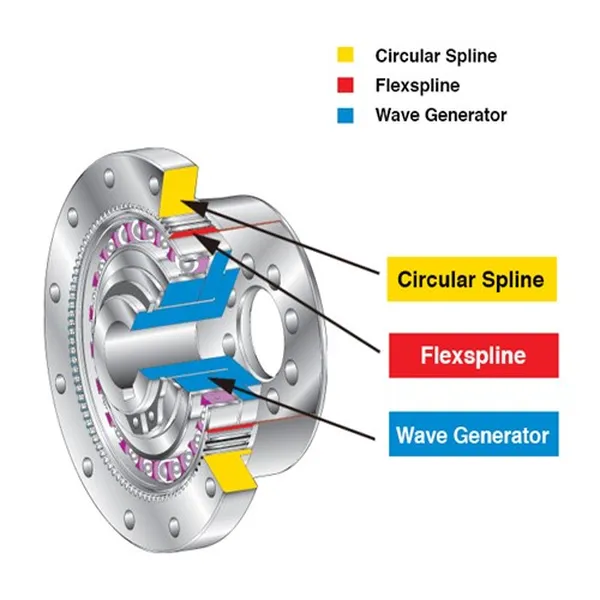
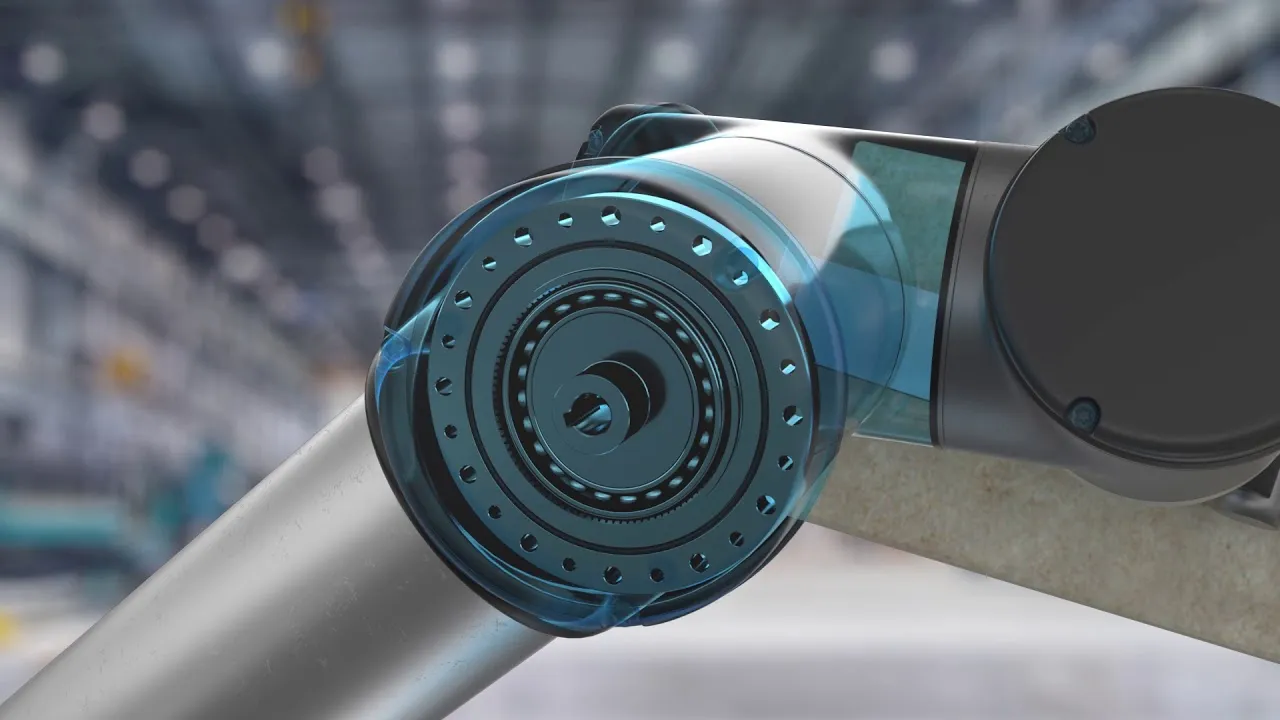
Harmonic Drive Reducer Basic Components: There are 3 basic elements in the Harmonic Drive Gearbox: a circular spline, a flexspline and a wave generator. These 3 components interact in such a way that helps in achieving high reduction ratios.
1. Circular Spline
- Structure: The circular spline is a rigid, circular ring that typically features internal teeth.
- Function: It acts as the stationary part of the gear system or the part connected to the output, depending on the design.
2. Flexspline
- Structure: The flexspline is a thin, flexible cylinder with external teeth on its outer diameter. The number of teeth is slightly fewer than those on the circular spline.
- Function: It deforms elastically to engage with the circular spline. In most configurations, the flexspline is connected to the output shaft, delivering the rotational motion.
3. Wave Generator
- Structure: This component consists of an elliptical (oval-shaped) disc, often with a ball bearing mounted to its outer perimeter.
- Function: The wave generator fits inside the flexspline, causing it to deform into an elliptical shape. This deformation leads to the engagement of the flexspline’s teeth with the teeth of the circular spline at the major axis of the ellipse.
Types of Harmonic Drive Reducers
-
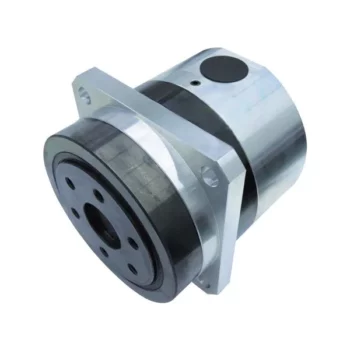
CF-GH Series Harmonic Drive (Strain Wave Gear Reducer)
-
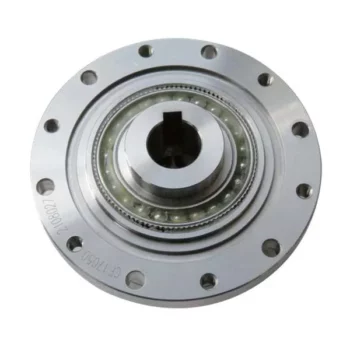
CF/CG-U1 Series Harmonic Drive (Strain Wave Gear Reducer)
-
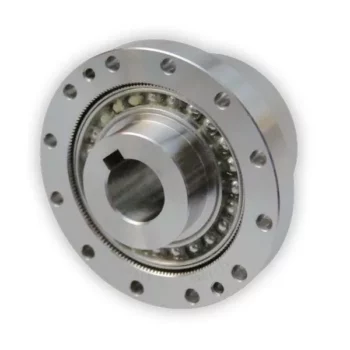
CF/CG-A Series Harmonic Drive (Strain Wave Gear Reducer)
-
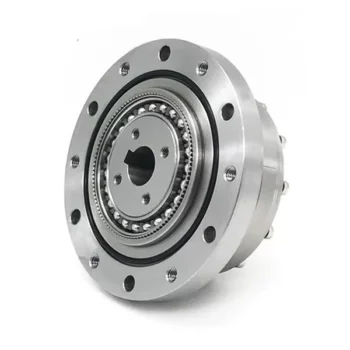
CD-U1 Series Harmonic Drive (Strain Wave Gear Reducer)
-
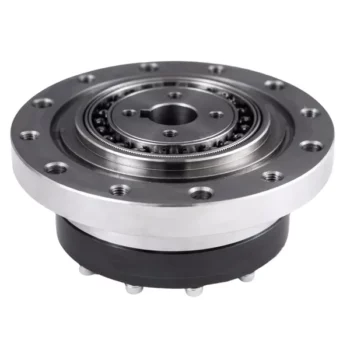
CD-U2 Series Harmonic Drive (Strain Wave Gear Reducer)
-
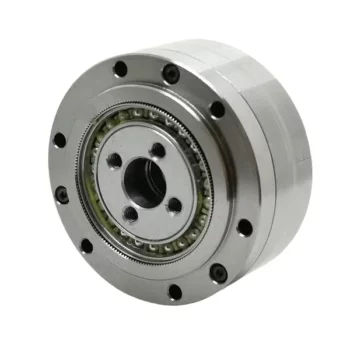
CD-A Series Harmonic Drive (Strain Wave Gear Reducer)
-
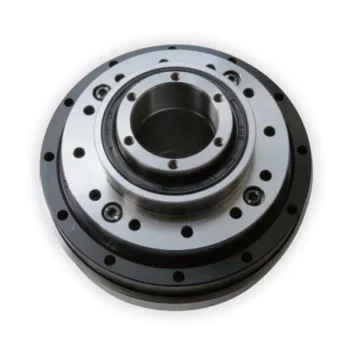
SD-U1 Series Harmonic Drive (Strain Wave Gear Reducer)
-
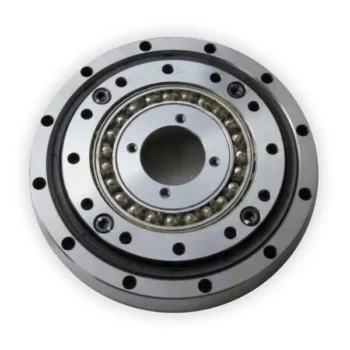
SD-U2 Series Harmonic Drive (Strain Wave Gear Reducer)
-
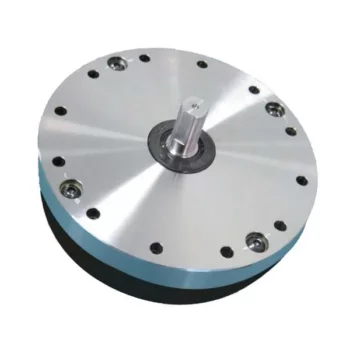
SF/SG-U1 Series Harmonic Drive (Strain Wave Gear Reducer)
-
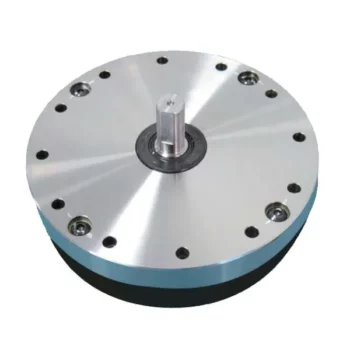
SF/SG-U2 Series Harmonic Drive (Strain Wave Gear Reducer)
-
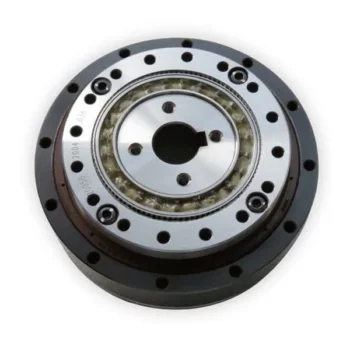
SF/SG-S1 Series Harmonic Drive (Strain Wave Gear Reducer)
-
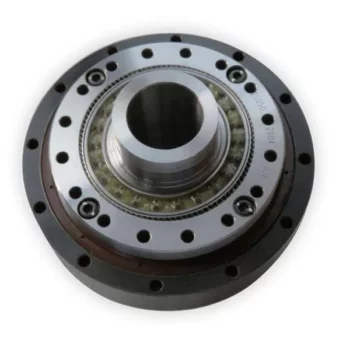
SF/SG-S2 Series Harmonic Drive (Strain Wave Gear Reducer)
-
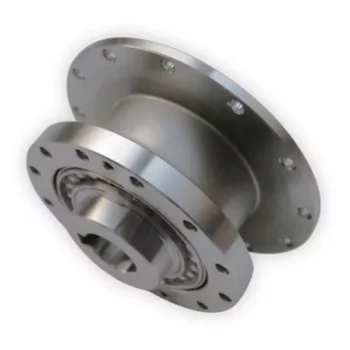
SF/SG-A Series Harmonic Drive (Strain Wave Gear Reducer)
Harmonic Drive Reducer Working Principle
The wave generator and the harmonic gear reducer are a rod-shaped component. Both ends are equipped with rolling bearings and V-shaped rollers which are mutually pressed against the inner wall of the elastic wheel. The elastic wheel is a thin-walled gear that can produce large elastic deformation. The diameter of the inner hole is slightly smaller than the total length of the wavelength generator. The wave generator is an element that makes the elastic wheel produce controllable elastic deformation.
When the harmonic drive wave generator is installed in the elastic wheel, one end of the elastic wheel is forced to become an ellipse of the original circle. The teeth at both ends of the long shaft are completely meshed with the teeth of the rigid wheel, and the teeth at both ends of the short shaft are completely separated from the rigid wheel. The teeth are in a transitional state of meshing and separating in other parts of the circumference.
When the harmonic generator and the reducer rotate continuously in the direction shown in the chart, the deformation of the elastic wheel is constantly changing, so that the meshing state of the elastic wheel and the rigid wheel is constantly changing. Through meshing, meshing, meshing, separation, re-engaging, etc., the elastic wheel is slowly rotated in the opposite direction of the wave generator H. When the utility model works, the rigid wheel is fixed, the motor drives the wave generator to rotate, and the elastic wheel drives the output wheel to rotate to drive the load to move. In the transmission process, the wave source rotates around a certain point on the elastic wheel, and the number of deformation cycles is called the wave number N.
Advantages of the Harmonic Gear Drive
1. High Precision: Harmonic Drive Reducers are known for their exceptional precision. They provide accurate motion control with minimal backlash, ensuring precise positioning and repeatability. This makes them well-suited for applications that require high levels of precision, such as robotics, automation, and instrumentation.
2. Compact Size: Harmonic Drive Reducers have a compact and lightweight design compared to other types of gear mechanisms. They offer high torque density, meaning they can transmit high levels of torque in a small package. This compactness is beneficial in applications where space is limited or weight reduction is crucial, such as robotics, aerospace, and portable devices.
3. Zero-Backlash Operation: Backlash refers to the play or clearance between gear teeth, which can cause inaccuracies and delays in motion control. Harmonic Drive Reducers are designed to have zero-backlash operation, ensuring immediate and precise response to input commands. This is particularly important in applications that require instantaneous and accurate motion, such as robotics, CNC machines, and precision instruments.
4. High Torque Transmission: Harmonic Drive Reducers can achieve high gear reduction ratios, typically ranging from 30:1 to 320:1. This allows for significant torque multiplication, enabling them to handle high torque loads efficiently. The high torque transmission capability makes them suitable for applications that require powerful and precise motion, such as industrial machinery, automotive systems, and robotics.
5. Smooth and Quiet Operation: The unique tooth profile and meshing action of Harmonic Drive Reducers result in smooth and quiet operation. The absence of backlash and the tooth engagement mechanism contribute to reduced vibration and noise generation. This is beneficial in applications where noise reduction and smooth operation are essential, such as medical devices, laboratory equipment, and precision optics.
6. Reliability and Durability: Harmonic Drive Reducers are known for their durability and long service life. The design minimizes wear and tear due to the absence of sliding contact between gear teeth. This makes them highly reliable and suitable for demanding applications that require continuous and reliable operation.
7. Wide Range of Sizes and Configurations: Harmonic Drive Reducers are available in a wide range of sizes, reduction ratios, and configurations to meet specific application requirements. This flexibility allows for customization and integration into various systems and equipment.
Applications of Harmonic Drive Reducer
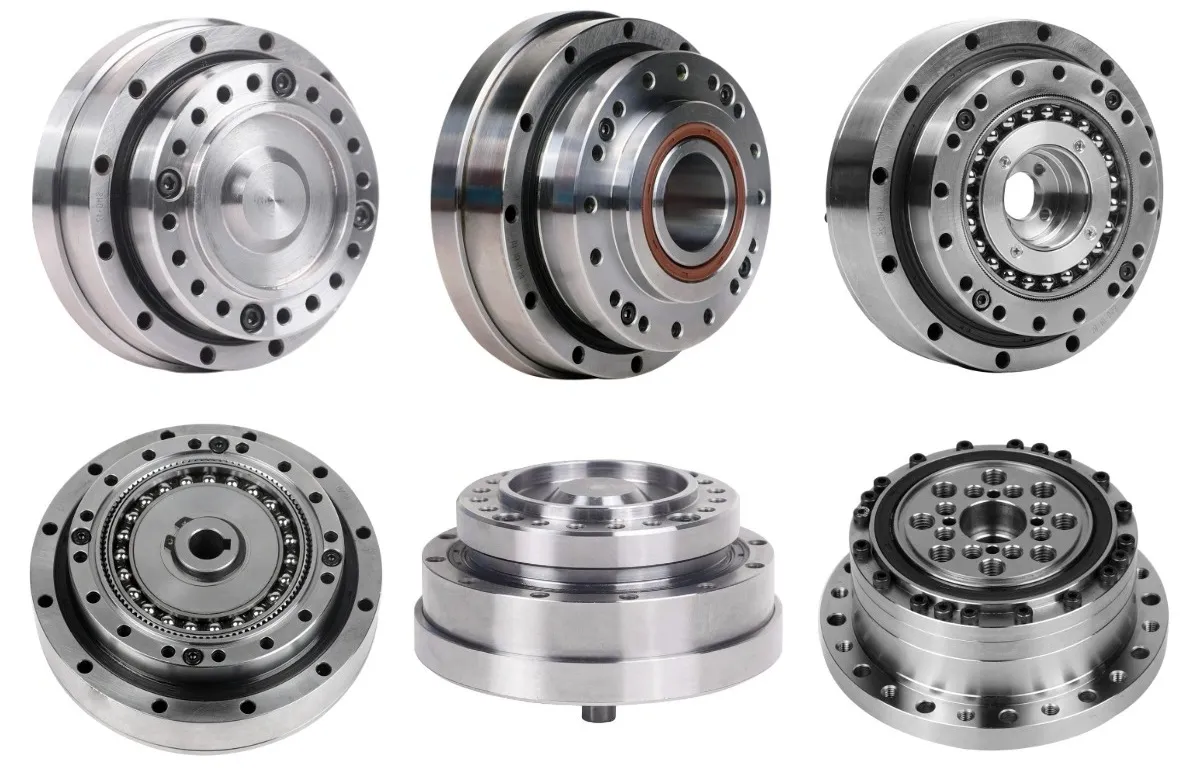
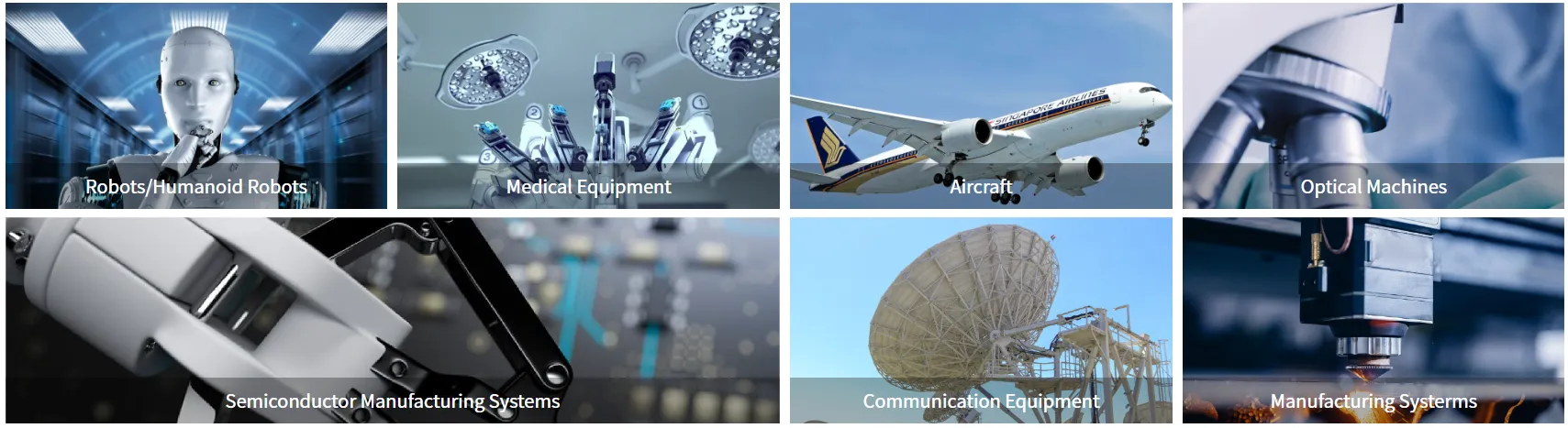
Harmonic drive is used in a wide range of applications, including:
(1) Robotics: Harmonic drive is widely used in robotics, especially in the arms and legs of humanoid robots. The high precision and low backlash of harmonic drive make it ideal for precise movements in robotics.
(2) Aerospace: Harmonic drive is used in aerospace applications, including satellite positioning systems and antenna positioning systems. The lightweight and compact design of harmonic drive make it ideal for aerospace applications.
(3) Medical Equipment: Harmonic drive is also used in medical equipment, including surgical robots and prosthetic limbs. The high precision and low backlash of harmonic drive make it ideal for delicate and precise movements in medical equipment.
(4) Machine Tools: Our high precision harmonic reducer has the characteristics of low-temperature rise, low starting torque, high reliability, big torque, long lifetime, big speed ratio, small size, etc., which can be widely used for precise applications in the machine tool industry.
(5) Aerospace: Harmonic gearbox’s reliability and quality make it possible in the defense industry. Special materials, extremely light constructions, or dry lubrication are required for aerospace and defense purposes.
(6) Semiconductor Manufacturing: Harmonic drive is used for wafer handling, aligning, and positioning stages. Their low backlash and high precision enable the accurate manipulation of delicate and valuable wafers during the manufacturing process, ensuring efficient and reliable semiconductor production.
Installation Steps of the Harmonic Speed Reducer
The first step is to confirm whether the motor and reducer are intact before installation, and strictly check whether the dimensions of the parts connecting the motor and the reducer match. Here are the tolerance of fit and dimensions of the positioning boss of the motor, the input shaft and the groove of the reducer.
The second step is to unscrew the screw on the dust-proof hole on the outer side of the reducer flange, adjust the clamping ring so that the side hole is aligned with the dust-proof hole, and insert the inner hexagon to tighten. After that, remove the motor shaft key.
The third step is to connect the motor and the reducer naturally. When connecting, ensure that the concentricity of the output shaft of the reducer and the input shaft of the motor is the same, and the outer flanges of the two are parallel. If the concentricity is inconsistent, it will cause the motor shaft to break or the reducer gear to wear.
Common Damage Causes of Harmonic Drive Reducer Bearings
1. The cavity of the harmonic speed reducer is not cleaned or the grease added is not pure
If the cavity of the harmonic speed reducer is not cleaned or the grease added is not pure, the wear, vibration and noise of the bearin will be increased, damaging the bearing raceway of the harmonic speed reducer and causing excessive temperature rise and burn the bearing.
2. High temperature rise of the motor body and the untimely grease supplement
Due to the high temperature rise of the motor body and the untimely grease supplement to the bearing of the harmonic speed reducer, the bearing is short of oil or even burned. The mixed use of different greases will also cause bearing damage.
3. The bearing of harmonic speed reducer is improperly assembled
During cold assembly, the shaft is worn by uneven knocking on the bearing inner ring. Then the loss of interference between the bearing inner ring of harmonic speed reducer and the bearing or the decrease of interference, will result in the operation of the inner ring; Uneven knock during the installation of the motor end cover will cause the loose fit between the end cover bearing chamber and the bearing outer ring, resulting in the operation of the outer ring.
4. The harmonic speed reducer hasn’t been operatated for a long time
When the harmonic speed reducer hasn’t been operated for a long time, grease deterioration and bearing rust are caused and it is not repaired in time.
5. The axial dislocation of stator and rotor cores or insufficient accuracy after re-machining the rotating shaft
Due to the axial dislocation of stator and rotor cores or insufficient accuracy after re-machining the rotating shaft of harmonic speed reducer, the inner and outer rings of the bearing of harmonic speed reducer are not on the same section, resulting in “different force” of bearing operation and then temperature rise and burning of the bearing.
6. Harmonic speed reducer manufacturers
Due to the problems of harmonic speed reducer manufacturers, the bearing clearance of harmonic speed reducer is too small or too large. If the bearing clearance is too small, it will be too tight during rotation, and if the bearing clearance is too large, which will cause abnormal noise and accelerate its damage.
7. The shaft of harmonic speed reducer is affected by additional load.
Edited by Yjx