
Two Piece D Bore Shaft Collars (Shaft Clamps) Inch Series
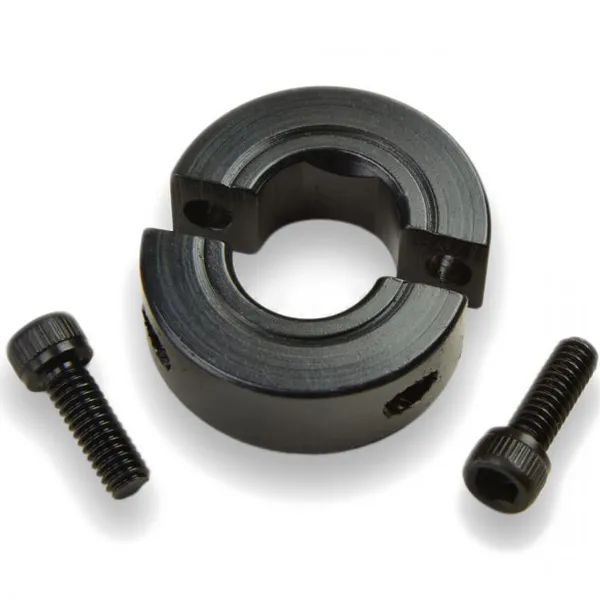
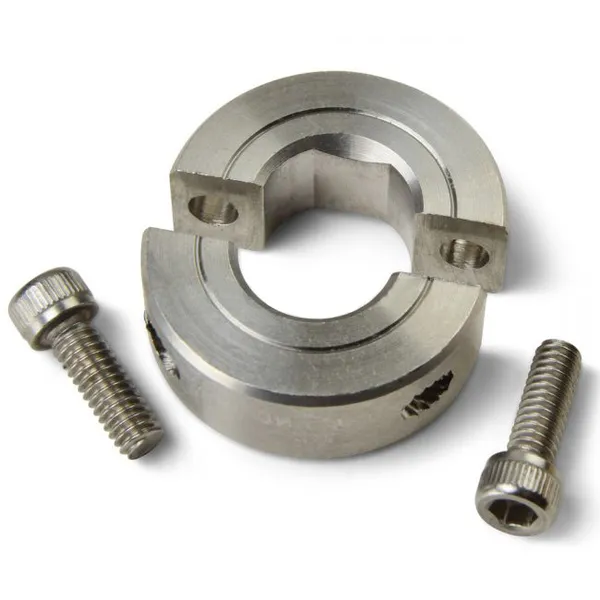
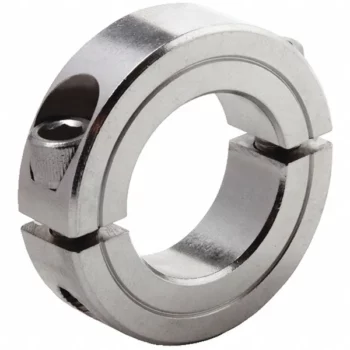
The inch series two piece d bore shaft collars are mechanical components used to secure a rotating shaft in place. They are designed to fit onto the shaft and clamp down, creating a mechanical stop that prevents the shaft from moving in a particular direction. The “D Bore” design of these shaft collars refers to the shape of the central hole – it is shaped like the letter “D” rather than a full circle. This allows the shaft collar to be easily installed and removed from the shaft without having to completely remove other components such as gears or pulleys that may be attached to the shaft.
Two Piece D Bore Shaft Collars (Shaft Clamps) Inch Series
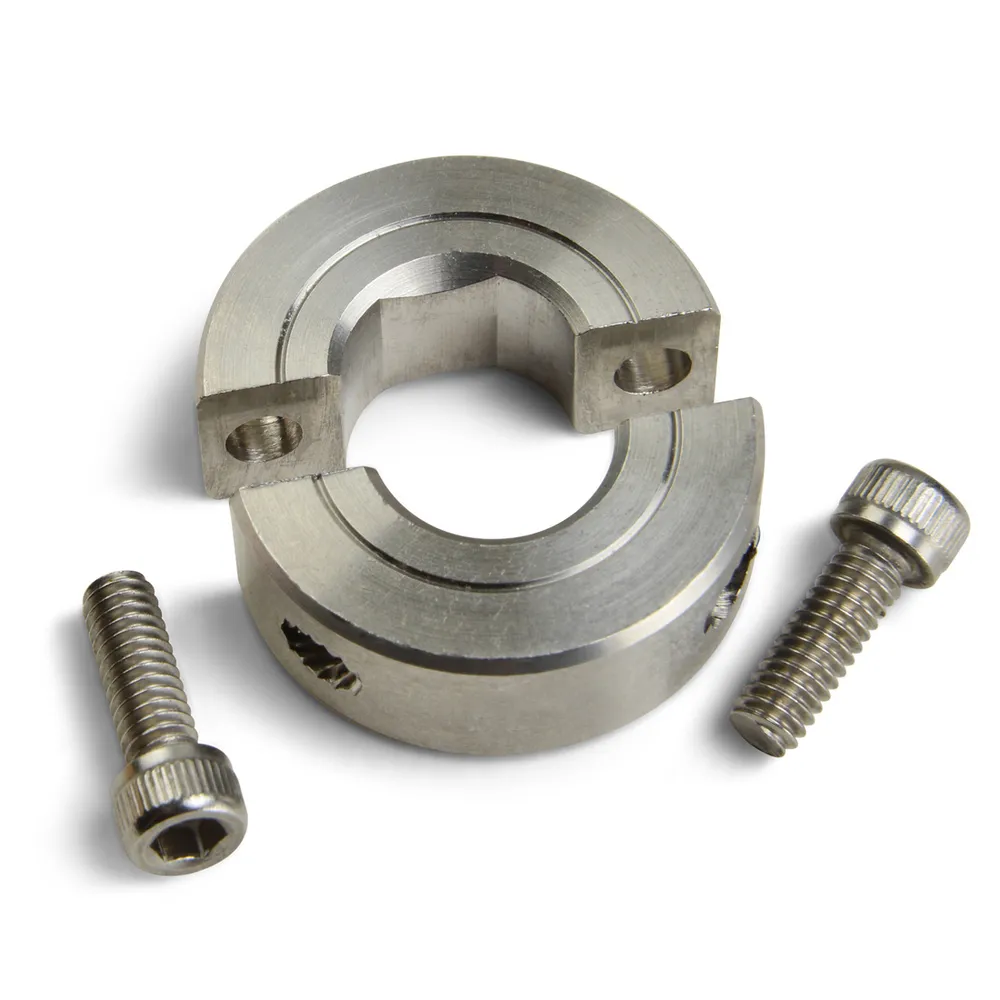
The inch series two piece d bore shaft collars are mechanical components used to secure a rotating shaft in place. They are designed to fit onto the shaft and clamp down, creating a mechanical stop that prevents the shaft from moving in a particular direction. The "D Bore" design of these shaft collars refers to the shape of the central hole - it is shaped like the letter "D" rather than a full circle. This allows the shaft collar to be easily installed and removed from the shaft without having to completely remove other components such as gears or pulleys that may be attached to the shaft.
The "two-piece" design of these d bore shaft collars means that they are made up of two separate pieces that are held together with screws or clamps. This allows for a tighter grip on the shaft and also makes it easier to install and remove the shaft collar. Overall, the inch series two piece d bore shaft collars are commonly used in various mechanical applications where a shaft needs to be securely held in place, such as in machinery, robotics, and conveyor systems.
 |
 |
▍Two Piece D Bore Shaft Collar Sizes Chart (Inch Series)
 |
 |
| Part Number Steel | Part Number Aluminum | Part Number Stainless Steel | Bore (B) (in) | Outer Diameter (OD) (in) | Width (W) (in) |
|---|---|---|---|---|---|
| SPD-4-F | SPD-4-A | SPD-4-SS | 0.2500 in | 5/8 in | 0.281 in |
| SPD-6-F | SPD-6-A | SPD-6-SS | 0.3750 in | 7/8 in | 0.343 in |
| SPD-8-F | SPD-8-A | SPD-8-SS | 0.5000 in | 1 1/8 in | 0.406 in |
| SPD-10-F | SPD-10-A | SPD-10-SS | 0.6250 in | 1 5/16 in | 0.437 in |
| SPD-12-F | SPD-12-A | SPD-12-SS | 0.7500 in | 1 1/2 in | 0.500 in |
| SPD-16-F | SPD-16-A | SPD-16-SS | 1.0000 in | 1 3/4 in | 0.500 in |
▍Characteristics of Two Piece D Bore Shaft Collars
Two-piece D bore shaft collars are mechanical components used to secure and position objects on a shaft. They have several key characteristics, including:
1. Two-piece design: As the name suggests, these d bore shaft collars consist of two pieces that clamp together around a shaft. This design makes them easy to install and remove without disturbing other components on the shaft.
2. D-bore shape: The d bore shaft collar's bore is shaped like a "D," which allows it to grip the flat sides of a shaft and prevent rotation. This shape also helps to distribute the clamping force evenly around the shaft to avoid damage.
3. Material: Two-piece d bore shaft collars are typically made from materials like steel, aluminum, or nylon, depending on the application requirements. Steel d shaft collars are strong and durable, while aluminum d shaft collars are lightweight and corrosion-resistant. Nylon d shaft collars are often used in applications where weight, noise, or vibration are a concern.
4. Size: These two-piece d bore shaft collars come in a range of sizes to fit different shaft diameters. The collar's outside diameter is usually larger than the shaft diameter to provide a surface for mounting other components or attaching a tool or handle.
5. Hardware: Two-piece d bore shaft collars may include hardware like screws, bolts, or clamps to secure the two pieces together. The hardware used will depend on the material and size of the shaft collar and the application requirements.
▍Applications of Two Piece D Bore Shaft Collars
Two piece d bore shaft collars are versatile components used in various industrial and mechanical applications. These shaft collars are designed with a D-shaped bore to fit securely onto a D-shaped shaft. The two-piece design allows for easy installation and removal without the need to disassemble the shaft or surrounding components. Here are some common applications of two-piece D bore shaft collars:
Positioning: Two-piece D bore shaft collars are used to position components along a shaft accurately, such as gears, sprockets, and bearings. They help maintain the proper spacing and alignment of the components.
Limiting movement: By installing D bore shaft collars on both sides of a component, you can limit its axial movement along the shaft. This is especially useful in applications where precise control of component movement is required.
Shaft coupling: Two-piece D bore shaft collars can be used to connect two shafts with D-shaped profiles. This type of coupling provides a secure connection that resists slipping and misalignment.
Mounting: D bore shaft collars can be used to mount devices or components onto a shaft, such as sensors, encoders, or other accessories. The collar's flat side provides a secure mounting surface.
Torque transmission: The D-shaped bore of the collar allows for efficient torque transmission between the shaft and the collar. This can be useful in applications where the collar is used to drive a component or transmit torque from the shaft to another system.
Anti-rotation: The D-shaped bore profile of the collar provides anti-rotation functionality, preventing the collar from rotating on the shaft. This can be important in applications where maintaining the correct orientation of components is critical.
Overall, two-piece D bore shaft collars find use in various industries, including automation, material handling, robotics, packaging, and manufacturing. Their versatility and ease of installation make them an essential component in many mechanical systems.

▍How to Choose the Right Two Piece D Bore Shaft Collar?
Choosing the right two-piece D bore shaft collar involves considering several factors, such as the application requirements, the material of the collar, and the size of the bore. Here are some steps that can help you choose the right two-piece D bore shaft collar:
(1) Determine the bore size: The first step in choosing a D bore shaft collar is to determine the size of the bore. Measure the diameter of the shaft where you want to install the collar to ensure you select the correct size.
(2) Consider the application: Consider the environment and conditions in which the D bore shaft collar will be used. Will the D bore shaft collar be exposed to high temperatures or corrosive chemicals? This will determine the material from which the D bore shaft collar should be made.
(3) Choose the right material: D bore shaft collars are made from various materials, including steel, aluminum, and plastic. Steel is durable and can withstand high pressures and temperatures, while aluminum is lightweight and resistant to corrosion.
(4) Decide on the collar type: Two-piece D bore shaft collars are available in various types, including clamp style shaft collars and set screw shaft collars. Clamp-style shaft collars are ideal for high torque applications and provide uniform pressure around the shaft, while set screw shaft collars are suitable for low torque applications.
(5) Consider additional features: Some two-piece D bore shaft collars may have additional features, such as keyways or tapped holes. Consider if anyof these features are necessary for your application, and select a D shaft collar with the appropriate features.
(6) Check the specifications: Once you have narrowed down your selection, review the specifications of the D bore shaft collar to ensure it meets your requirements, such as load capacity and maximum torque.
 |
 |
▍Two Piece D Bore Shaft Collar Manufacturers
Shaft collars are machine components that feature a simple design but play an important role in a wide range of industrial applications. They serve three primary functions; holding components in place, locating or positioning components on a shaft, and creating an attachment between the shaft and another component. Designers have a variety of factors to consider, such as style, material, bore size, and shaft geometry, before a selection can be made. It is important to identify the requirements, parameters, and limitations of your system in order to determine the right style for the application.
Despite their simple design, shaft collars play an important role in a wide range of industrial applications. As such, when choosing one for a particular application, it is essential to use the one with the right design and performance characteristics.
As an experienced manufacturer and distributor of shaft collars suitable for use in power transmission, motion control, automation, and other OEM and ODM operations, HZPT has the knowledge, skills, and inventory to help customers select and source the right shaft collar for their application. In addition to offering standard shaft collars, including set screw shaft collars, heavy duty shaft collars, one piece shaft collars, two piece shaft collars, quick release shaft collars, double wide shaft collars, mountable shaft collars, hex shaft collars, D profile shaft collars, and threaded shaft collars, we also provide custom design and engineering services to manufacturing specialized shaft collars for unique customer needs.

▍FAQ
Q1: What is a D bore shaft collar?
A: A D bore shaft collar is a type of collar used to secure a machine component onto a shaft. It has a D-shaped hole that fits snugly around the shaft, providing a secure grip and preventing the component from sliding or rotating on the shaft.
Q2: What materials are D bore shaft collars made from?
A: D bore shaft collars are typically made from materials such as steel, stainless steel, aluminum, brass, and plastic. The choice of material depends on the application and the operating conditions.
Q3: What sizes are available for D bore shaft collars?
A: D bore shaft collars come in a range of sizes to fit different shaft diameters. The sizes are usually specified in inches or millimeters, and the shaft collar's width can also vary depending on the application.
Q4: How are D bore shaft collars installed?
A: D bore shaft collars are installed by sliding them onto the shaft and tightening the set screw(s) using a hex key or Allen wrench. The set screw(s) press against the flat side of the D-shaped hole, creating a tight grip on the shaft.
Q5: What are some common applications for D bore shaft collars?
A: D bore shaft collars are commonly used in applications such as robotics, automation equipment, conveyor systems, and packaging machinery. They can be used to secure bearings, sprockets, pulleys, gears, and other components onto shafts. They are also used in medical equipment, food processing equipment, and other industries where hygiene and corrosion resistance are important.
Q6: Are D bore shaft collars reusable?
A: Yes, D bore shaft collars are designed to be reusable. They can be removed from the shaft by loosening the set screw(s) and sliding the shaft collar off. However, it is important to inspect the shaft collar and the set screw(s) for damage or wear before reusing them to ensure proper function and safety.
Q7: What are some advantages of using D bore shaft collars?
A: D bore shaft collars are easy to install and remove, making them a convenient solution for securing components onto shafts. They are also relatively low-cost compared to other types of shaft collars. Additionally, D bore shaft collars provide a secure grip on the shaft without damaging the surface, and they can be positioned anywhere along the shaft for maximum flexibility.
Q8: Are there any limitations or drawbacks to using D bore shaft collars?
A: One limitation of D bore shaft collars is that they can only be used on shafts with a flat side or a keyway. They are not suitable for use on round or tapered shafts. Additionally, D bore shaft collars may not provide as strong a grip as other types of shaft collars, such as split shaft collars or clamping shaft collars, and they may be more prone to slipping or coming loose if the set screw(s) are not tightened properly or if there is excessive vibration or torque. However, these limitations can often be mitigated by choosing the appropriate shaft collar size and material and by following proper installation and maintenance procedures.
Additional information
| Editor | Yjx |
|---|
Related products
-
One Piece Shaft Collars (Shaft Clamps) Metric Series
-
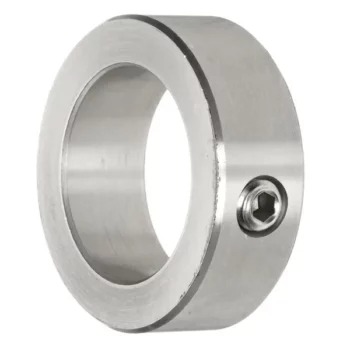
Set Screw Shaft Collars (Shaft Clamps) Metric Series
-
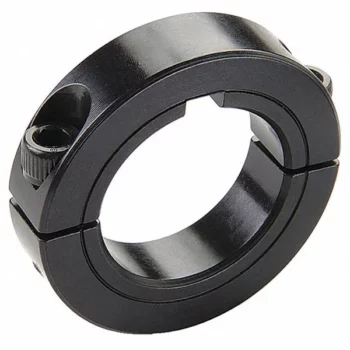
Two Piece Shaft Collars (Shaft Clamps) Inch Series
-
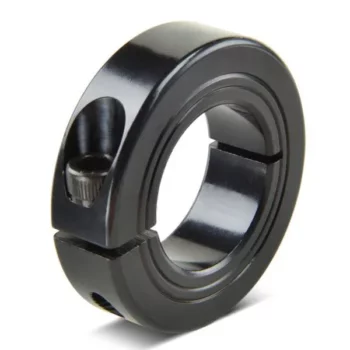
One Piece Shaft Collars (Shaft Clamps) Inch Series
-
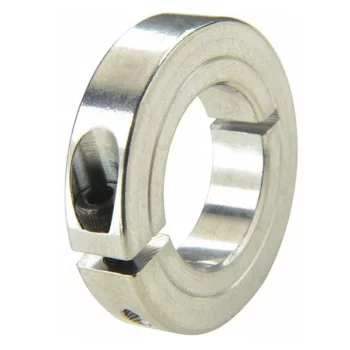
One Piece Thin Line Shaft Collars (Shaft Clamps) Inch Series
-
Two Piece Shaft Collars (Shaft Clamps) Metric Series

We promise will offer the best price by the high quality in china! We also accept special order about the products. If you are interested in our products. Please do not hesitate to let us know.We are pleased to give you the detailed information.We promise that our products would be safety and were in high quality and reasonable price. If you are interested in our products, please contact us asap.We are sincerely looking for your cooperation.
Most of our products are exported to Europe or Americas, both standard and nonstandard products available. We can produce as per your drawing or sample. Material can be standard or as per your special request. If you choose us, you choose reliable.
Industries We Service
