
Finished Bore Sprocket
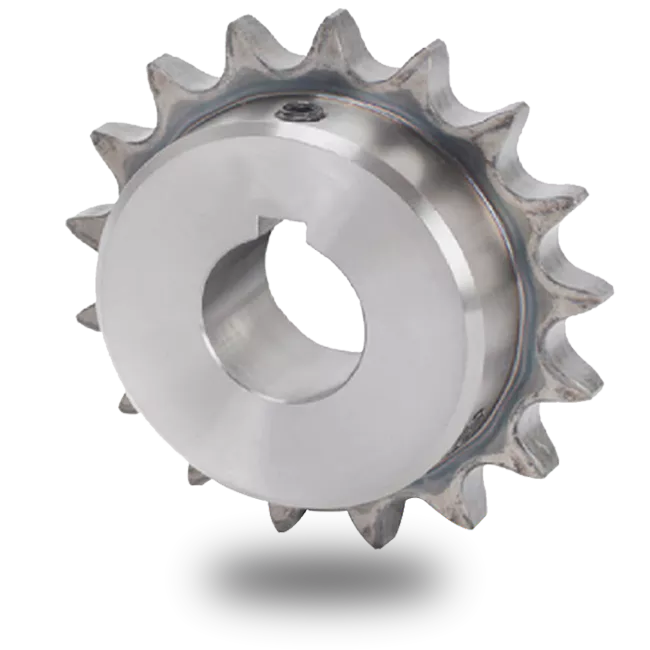
A Finish Bore Sprocket is a precision machined sprocket characterized by a sprocket center hole that has been specially finished to very high tolerances. This finishing is usually done to ensure a precise fit between the sprocket and the shaft, thereby improving the performance and reliability of the entire drivetrain.
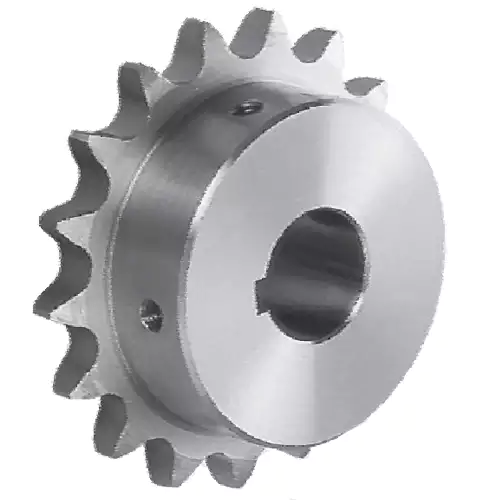
Non-hardened teeth sprocket
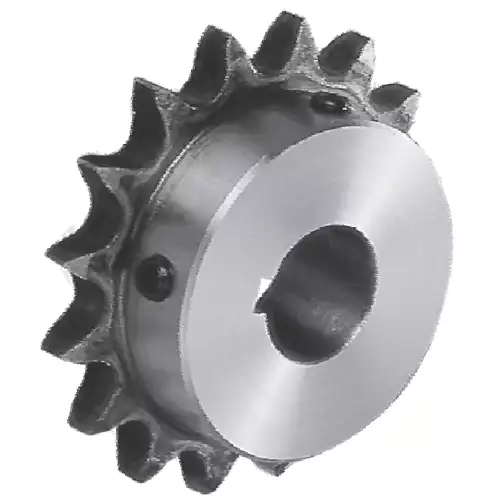
Hardened teeth sprocket
European Standard Finished Bore Sprocket
Finished Bore sprockets For Roller Chains DIN8187-ISO/R606
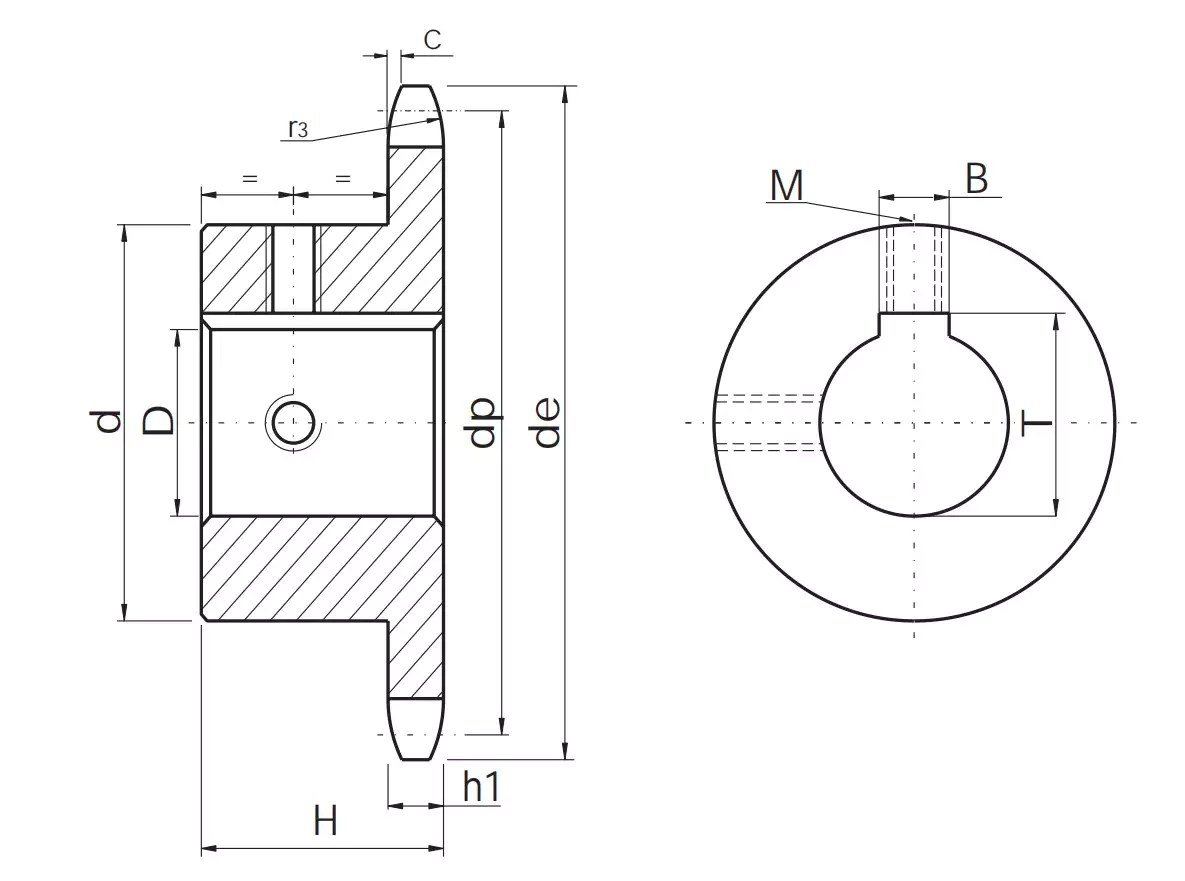
American Standard Finished Bore Sprocket
ASIAN Standard Finished Bore Sprocket
Showing 1–12 of 46 resultsSorted by latest
-
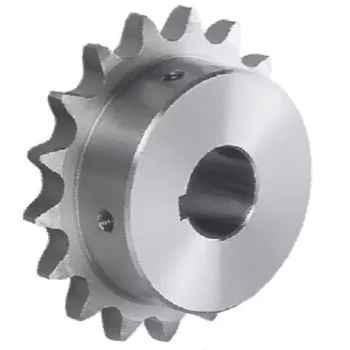
Finished Bore Sprocket FBN120B Asian Standard
-
Finished Bore Sprocket FBN100B Asian Standard
-
Finished Bore Sprocket FBK80B Asian Standard
-
Finished Bore Sprocket FBN80B Asian Standard
-
Finished Bore Sprocket FBK60B Asian Standard
-
Finished Bore Sprocket FBN60B Asian Standard
-
Finished Bore Sprocket FBK50B Asian Standard
-
Finished Bore Sprocket FBN50B Asian Standard
-
Finished Bore Sprocket FBK40B Asian Standard
-
Finished Bore Sprocket FBN40B Asian Standard
-
Finished Bore Sprocket FBK35B Asian Standard
-
Finished Bore Sprocket FBN35B Asian Standard
What is a finish bore sprocket?
A Finish Bore Sprocket is a precision machined sprocket characterized by a sprocket center hole that has been specially finished to very high tolerances. This finishing is usually done to ensure a precise fit between the sprocket and the shaft, thereby improving the performance and reliability of the entire drivetrain.
Improved
Alignment
Accuracy
Enhanced
Transmission
Efficiency
Improve
Safety
Improve
Overall
Performance
Finished Bore Sprocket Raw Materials Selection
✔ Steel
- Carbon Steel: Suitable for general-purpose sprockets with good strength and toughness. Common grades include 1018, 1045, etc.
- Alloy Steel: Used in situations where higher strength and wear resistance are required, such as 4140 or 4340 alloy steel.
✔ Stainless Steel
- 304/304L Stainless Steel: Commonly used in environments that require corrosion resistance, such as food processing or chemical industries.
- 316/316L Stainless Steel: More corrosion-resistant than 304, suitable for marine or high-chloride environments.
✔ Cast Iron
- Grey Iron: Usually used in low-speed and light-load applications, with lower cost.
- Ductile Iron: Has better ductility and impact strength, suitable for medium loads and applications that require a certain degree of toughness.
✔ Aluminum Alloy
- 6061-T6 aluminum alloy: Lightweight and corrosion-resistant, suitable for weight-sensitive applications.
- 7075-T6 aluminum alloy: Higher strength, suitable for situations that require higher strength but lighter weight.
Manufacturing Process
Forging
Casting
Machining
Hole machining
Heat Treatment & Surface Treatment
- Annealing: Improve the machinability of materials and eliminate internal stress.
- Quenching: Improve hardness and wear resistance.
- Tempering: Increase toughness while maintaining a certain hardness.
- Coating: Increase corrosion resistance or improve appearance through electroplating, spraying, etc.
- Galvanizing: Provide anti-rust protection.
- Anodizing: Increase the corrosion resistance of aluminum alloys.
- Polishing: Improve surface finish and reduce friction.
Quality Control

-
Balance Correction
Dynamic Balancing: By adding or removing material, the sprocket is kept balanced and vibration is reduced when rotating at high speed. -
Deburring: Remove burrs generated during processing.
-
Cleaning: Remove surface residues to prepare for further processing or packaging.
- Dimensional Inspection: Use tools such as calipers and micrometers to measure key dimensions.
- Surface Inspection: Check the surface for defects such as cracks, scratches, etc.
- Hardness Test: Confirm whether the material hardness meets the requirements.
- Dynamic Balancing Test: Test the balance of the sprocket in the rotating state.
Showing 1–16 of 46 resultsSorted by popularity
-
Finished Bore Sprocket FBN120B Asian Standard
-
Finished Bore Sprocket FBN100B Asian Standard
-
Finished Bore Sprocket FBK80B Asian Standard
-
Finished Bore Sprocket FBN80B Asian Standard
-
Finished Bore Sprocket FBK60B Asian Standard
-
Finished Bore Sprocket FBN60B Asian Standard
-
Finished Bore Sprocket FBK50B Asian Standard
-
Finished Bore Sprocket FBN50B Asian Standard
-
Finished Bore Sprocket FBK40B Asian Standard
-
Finished Bore Sprocket FBN40B Asian Standard
-
Finished Bore Sprocket FBK35B Asian Standard
-
Finished Bore Sprocket FBN35B Asian Standard
-
Finished Bore Sprocket FBN25B Asian Standard
-
Finished Bore Sprocket FBP15B FBN15B Asian Standard
-
Finished Bore Sprocket SUSFBP11B Asian Standard
-
Finished Bore Sprocket 100BS* American Standard