Oil-free Air Compressor for Aerospace Industry
Experience unparalleled purity and reliability with our oil-free air compressors, engineered specifically for the demanding aerospace industry. Our state-of-the-art technology ensures clean, contamination-free air supply, critical for precision applications. Discover how our compressors can enhance your operations’ efficiency and safety while meeting stringent aerospace standards.
Aerospace Industry Places Stringent Demands On Compressed Air Quality
The strict requirements of the aerospace industry for the quality of compressed air are derived from the particularity of its operating environment and safety considerations. In this field, compressed air is not only used as a power source to drive various pneumatic tools and equipment, but also participates in many key links such as precision manufacturing processes, material handling, testing and experiments. Therefore, there are extremely high standards for the purity, dryness, pressure stability and pollution-free nature of compressed air:
◆ Purity
Aerospace components often require extremely high precision, and any tiny oil or impurities may cause equipment failure or performance degradation. Class 0 oil-free compressed air defined in the ISO 8573-1 standard is a common requirement to ensure that the air is oil-free and reduce the risk of part contamination.
◆ Dryness
Compressed air with too high humidity can cause pipeline corrosion, reduce tool efficiency, and may form ice crystals in low temperature environments, affecting system safety. Therefore, effective dehumidification is essential.
◆ Pressure stability
A stable pressure supply is essential to ensure the accuracy and repeatability of the process, especially in the precision assembly and testing stages.
◆ Pollution-free nature
Compressed air cannot contain harmful substances to prevent contamination of products or damage to the environment, especially air used in closed environments such as satellites and spacecraft.
Avoid oil pollution
Physical or technical means are used to achieve the compression process without the use of lubricating oil, thereby eliminating the risk of oil pollution from the source and meeting the strict requirements of aerospace for air purity.
Improve system reliability
The oil-free design reduces maintenance requirements, reduces the failure rate caused by oil pollution, and improves the stability and reliability of the overall system.
Environmental protection and energy saving
Oil-free compressors usually have better energy efficiency ratios, reduce energy consumption, and avoid the problem of waste oil disposal, which is in line with the aerospace industry’s pursuit of sustainable development.
Energy Saving & High Efficiency
In aerospace applications, oil-free compressors are more adaptable to special environments such as extreme temperatures and high altitudes, ensuring stable output of high-quality compressed air under various conditions.
Overview Of The Aerospace Industry
The aerospace industry is a high-tech industry that integrates the design, research and development, manufacturing, testing, operation and maintenance of aircraft and space exploration equipment, covering the two major fields of aviation and aerospace. Aviation mainly involves aircraft within the Earth’s atmosphere, such as various military and civilian aircraft; aerospace focuses on activities outside the atmosphere, including satellites, space probes, manned spacecraft and space stations. This industry is an important indicator of a country’s scientific and technological level, industrialization capabilities and national security strategy.
Key application areas
- Aircraft manufacturing: including military aircraft (such as fighters, bombers, transport aircraft) and civil aircraft (such as passenger aircraft, cargo aircraft, business aircraft), as well as general aviation aircraft.
- Satellite launch: using rocket technology to send artificial satellites into predetermined orbits for communication, navigation, remote sensing, meteorological observation, scientific research and other fields.
- Space station maintenance: building, maintaining and supplying space laboratories such as the International Space Station (ISS) for long-term human space residence and scientific research.
- Missile and defense systems: including the research and development of ballistic missiles and cruise missiles, as well as the construction of anti-missile defense systems.
- Space exploration: including manned space missions, Mars exploration, deep space exploration, etc., to promote human beings’ in-depth understanding of the universe
Oil-free Screw VS Piston Air Compressor
Specific Application of Oil-free Air Compressor in Spraying Industry
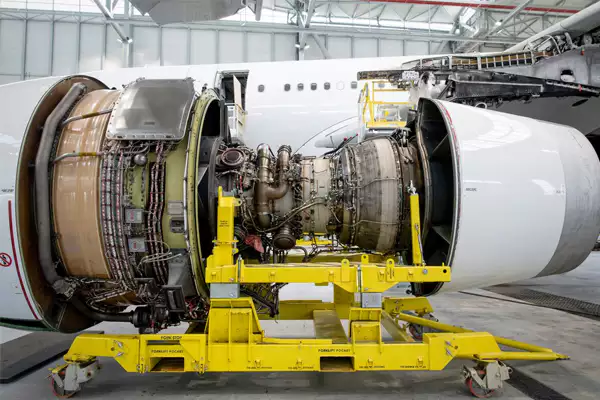
Aircraft engine manufacturing and maintenance
- Precision cleaning: During the manufacturing and maintenance of engine components, oil-free compressed air is used for precision cleaning to remove fine impurities and prevent performance degradation or damage caused by oil pollution.
- Pneumatic tool drive: When assembling and disassembling the engine, oil-free compressed air is used as a power source to drive pneumatic wrenches, screwdrivers and other tools to ensure efficient and safe operation.
- Leak detection: After assembly, oil-free compressed air is used to perform leak tests to ensure engine sealing and avoid fuel or oxidant leakage.
Ground Support Equipment
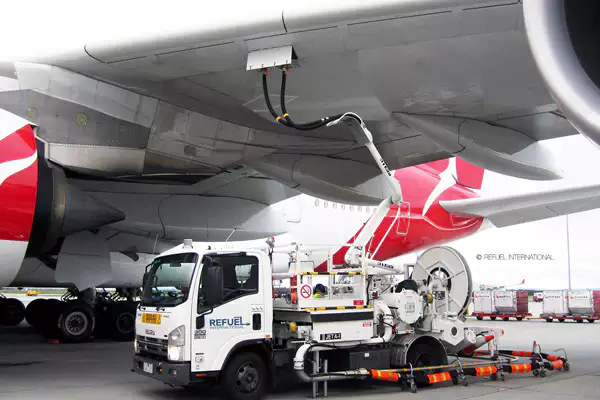
- Tire Inflation and Pressure Testing: Aircraft tires need to be regularly inspected and inflated, and the clean air provided by the oil-free compressor can prevent tire rubber from aging or corrosion.
- Landing Gear Testing: Compressed air is used to test the extension and retraction of the landing gear to ensure its reliable operation during takeoff and landing.
- Aircraft Interior Cleaning: Oil-free compressed air is also used to clean the interior of the aircraft, including electronic equipment and passenger areas, to avoid damage or safety hazards caused by oil contamination.
Fuel injection system testing
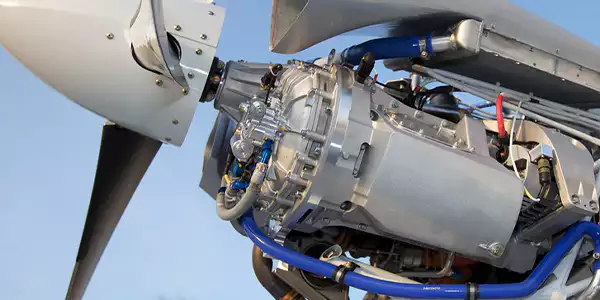
- During the engine testing phase, oil-free compressed air is used to simulate fuel injection, evaluate nozzle performance, ensure fuel atomization effect and combustion efficiency, and avoid damage to the fuel system caused by oil contamination.
Wing structure test
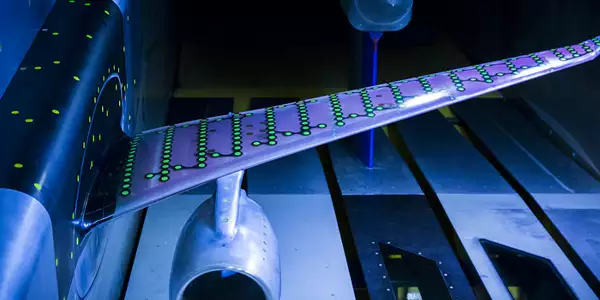
- Oil-free compressed air is used to test the tightness of the pressure chamber, simulating the high pressure difference environment during flight, verifying the strength and integrity of the wing structure, and ensuring flight safety.

Fuel injection system testing
- Although the air directly used for cabin pressurization is usually processed by the aircraft’s own engine bleed air system, in certain ground testing and maintenance situations, oil-free compressors are also used to simulate the pressurization process and test the cabin pressure control system to ensure it is functioning properly while providing a comfortable and safe cabin environment.
Recommended Oil-Free Air Compressor for Medical Industry
Solutions for Other Industries