Oil-free Air Compressor For Pharmaceutical Industry
Discover unparalleled purity with our oil-free air compressors designed specifically for the pharmaceutical industry. Ensure your processes meet stringent quality standards with clean, contaminant-free air. Explore our range now for reliable solutions that safeguard product integrity.
Oil Free Air Compressor: The Pure Power Of The Pharmaceutical Industry
In the highly regulated pharmaceutical industry, air quality is not only the key to producing high-quality drugs, but also the cornerstone of patient safety. Pharmaceutical companies must follow strict international standards, such as Good Manufacturing Practices (GMP), to ensure that all production links are free from contamination. GMP standards have extremely low tolerance for microorganisms, dust particles, humidity and chemical pollutants in the air, requiring the compressed air used in the production environment to reach the highest purity level of sterility and oil-free.
It is in this context that oil-free air compressors have become an indispensable heart equipment in the pharmaceutical industry. Compared with traditional oil-containing compressors, oil-free air compressors fundamentally eliminate the risk of oil contamination by excluding any form of oil from entering the compressed air flow, which is essential for the production of sensitive drug ingredients, vaccines or aseptic packaging. It can effectively prevent oil particles from contaminating drugs, avoiding potential health risks and product quality issues, thereby ensuring the absolute safety and efficacy of drugs.
Ever-Power, as a leader in providing efficient and reliable compressed air solutions, is well aware of the core value of oil-free technology in the pharmaceutical industry. We are committed to developing and supplying a series of high-performance oil-free air compressors that not only meet the most stringent air quality standards, but also provide powerful and pure power support for the production process of pharmaceutical companies by optimizing energy efficiency, reducing operating costs, and ensuring long-term stable operation. Ever-Power’s oil-free compressed air solution is a strong backing for achieving zero pollution in the production environment and promoting the upgrading of the pharmaceutical industry, reflecting our commitment to quality and protection of health.
Special Needs of The Pharmaceutical Industry
Overview of Air Quality Standards
ISO 8573-1 is an internationally recognized compressed air quality standard that sets detailed classification for the three main pollutants in compressed air: solid particles, water (humidity), and oil. This standard is crucial to ensuring the purity of compressed air, especially in the pharmaceutical field, which has strict requirements on air quality. Class 0 is the highest level of oil content in ISO 8573-1, which means that compressed air should not contain any oil, whether liquid, suspended or oil vapor, which is directly related to the sterile environment of drug production and the safety of the final product. By using an oil-free air compressor that meets the Class 0 standard, pharmaceutical companies can be sure that their compressed air will not become a source of contamination and meet the highest level of air quality requirements.
Good Manufacturing Practice GMP Compliance
Good Manufacturing Practice (GMP) is a set of standards established by global pharmaceutical regulatory agencies to ensure that the quality of drugs is controlled throughout the entire process from raw material procurement, production, inspection to sales, to prevent contamination, cross-contamination and confusion, and to ensure the effectiveness and safety of drugs. GMP has extremely high requirements for pharmaceutical equipment and production environment
Contamination Risk: Analyze the potential threat of oil contamination to drug quality and patient safety
In the pharmaceutical process, oil contamination is one of the risks that cannot be ignored. Even if a very small amount of oil enters the production process, it may cause:
- Chemical property changes: Oil contamination may change the chemical structure of the drug, affecting the stability and effectiveness of the drug.
- Microbial growth: Oil provides a breeding ground for microorganisms, increasing the risk of microbial contamination of drugs.
- Allergic reactions: Patients may have adverse reactions to oil residues, especially those who are sensitive to specific oil components.
- Equipment damage: Oil contamination can also cause blockage and corrosion of production equipment, affecting production efficiency and equipment life.
- Regulatory violations: Products that do not meet GMP and ISO 8573-1 standards cannot be put on the market, which may result in the scrapping of production batches and face legal sanctions in serious cases.
Raw material handling & transportation
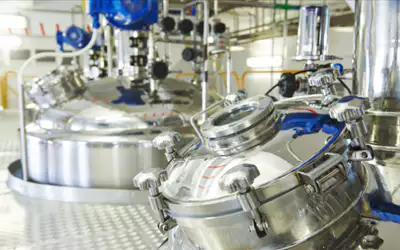
During the handling and transportation of pharmaceutical raw materials, oil-free air compressors provide a stable air source to drive pneumatic valves, cylinders and other equipment to ensure that the raw materials are transferred to the reaction vessel or mixing equipment in a closed pipeline without contamination.
Agitation & mixing
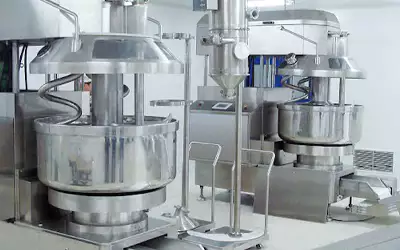
During the drug synthesis stage, oil-free compressed air can drive the agitation equipment, evenly mix the raw materials, control the reaction conditions, and ensure the efficient conduct of the chemical reaction.
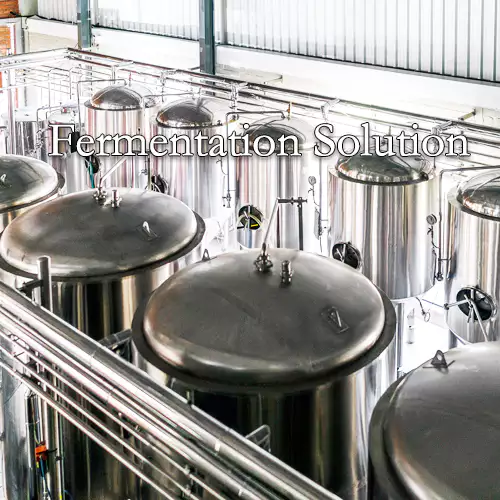
Fermentation
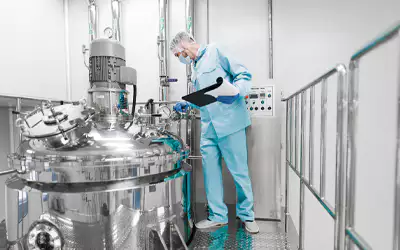
In biopharmaceuticals, oil-free air is a necessary means to provide oxygen to the fermentation tank, maintain a sterile environment for microbial growth, promote biological reactions, and increase production.
Drying
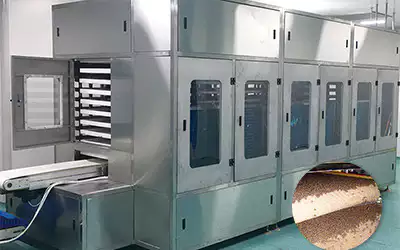
With advanced sound insulation technology and low vibration design, the operating noise is as low as 50dB(A), creating a quiet medical environment without affecting patients’ rest and treatment.
Filtration & purification
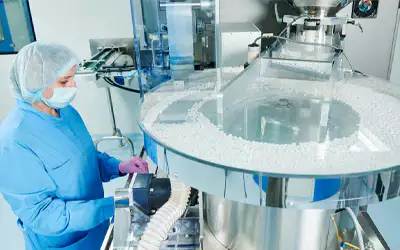
In air purification systems, oil-free compressed air helps push filter media, such as HEPA filters, to remove particles and microorganisms from the air and maintain a sterile production environment.
Filling & packaging
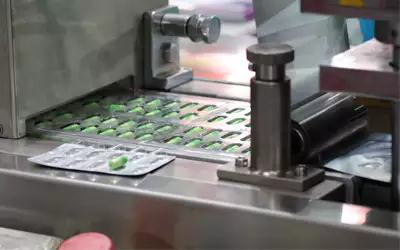
During the filling and packaging stages of drugs, oil-free air powers equipment such as fillers, cappers, and labelers to ensure that drugs are not contaminated by the outside world during the sealing process while maintaining the integrity of packaging materials.
Cleaning & disinfection
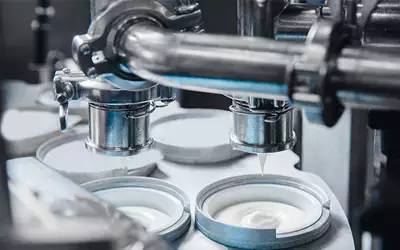
Oil-free compressed air is used in CIP (cleaning in place) and SIP (sterilization in place) systems to help clean and disinfect production line equipment to ensure a sterile environment before and after each production.
Experiment & testing
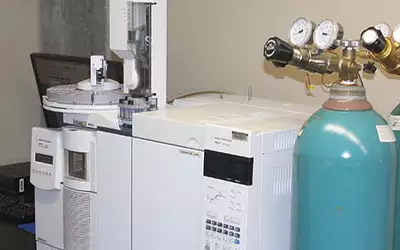
In drug research and development and quality control laboratories, oil-free air provides a clean air source for precision instruments such as gas chromatographs and mass spectrometers to ensure the accuracy of test results.
Special Needs of The Pharmaceutical Industry
Overview of Air Quality Standards
ISO 8573-1 is an internationally recognized compressed air quality standard that sets detailed classification for the three main pollutants in compressed air: solid particles, water (humidity), and oil. This standard is crucial to ensuring the purity of compressed air, especially in the pharmaceutical field, which has strict requirements on air quality. Class 0 is the highest level of oil content in ISO 8573-1, which means that compressed air should not contain any oil, whether liquid, suspended or oil vapor, which is directly related to the sterile environment of drug production and the safety of the final product. By using an oil-free air compressor that meets the Class 0 standard, pharmaceutical companies can be sure that their compressed air will not become a source of contamination and meet the highest level of air quality requirements.
Good Manufacturing Practice GMP Compliance
Good Manufacturing Practice (GMP) is a set of standards established by global pharmaceutical regulatory agencies to ensure that the quality of drugs is controlled throughout the entire process from raw material procurement, production, inspection to sales, to prevent contamination, cross-contamination and confusion, and to ensure the effectiveness and safety of drugs. GMP has extremely high requirements for pharmaceutical equipment and production environment
Contamination Risk: Analyze the potential threat of oil contamination to drug quality and patient safety
In the pharmaceutical process, oil contamination is one of the risks that cannot be ignored. Even if a very small amount of oil enters the production process, it may cause:
- Chemical property changes: Oil contamination may change the chemical structure of the drug, affecting the stability and effectiveness of the drug.
- Microbial growth: Oil provides a breeding ground for microorganisms, increasing the risk of microbial contamination of drugs.
- Allergic reactions: Patients may have adverse reactions to oil residues, especially those who are sensitive to specific oil components.
- Equipment damage: Oil contamination can also cause blockage and corrosion of production equipment, affecting production efficiency and equipment life.
- Regulatory violations: Products that do not meet GMP and ISO 8573-1 standards cannot be put on the market, which may result in the scrapping of production batches and face legal sanctions in serious cases.
Selection Guide of Oil-free Air Compressor
Selecting an oil-free air compressor suitable for use in a hyperbaric oxygen chamber is a comprehensive consideration process, and the following key points need to be focused on:
| Determine requirements and applications | |
| Air quality | Clarify whether your application requires oil-free air, such as in the food, pharmaceutical, electronics, or medical industries, ISO 8573-1 Class 0 certification is a basic requirement. |
| Gas demand | Calculate the required pressure (usually in bars or psi) and flow rate (usually in m ³/h or cfm) to ensure that the compressor can meet the gas demand for production or experimentation. |
| Usage environment | Consider the temperature, humidity, space limitations, and cleanliness of the working environment to choose the appropriate model and configuration. |
| Understand the type of technology | |
| Types of oil-free compressors | Commonly seen on the market include scroll, screw, centrifugal, and sliding plate types. Understand their respective characteristics and applicable scenarios, and choose the technology type that best suits your needs. |
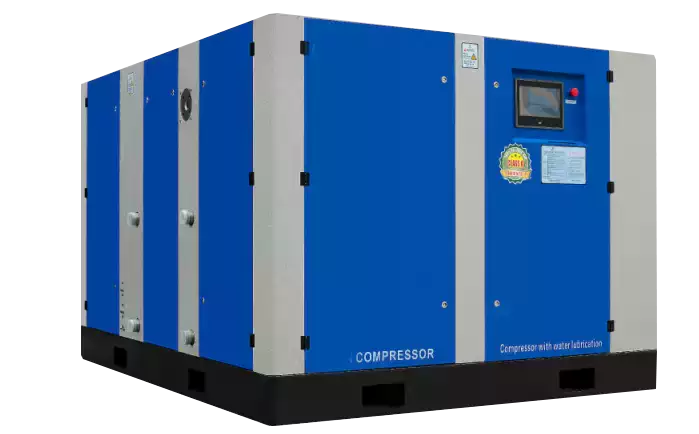
| Dry or water lubrication | There are two types of oil-free compressors: dry sealing and water lubrication. The former is suitable for scenarios with extremely high air quality requirements, while the latter is more economical and environmentally friendly in some applications. |
| Consider energy efficiency and noise | |
| Energy efficiency ratio | Choosing products with higher energy efficiency levels, such as those that comply with the EU’s ErP directive or have other energy-saving certifications, can significantly reduce operating costs in the long term. |
| Silent design | If the operating environment is sensitive to noise, priority should be given to compressors with low noise design to ensure a comfortable working environment. |
| Budget and Investment Return | |
| Cost benefit analysis | Taking into account factors such as initial investment, operating costs (including energy consumption and maintenance costs), service life, and depreciation, evaluate the total cost of ownership (TCO). |
| Scalability and Upgrade | Consider potential future capacity growth or application changes, and choose systems that are easy to upgrade or expand. |
Recommended Oil-Free Air Compressor for Medical Industry
Solutions for Other Industries